
Pan de leche japonés
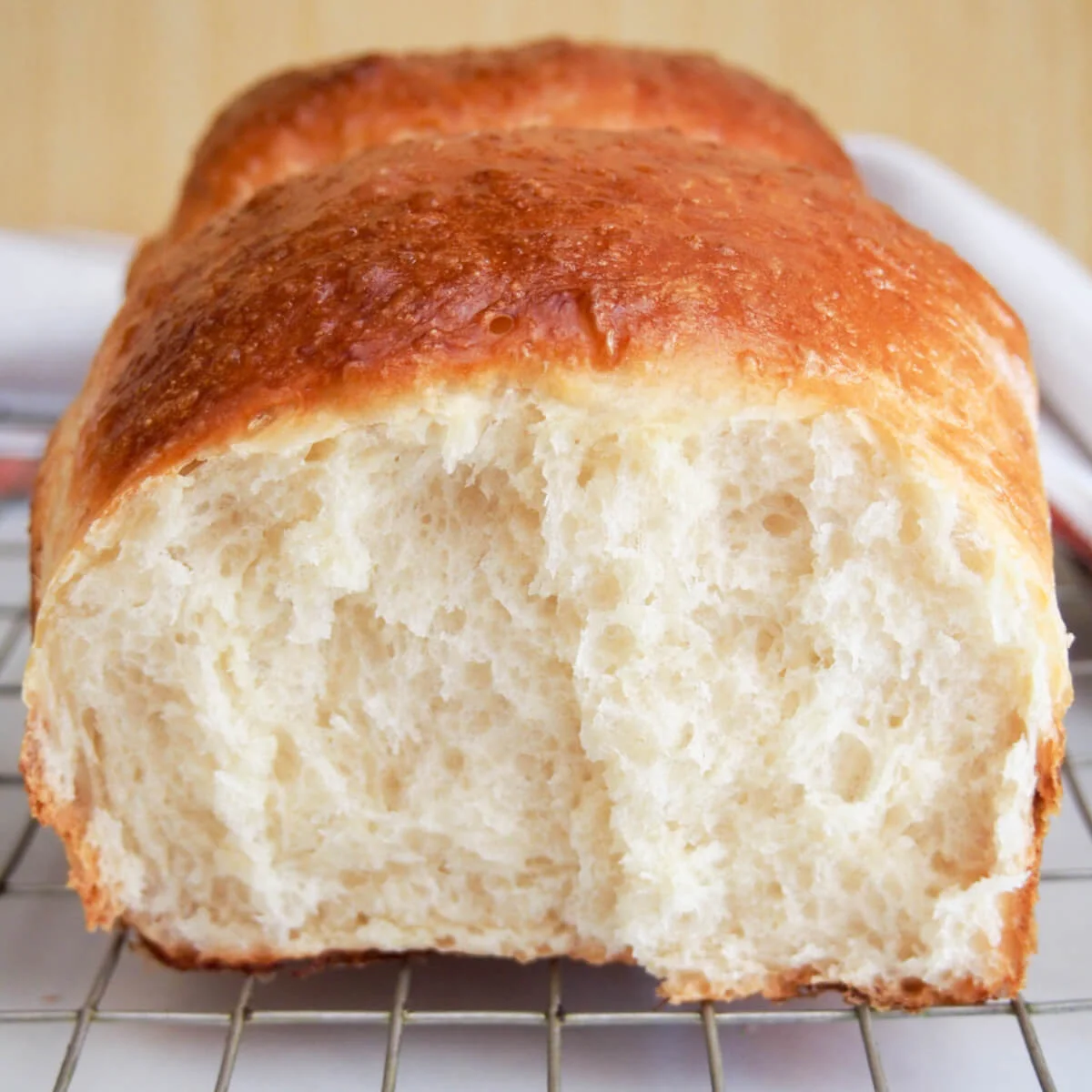
Japanese milk bread is a soft, lightly sweet loaf with a fine, fluffy crumb. The tangzhong starter helps keep it tender, making it a lovely choice for everyday toast or sandwiches.
Ingredients
- 20 g (2 tbsp)bread flour
- 90 mlwater
- 300 gbread flour
- 7 gfast-action yeast
- 120 mlmilk
- 28 gunsalted butter, melted and cooled
- 5 mlsalt
- 42 gcaster sugar
- 1egg
- 1, lightly beaten; you may not need all of itegg, for the egg wash
Instructions
- 1
Mix the tangzhong
Before heating, whisk the 20 g bread flour and 90 ml water in a small pan until smooth and free of lumps.
- 2
Cook the paste
Warm the mixture over medium-low heat, stirring constantly, until thickened and the spoon or whisk leaves trails. Set aside to cool.
- 3
Combine the dough
Put the remaining 300 g bread flour, yeast, milk, melted butter, salt, sugar and one egg in a large bowl. Add the cooled tangzhong and mix everything together thoroughly. The egg can be beaten into the tangzhong first to make it easier to incorporate.
- 4
Knead the dough
Knead in a mixer or by hand on a floured surface until the dough is no longer sticky, adding a little more flour if needed.
- 5
Let it rise
Transfer the dough to a lightly oiled bowl, cover it and leave it in a relatively warm place until doubled in size, around 1 hour.
- 6
Shape the loaf
Knock back the risen dough and divide it into three pieces. Set two aside and roll the first into an oval.
- 7
Roll each piece
Fold one side of the oval halfway over the dough, then fold the other side on top to make three layers. Roll it gently a little more if needed, then roll it up like a cinnamon roll. Repeat with the other two pieces.
- 8
Proof and glaze
Place the three rolls in an oiled 22 × 12 cm loaf tin, or one slightly smaller. Cover and leave to rise until the loaf is just reaching the top of the tin. Preheat the oven to 175°C, lightly beat the second egg and brush the loaf's top with egg wash.
- 9
Bake and cool
Bake for about 30 minutes, until golden brown. If it colours too quickly, cover loosely with foil for the remaining baking time. Turn the loaf out onto a cooling rack and let it cool before slicing.
What is Japanese milk bread?
Japanese milk bread, often called shokupan, is a soft, enriched loaf known for its fine crumb and gentle sweetness. This version uses tangzhong, a cooked flour-and-water paste, to help make the dough especially tender.
Tangzhong: This simple starter is cooked before the other dough ingredients are mixed. Cooling it before use keeps it from heating the yeast or egg.
Nutrition and macros by portion
The nutrition label shows one serving as written: 103 calories, 3g protein, 17g carbs, 2g fat.
| Portion | Adjustment | kcal | Protein | Carbs | Fat |
|---|---|---|---|---|---|
| Lighter | Smaller slice | 72 kcal | 2g | 12g | 1g |
| This serving | As written | 103 kcal | 3g | 17g | 2g |
| Hungry | Larger slice | 155 kcal | 5g | 26g | 3g |
The main carbohydrate sources are the bread flour and sugar, while the butter and egg contribute much of the fat. The egg, milk and flour also provide some protein. Pair a slice with an egg or another protein-rich filling and fruit or vegetables for a more balanced plate.
Why make the tangzhong first?
Smooth paste: Mix the flour and water before switching on the heat so there are no lumps to work out later. Stir continuously as it thickens over medium-low heat.
Ready to use: Look for trails left by the spoon or whisk as a cue that the paste has thickened. Let it cool before adding it to the dough.
Getting the dough right
Temperature: Use milk that is lukewarm or at room temperature, not hot, and make sure the melted butter has cooled. This helps keep the dough ingredients at a suitable temperature for the yeast.
Kneading: Work the dough until it is no longer sticky, but avoid adding too much extra flour. A lightly floured surface is enough to help manage it while kneading.
Shaping for a soft crumb
Three portions: Divide the dough into three equal pieces for the loaf tin. Keeping the pieces similar in size helps them rise and bake evenly.
Layered rolls: Flatten each portion into an oval, fold it into three layers, then roll it up. Arrange the rolls side by side in the greased tin.
Proofing and baking cues
First rise: Leave the covered dough somewhere relatively warm until it has doubled, which takes around 1 hour in the recipe. The rise time can vary with the warmth of the room, so use the dough's size as your cue.
Second rise: Let the shaped loaf rise until it just reaches the top of the tin. Bake at 175°C for about 30 minutes, watching for a golden-brown top; tent with foil if it browns too fast.
Serving and slicing
Cool first: Leave the loaf on a cooling rack before slicing so the soft crumb can settle. A serrated bread knife helps cut neat slices without compressing it.
To serve: Enjoy it plain, toasted with butter, or filled for a simple sandwich. Its mild sweetness also works well with jam.
Recipe notes & tips
- Let the tangzhong cool completely before adding it to the dough.
- Use milk that is lukewarm or at room temperature rather than hot.
- Add extra flour sparingly if the dough is sticky while kneading.
- Oil the bowl and loaf tin lightly to make handling and release easier.
- Cover the loaf with foil if the top is browning before the centre is baked.
- Wait until the loaf has cooled before slicing for the neatest pieces.
Variations
- Honey finish: Replace some of the sugar with honey for a different gentle sweetness.
- Seeded top: Sprinkle seeds over the egg wash before baking for a little crunch.
- Cinnamon swirl: Add a thin cinnamon-sugar layer as you roll each piece of dough.
- Raisin loaf: Knead raisins into the dough for a sweeter loaf.
- Savoury slices: Serve with cheese or a savoury sandwich filling instead of jam.
Common mistakes to avoid
- Lumpy tangzhong: Whisk the flour and water smooth before heating.
- Hot milk: Use lukewarm or room-temperature milk so it is not too hot for the yeast.
- Too much extra flour: Add only a little at a time, as excess can make the loaf dense.
- Underproofed loaf: Let it rise until it reaches the top of the tin before baking.
- Over-browned top: Cover loosely with foil for the remaining baking time.
- Slicing while warm: Cool the loaf on a rack first to avoid compressing its soft crumb.
How to store
Once completely cool, store the loaf in an airtight container or bread bag at room temperature and use within a few days. Refresh slices briefly in a toaster, or warm them gently in the oven.
Frequently asked questions
What is tangzhong?
Tangzhong is a paste made by cooking flour with water. In this loaf it is cooled and mixed into the dough to help produce a soft, tender crumb.
Can I make the tangzhong ahead?
Yes. Make it slightly ahead and let it cool before using it in the dough.
How do I know when the dough has risen enough?
For the first rise, wait until it has doubled in size. After shaping, let it rise until it just reaches the top of the loaf tin.
Can I knead the dough by hand?
Yes. Knead it on a floured surface until it is no longer sticky, adding a little flour if needed.
Why is the top browning too quickly?
Ovens can colour the crust before the loaf has finished baking. Cover it loosely with foil for the remaining baking time.
When should I slice the loaf?
Let it cool on a rack before slicing. This helps the soft crumb settle and makes neater slices.
Cook it from the original
This recipe comes from carolinescooking.com. Their page has the author’s own photos, notes and tips — the best place to cook it from.
Open the recipe on carolinescooking.com