
Eggplant Involtini
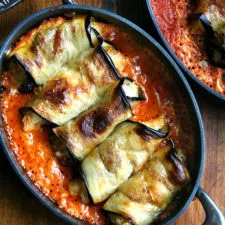
Eggplant involtini are tender aubergine slices rolled around a lemony ricotta and breadcrumb filling, then baked in tomato sauce with a little cream. They make a comforting Italian-style main for when you want a meal that feels special without complicated assembly.
Ingredients
- 1 largeaubergine
- to tastekosher salt
- as needed for fryingolive oil or rapeseed oil
- to tastehomemade tomato sauce
- to tastedouble cream
- to taste, for servingfreshly grated Parmigiano Reggiano
- 55 g (½ cup)fresh, dried or panko breadcrumbs
- 240 g (1 cup)whole milk ricotta or homemade ricotta
- zest of 1lemon
- juice of ½lemon
- 1 tspfresh thyme leaves, minced
- ¼ tspkosher salt
Instructions
- 1
Slice the aubergine
Trim the stem end and cut the aubergine lengthways into 6 mm-thick slices with a mandoline; you should get about 12. Sprinkle both sides with kosher salt, layer the slices in a colander and leave for 1 hour. Alternatively, skip salting and frying and roast the slices as described in the recipe notes.
- 2
Fry the slices
For frying, press out the moisture and pat the slices dry with paper towels. Add oil to a depth of 2.5 cm in a deep, heavy saucepan or large frying pan and heat to 182°C. Fry 3–4 slices at a time for 3–4 minutes, until lightly coloured, then lift them out with tongs and drain in a colander or on a paper-towel-lined plate. Repeat with the remaining slices. Alternatively, shallow-fry them in less oil until softened and lightly golden.
- 3
Mix the filling
Meanwhile, stir together the breadcrumbs, ricotta, lemon zest, lemon juice, thyme and ¼ tsp kosher salt in a bowl.
- 4
Roll and bake
Heat the oven to 220°C. Spread a thin layer of tomato sauce over the base of a medium baking dish or individual gratin dishes. Put a spoonful of filling at one end of each aubergine slice, roll it up and arrange it seam-side down over the sauce. Spoon about 1 tablespoon of cream, or less, over each roll to moisten it. Bake for 20–25 minutes, until the sauce is dark at the edges and the rolls are nicely caramelised. Finish with Parmigiano before serving.
What is eggplant involtini?
Involtini means little rolls in Italian, and the dish takes its name from the way thin slices are wrapped around a filling. Aubergine versions are associated with Italian home cooking, where the slices are often baked in tomato sauce.
Here, ricotta and breadcrumbs make a soft, savoury centre, while lemon and thyme keep it bright. Baking the rolls in sauce lets the aubergine become tender and gives the edges time to caramelise.
Nutrition and macros by portion
The nutrition label shows one serving as written: 620 calories, 23g protein, 42g carbs, 39g fat.
| Portion | Adjustment | kcal | Protein | Carbs | Fat |
|---|---|---|---|---|---|
| Lighter | Roast instead of frying | 434 kcal | 16g | 29g | 27g |
| This serving | As written | 620 kcal | 23g | 42g | 39g |
| Hungry | Add another roll | 930 kcal | 35g | 63g | 59g |
The breadcrumbs and aubergine provide most of the carbohydrates, while ricotta contributes protein and much of the fat; frying oil, cream and cheese add further fat. Serve a moderate number of rolls with greens or salad to round out the plate.
Choosing the aubergine
Even slices: A mandoline makes slices of consistent thickness, which helps them soften and roll evenly. If cutting by hand, aim for slices about 6 mm thick.
Salting: The recipe calls for salting the slices in a colander for 1 hour before frying. Pat them dry well afterwards; the notes also offer roasting as a simpler alternative to salting and frying.
Getting the filling right
Ricotta: Whole milk ricotta gives the filling its creamy body. If it seems very wet, drain it briefly so the mixture stays in the rolls rather than running out.
Breadcrumbs and lemon: Breadcrumbs absorb some moisture, while lemon zest and juice add a fresh, tart note. Stir the filling until combined, but avoid packing it tightly into the slices.
Frying or roasting
Frying: The oil should be at 182°C, and the slices need space in the pan. Frying in batches for 3–4 minutes gives them some colour and softens them enough to roll.
Roasting: The recipe notes suggest brushing the slices with olive oil, seasoning with salt and pepper, and roasting for 10 minutes on one side and 8 minutes on the other. This approach avoids deep-frying; check that the slices are flexible before filling.
Rolling and arranging
Filling each slice: Place a spoonful near one end, then roll the aubergine around it without squeezing hard. Set each roll seam-side down so it stays closed in the dish.
Sauce and cream: Spread only a thin layer of sauce over the base, then add about 1 tablespoon of cream or less over each roll. This moistens the tops without drowning the aubergine.
When they are done
Look for darkened sauce around the edges and rolls that are lightly caramelised on top after 20–25 minutes at 220°C. The aubergine should be tender enough to cut easily, and the filling should be hot throughout.
If the sauce is bubbling but the rolls are still pale, give them a little more time and check again. Oven and dish size can affect how quickly the edges brown.
What to serve with it
Serve the involtini hot, with extra grated Parmigiano at the table. Bread is useful for scooping up the tomato sauce, while a green salad or simply cooked greens add a fresh contrast to the rich filling.
Recipe notes & tips
- Pat fried aubergine slices dry so excess moisture does not loosen the filling.
- Use a thermometer to bring frying oil to 182°C before adding the slices.
- Fry in batches of 3–4 slices to avoid crowding the pan.
- Drain ricotta briefly if it looks watery before mixing the filling.
- Arrange the rolls seam-side down to help them hold their shape.
- Grate the Parmigiano just before serving for the best flavour and texture.
Variations
- Roasted aubergine: Brush the slices with olive oil, season with salt and pepper, and roast for 10 minutes on one side and 8 minutes on the other.
- Simpler filling: Leave out the thyme and lemon juice, keeping the lemon zest and salt as in the recipe notes.
- Herb swap: Replace the thyme with finely chopped basil or parsley for a different herbal note.
- Extra cheese: Mix a little grated Parmigiano into the ricotta filling as well as sprinkling it on top.
- Individual dishes: Bake the rolls in separate gratin dishes for easy serving.
- Sauce choice: Use your preferred homemade tomato sauce as the base for the rolls.
Common mistakes to avoid
- Wet aubergine: Press and pat the slices dry before frying so they brown rather than steam.
- Oil too cool: Wait until it reaches 182°C before frying, or the slices may absorb more oil.
- Overfilled rolls: Use a modest spoonful of filling so the slices close neatly around it.
- Loose arrangement: Set each roll seam-side down to keep it from unrolling in the oven.
- Too much cream: Use about 1 tablespoon or less per roll so the sauce remains concentrated.
- Underbaked aubergine: Bake until the rolls are tender and the sauce edges have darkened.
How to store
Cool leftovers and refrigerate in a covered container for up to 3 days. Reheat in an oven at 180°C until hot throughout, or microwave individual portions; the aubergine will be softer after reheating.
Frequently asked questions
Can I make the involtini ahead?
You can prepare the filling and aubergine slices in advance, then assemble them in the dish and refrigerate. Bake until hot throughout, allowing a little extra time if the dish is cold.
Do I have to salt the aubergine for an hour?
The method uses a 1-hour salting step before frying. The recipe notes also suggest skipping salting and frying and roasting the slices instead.
Can I use shop-bought tomato sauce?
Yes. Choose a tomato sauce you enjoy and spread a thin layer over the base of the baking dish.
How do I know the rolls are ready?
After 20–25 minutes at 220°C, the sauce should be dark around the edges and the rolls lightly caramelised. The aubergine should also be tender when pierced.
Can I freeze eggplant involtini?
They can be frozen, though the aubergine and ricotta filling may soften after thawing. Cool them first, freeze in a sealed container, and reheat until piping hot.
What can I use instead of deep-frying?
The recipe offers shallow-frying in less oil until the slices are soft and lightly golden. Its notes also describe roasting brushed, seasoned slices for 10 minutes on one side and 8 minutes on the other.
Cook it from the original
This recipe comes from alexandracooks.com. Their page has the author’s own photos, notes and tips — the best place to cook it from.
Open the recipe on alexandracooks.com