
Vegetable Biryani
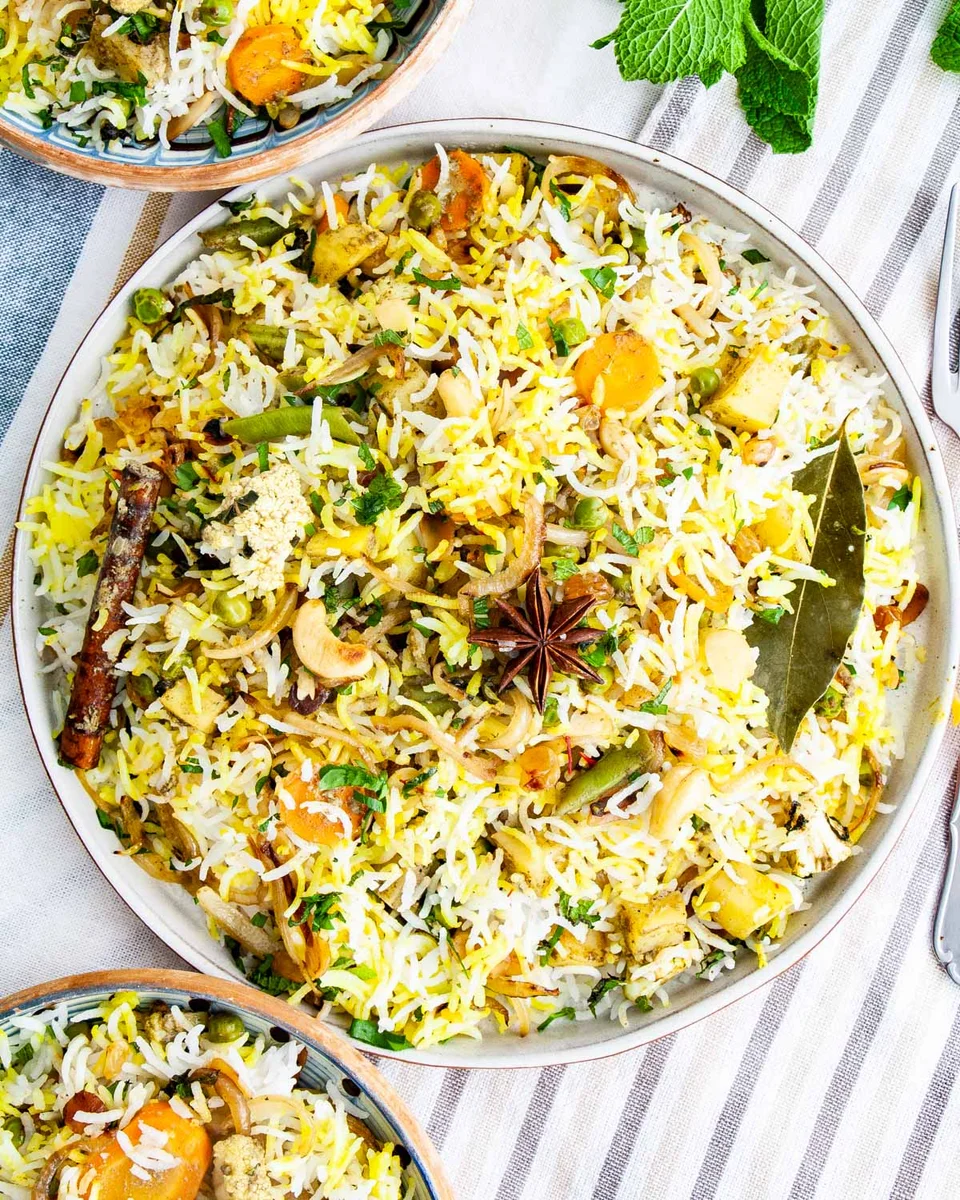
Vegetable biryani layers fragrant basmati rice with a warmly spiced vegetable gravy, saffron milk and browned onions with nuts and raisins. It takes time to prepare, but the layered cooking gives the rice and vegetables plenty of flavour.
Ingredients
- 285 g (1 1/2 cups)basmati rice (or other white long-grain rice)
- 6cardamom pods
- 6whole cloves
- 2bay leaves
- 1star anise pod
- 1 1/2 tspsalt, or to taste
- 37.5 ml (2.5 tbsp)olive oil (or ghee)
- 1white onion, sliced 6 mm (1/4 inch) thin
- 40 g (1/4 cup)golden raisins
- 35 g (1/4 cup)cashews
- 25 g (1/4 cup)sliced almonds
- 1/4 tspsaffron
- 60 ml (1/4 cup)hot milk
- 1/4 tspwhole peppercorns
- 1cinnamon stick, 5 cm (2 inches) long
- 2Yukon Gold potatoes, peeled or unpeeled and cut into 1–2 cm (1/2–3/4 inch) cubes
- 55 g (1/2 cup)cauliflower, cut into florets
- 1 mediumcarrot, peeled and sliced into 6 mm (1/4 inch) rounds
- 75 g (1/2 cup)green beans, cut into 2.5 cm (1 inch) pieces
- 70 g (1/2 cup)peas, fresh, canned or frozen
- 15 ml (1 tbsp)garlic, minced
- 15 ml (1 tbsp)fresh ginger, minced
- 120 g (1/2 cup)plain yoghurt
- 60–120 ml (1/4–1/2 cup)water
- 1 tspground cumin
- 15 ml (1 tbsp)garam masala
- 1/4 tsp, or more to tastecayenne pepper
- 15 ml (1 tbsp)fresh coriander, chopped
- 15 ml (1 tbsp)fresh mint, chopped
Instructions
- 1
Soak the rice
Soak the rice in room-temperature water for 30 minutes.
- 2
Part-cook the rice
Bring a pot of water to the boil. Add the rice, 3 cardamom pods, 3 cloves, 1 bay leaf, the star anise and 1 tsp salt. Cook until the rice is about 70% done: it should still have some bite. Drain and set aside.
- 3
Fry the onions
Heat 1 tbsp oil in a frying pan over a medium heat. Add the onion and toss to coat it in the oil. Fry for 5–7 minutes, stirring often, until it starts to turn golden.
- 4
Toast the nuts
Add the raisins, cashews and almonds. Cook for a further 5 minutes, or until the onion is well browned and the nuts are toasted.
- 5
Infuse the saffron
Stir the saffron into the hot milk and leave it to infuse for at least 10 minutes.
- 6
Warm the whole spices
Heat 1.5 tbsp oil or ghee in a large frying pan over a medium-high heat. Add the peppercorns, cinnamon stick, remaining cloves and cardamom, and the remaining bay leaf. Cook for 10–20 seconds.
- 7
Cook the vegetables
Add the potatoes, cauliflower, carrot, green beans and peas. Cook for 2–3 minutes, stirring often. Add the garlic and ginger, stir, and cook for 30 seconds or until fragrant.
- 8
Simmer the gravy
Stir in the yoghurt, 60–120 ml water, 1/2 tsp salt, cumin, garam masala and cayenne. Bring to a bubble, then lower the heat and simmer, stirring occasionally, for about 10 minutes until the vegetables are tender. Add more water as needed if the gravy reduces too much.
- 9
Layer the biryani
Spread half the vegetable gravy in a heavy-bottomed pot with a well-fitting lid, such as a Dutch oven. Add half the rice, drizzle over half the saffron milk, then add half the onion mixture and half of each herb. Repeat with the remaining gravy, rice, saffron milk and onion mixture.
- 10
Cook gently
Set a large, flat frying pan containing 3 cups of hot water on a hob over a low heat. Place the pot of biryani in the pan and cook for 25–30 minutes, or until the rice is tender. The water-filled pan provides gentle, even heat to help prevent the bottom from burning.
- 11
Garnish and serve
Scatter the remaining coriander and mint over the biryani before serving.
What is vegetable biryani?
Biryani is a South Asian rice dish, with many regional versions across the Indian subcontinent. This version builds flavour by cooking the vegetables in a spiced yoghurt gravy, then layering them with partly cooked rice and aromatic toppings.
The method takes several stages, but each has a purpose: the rice finishes gently with the vegetables, while saffron milk and browned onion, nuts and raisins add fragrance and contrast.
Nutrition and macros by portion
The nutrition label shows one serving as written: 321 calories, 8g protein, 49g carbs, 11g fat.
| Portion | Adjustment | kcal | Protein | Carbs | Fat |
|---|---|---|---|---|---|
| Lighter | Less oil and nuts | 225 kcal | 6g | 34g | 8g |
| This serving | As written | 321 kcal | 8g | 49g | 11g |
| Hungry | Larger rice portion | 482 kcal | 12g | 74g | 17g |
The rice and potatoes provide most of the carbohydrates, while oil or ghee, cashews, almonds and yoghurt contribute fat; the yoghurt, nuts and vegetables also provide some protein. Serve a portion with a fresh salad or extra non-starchy vegetables for a more balanced plate.
Choose and prepare the rice
Long-grain rice: Basmati is a good fit because its grains stay distinct when cooked. The recipe also allows another white long-grain rice.
Partial cooking: Soaking first helps the grains cook more evenly. Stop boiling while the rice still has a little bite, since it will finish in the pot with the gravy.
Build the vegetable gravy
Whole spices: The brief frying in oil or ghee releases their aroma before the vegetables go in. Keep the spices moving and follow the short cooking time so they do not scorch.
Vegetables: Potatoes, cauliflower, carrot, beans and peas make up the hearty base. Cut them as directed so they cook through during the simmer and final layering.
Mind the yoghurt and water
Yoghurt: Stir it in with the seasonings to form the gravy. Once the mixture bubbles, lower the heat to a simmer and stir occasionally.
Consistency: The recipe gives a range of water because the vegetables and pan can affect how quickly the liquid reduces. Add more if the gravy becomes too thick before the vegetables are tender.
Layer for flavour
Saffron milk: Let the saffron sit in hot milk for at least 10 minutes, then drizzle it across the rice layers. This distributes its fragrance and colour through the finished dish.
Onion topping: Fry the onions until golden, then add the raisins and nuts and continue until the onions are well browned and the nuts toasted. Divide this mixture between the layers as directed.
Finish with gentle heat
Water bath: Setting the biryani pot inside a larger pan with hot water gives it a gentler heat source. Keep the hob low and use a pot with a close-fitting lid.
Doneness: After 25–30 minutes, check that the rice is tender. If it still has a firm centre, continue cooking gently until it is done.
Serve it as a meal
The biryani has rice, vegetables, yoghurt and a rich onion-and-nut topping, so it can be served on its own. A simple salad or a cooling yoghurt accompaniment can bring a fresh contrast.
Finish with the reserved coriander and mint just before serving so their fresh flavour remains noticeable.
Recipe notes & tips
- Soak the rice for the full 30 minutes before partly cooking it.
- Drain the rice well so excess cooking water does not thin the layered dish.
- Keep the onion mixture moving as it browns, especially after adding the nuts and raisins.
- Use the lower end of the water range first, adding more only if the gravy reduces too much.
- Make sure the pot has a well-fitting lid for the gentle final cooking.
- Leave the rice slightly firm after boiling so it can finish cooking in the biryani.
Variations
- Use ghee: Replace the olive oil with ghee for a richer flavour.
- Adjust the heat: Add more cayenne if you prefer a hotter gravy.
- Change the vegetables: Use other vegetables in place of the listed mixture, keeping pieces a similar size.
- Choose the rice: Use another white long-grain rice if basmati is unavailable.
- Add extra herbs: Increase the coriander or mint to suit your taste.
Common mistakes to avoid
- Fully cooking the rice at the start: Stop while it still has some bite so it can finish during the final cook.
- Scorching the spices: Fry them for only 10–20 seconds before adding the vegetables.
- Letting the gravy dry out: Add more water if it reduces too much before the vegetables are tender.
- Over-browning the nuts: Stir the onion mixture often and remove it from the heat once the nuts are toasted and the onions well browned.
- Using high heat to finish: Keep the hob low and use the water-filled pan to cook the biryani gently.
- Skipping the lid: A well-fitting lid helps the rice cook through during the final stage.
How to store
Cool leftovers promptly and refrigerate them in a covered container for up to 3 days. Reheat until piping hot throughout, adding a small splash of water if the rice seems dry.
Frequently asked questions
Can I use another type of rice?
Yes. The recipe allows another white long-grain rice. Cook it only until partly done before layering.
How do I know when the rice is 70% cooked?
It should be partly tender but still have a distinct bite, rather than being ready to eat. It will cook further during the final 25–30 minutes.
Can I use frozen peas?
Yes. Fresh, canned or frozen peas are all listed as options.
What if the gravy gets too thick?
Add more water while the vegetables cook, as needed, if the gravy reduces too much.
Why cook the biryani in a pan of water?
The recipe uses the hot-water pan to provide gentle, even heat to the pot and help prevent the bottom from burning.
Can I make the saffron milk ahead?
You can infuse it while preparing the other parts of the dish. Allow at least 10 minutes for the saffron to steep in the hot milk.
Cook it from the original
This recipe comes from cravinghomecooked.com. Their page has the author’s own photos, notes and tips — the best place to cook it from.
Open the recipe on cravinghomecooked.com