
Gingerbread scones
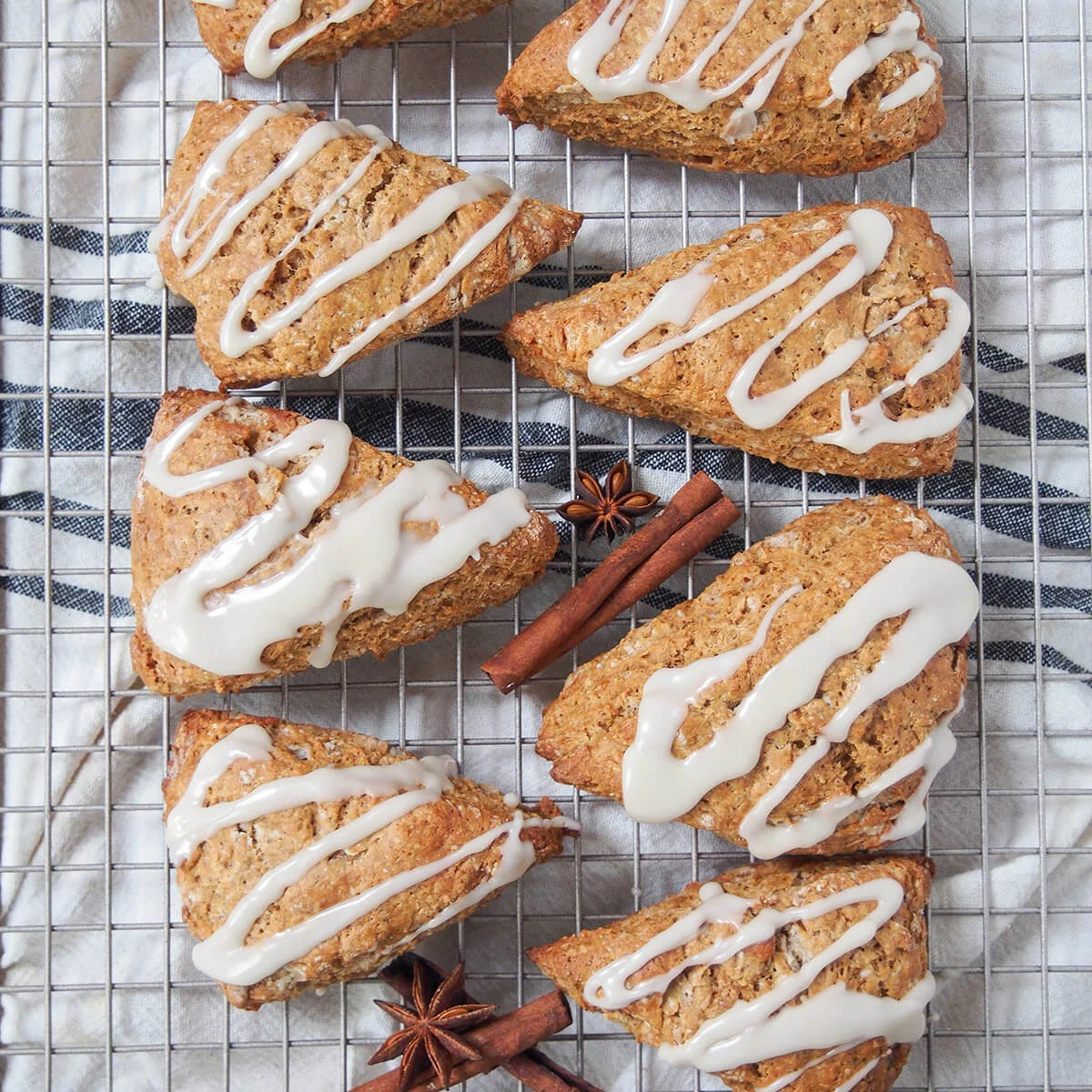
These American-style scones bring ginger, cinnamon and molasses together in a tender, gently spiced bake, finished with a maple icing. They come together quickly and are lovely with a cup of tea or coffee.
Ingredients
- 250 g (2 cups)plain flour
- 12 g (1 tbsp)baking powder
- 3 g (½ tbsp)ground ginger
- 2 g (¾ tsp)ground cinnamon
- 1 g (½ tsp)ground allspice or cloves
- 3 g (½ tsp)salt
- 38 g (3 tbsp)brown sugar
- 120 ml (½ cup)milk
- 1egg
- 30 ml (2 tbsp)molasses
- 57 g (4 tbsp), cold and cut into small cubesbutter
- 60 g (½ cup)icing sugar
- 7.5 ml (½ tbsp)maple syrup
- 1.25 ml (¼ tsp)vanilla extract
- 7.5 ml (½ tbsp), or creammilk
Instructions
- 1
Heat the oven
Preheat the oven to 200°C (400°F) and line a baking sheet.
- 2
Mix the dry ingredients
Put the flour, baking powder, ginger, cinnamon, allspice or cloves, salt and brown sugar in a large bowl. Whisk until evenly combined.
- 3
Whisk the wet ingredients
In a smaller bowl or measuring jug, whisk together the milk, egg and molasses until well mixed.
- 4
Rub in the butter
Add the cold butter cubes to the flour mixture. Rub them in by hand or use a pastry cutter until the mixture resembles coarse crumbs, with a few small lumps of butter remaining.
- 5
Bring the dough together
Pour the milk mixture into the flour and butter mixture and stir just until combined. A knife or spatula can help you avoid warming or pressing the dough too much.
- 6
Shape the scones
Turn the dough onto a floured work surface and flatten it into a round disc. Cut it into 8 roughly even triangles and transfer them to the lined baking sheet. If you like, brush the tops with a little milk before baking.
- 7
Bake and cool
Bake for about 12–15 minutes, watching closely towards the end. Take the scones out when they are just beginning to brown and are cooked through, with a slight crispness. Leave them on the tray for a minute, then move them to a cooling rack to cool completely.
- 8
Mix the icing
If making the icing, sift the icing sugar, then stir in the maple syrup, vanilla and milk until smooth. Add a little more milk if needed, but keep the icing fairly thick so it sets well.
- 9
Finish the scones
When the scones are around room temperature, drizzle the icing over them or spread it on top.
What are gingerbread scones?
Scones are a familiar quick bake in the United States, often served for breakfast or alongside coffee. This version borrows the warm spice and molasses flavour associated with gingerbread.
The dough is cut into wedges and baked, then finished with a simple maple icing. Keeping the butter cold and mixing lightly helps give the scones a tender, crumbly texture.
Nutrition and macros by portion
The nutrition label shows one serving as written: 253 calories, 5g protein, 43g carbs, 7g fat.
| Portion | Adjustment | kcal | Protein | Carbs | Fat |
|---|---|---|---|---|---|
| Lighter | Use less icing | 177 kcal | 4g | 30g | 5g |
| This serving | As written | 253 kcal | 5g | 43g | 7g |
| Hungry | Serve two scones | 380 kcal | 8g | 65g | 11g |
The flour and brown sugar provide most of the carbohydrates, while butter contributes much of the fat. The egg, milk and flour supply some protein; serve a scone with yoghurt and fruit for a more rounded plate.
The spice and molasses balance
Spice blend: Ginger leads, while cinnamon and allspice add warmth. Cloves can stand in for allspice, but their flavour is more intense, so measure carefully.
Molasses: Whisk it thoroughly with the milk and egg so it disperses through the dough rather than leaving sticky streaks.
Keep the butter cold
Cold butter: Work the cubes into the flour until you have coarse crumbs, leaving some small pieces visible. These pieces help create a tender texture as the scones bake.
Light mixing: Once the wet ingredients go in, stir only until the dough comes together. Overworking can make the scones dense.
Shape without overworking
Floured surface: Turn the dough out gently and flatten it into a disc, using only enough pressure to make it hold together. A little unevenness is fine.
Even wedges: Cut the disc into 8 roughly similar triangles so they bake at about the same rate. Transfer them carefully to the lined tray.
Watch for doneness
Bake time: Start checking at 12 minutes, since ovens can vary. The scones are ready when they are cooked through and just starting to brown.
Cooling: Let them sit on the baking sheet for a minute before moving them to a rack. Cool them completely before icing so the topping does not melt away.
Make a smooth maple icing
Sift first: Sifting the icing sugar helps prevent lumps. Mix it with the maple syrup, vanilla and milk until smooth.
Thick finish: Add any extra milk a little at a time; a thicker icing is easier to drizzle or spread and is more likely to set neatly.
How to serve them
Serve the scones at room temperature with tea or coffee, either plain or topped with the maple icing. Their warm spices also pair well with a spoonful of yoghurt or a little fresh fruit on the side.
Recipe notes & tips
- Measure the flour lightly rather than packing it into the measuring cup.
- Keep the butter in the fridge until you are ready to use it.
- Use a knife or spatula to mix in the wet ingredients with minimal handling.
- Cut the wedges to similar sizes so they bake evenly.
- Check the scones from the 12-minute mark, as they can brown quickly near the end.
- Wait until the scones are cool before adding the icing.
Variations
- Use cloves: Replace the allspice with the same amount of ground cloves for a sharper spice note.
- Skip the icing: Leave the scones plain for a less sweet finish.
- Add citrus: Stir a little finely grated orange zest into the dry ingredients.
- Change the glaze: Use cream in place of the milk in the icing for a richer finish.
- Brush the tops: Brush the shaped scones with a little milk before baking for a lightly finished surface.
Common mistakes to avoid
- Warm butter: Soft butter can make the dough greasy; keep it cold and work it in quickly.
- Overmixing: Too much stirring can make the scones firm; stop as soon as the dough comes together.
- Uneven wedges: Scones of very different sizes bake at different rates; aim for 8 similar triangles.
- Overbaking: The scones can dry out if left until deeply browned; take them out when just beginning to colour and cooked through.
- Icing warm scones: The topping can melt and run; cool the scones completely first.
- Thin icing: Too much milk makes the icing runny; add liquid gradually and keep the mixture fairly thick.
How to store
Keep cooled scones in an airtight container at room temperature for up to 2 days. Warm them briefly in a low oven, and add the icing after reheating if you want it to stay neat.
Frequently asked questions
Can I make the dough ahead?
For the best rise and texture, bake the scones soon after mixing. You can measure the dry ingredients in advance and keep them covered until needed.
Can I use cloves instead of allspice?
Yes. The recipe allows either, but cloves taste stronger, so keep to the stated amount.
How do I know when the scones are baked?
They should be cooked through and only just starting to brown, with a slightly crisp exterior. Begin checking at 12 minutes.
Do I have to add the icing?
No. The scones are good without it, though the maple icing adds sweetness and a maple note.
Can I use cream in the icing?
Yes. The recipe gives cream as an alternative to milk for mixing the icing.
Cook it from the original
This recipe comes from carolinescooking.com. Their page has the author’s own photos, notes and tips — the best place to cook it from.
Open the recipe on carolinescooking.com