
Malabar prawn curry (Malabar shrimp)
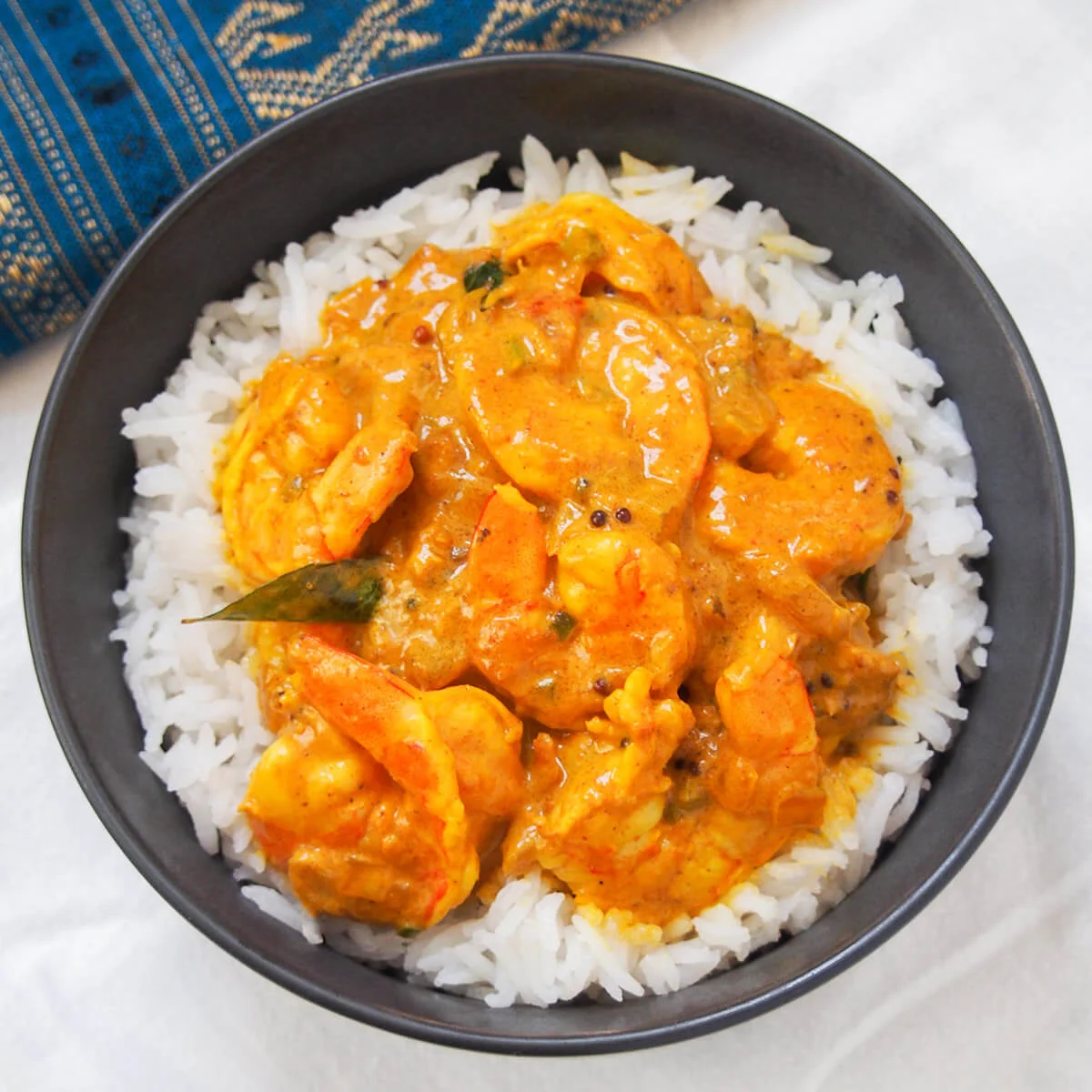
Malabar prawn curry pairs seared prawns with coconut milk, tamarind and a fragrant mix of spices. It comes together in about 30 minutes and is a flavourful choice for a weeknight meal.
Ingredients
- 227 graw prawns, peeled weight
- ¼ tspturmeric
- 1 pinchsalt
- ½ tbsplemon juice
- ½ smallonion
- 2 cloves (about 1 tbsp chopped)garlic
- 1 tspfresh ginger
- 1medium green chilli
- ½tomato
- 1 tbspoil, such as vegetable or rapeseed, approximately
- 8 leaves (about 1 small stem)curry leaves
- ¼ tspfenugreek seeds
- ¼ tspblack mustard seeds
- ½ tspground coriander
- ¼ tspKashmiri chilli powder
- ¼ tspturmeric
- 120 ml (½ cup)thick coconut milk, not light
- 1 tbsp, or more if mild; use less if concentratedtamarind paste
Instructions
- 1
Marinate the prawns
If the prawns are not prepared, peel and devein them. Put them in a small bowl, add the turmeric, salt and lemon juice, and toss to coat. Leave to marinate for about 10 minutes while you prepare the other ingredients.
- 2
Prepare the vegetables
Finely chop the onion, garlic, ginger and chilli. Peel the tomato and chop it.
- 3
Sear the prawns
Heat about half the oil in a skillet, frying pan, wok or wide pan over medium heat. Add the prawns and sear for about 2–3 minutes on each side, until they turn from grey to bright pink. They need not be fully cooked yet. Lift them out and set aside.
- 4
Toast the spices
Add the remaining oil to the pan, followed by the curry leaves, fenugreek seeds and mustard seeds. Cook for a couple of minutes, stirring occasionally, until the seeds begin to splutter.
- 5
Soften the aromatics
Add the onion and cook for about 5–7 minutes, until well softened. Add a little more oil if needed to stop it catching. Stir in the garlic, ginger and chilli and cook for a couple more minutes, stirring fairly regularly, until softened and fragrant.
- 6
Build the curry
Stir in the ground coriander, Kashmiri chilli powder and turmeric. After a minute or two, add the tomato and cook briefly until softened. Pour in the coconut milk, stir well and loosen any browned spices from the bottom of the pan; do not scrape up anything burnt.
- 7
Finish and serve
Bring the coconut mixture to a simmer, stir in the tamarind, then return the prawns to the pan. Cook for a minute or two, just until the prawns are cooked through, taking care not to overcook them. Serve with rice, paratha or naan.
What is Malabar prawn curry?
Malabar refers to the coastal region of Kerala in south-western India, where seafood and coconut feature in many local dishes. This curry brings together prawns, coconut milk and tamarind for a balance of richness and tang.
The method sears the prawns separately before returning them to the sauce at the end. That helps the spices and aromatics develop without leaving the prawns to simmer for too long.
Nutrition and macros by portion
The nutrition label shows one serving as written: 309 calories, 18g protein, 15g carbs, 21g fat.
| Portion | Adjustment | kcal | Protein | Carbs | Fat |
|---|---|---|---|---|---|
| Lighter | Use less coconut milk | 216 kcal | 13g | 11g | 15g |
| This serving | As written | 309 kcal | 18g | 15g | 21g |
| Hungry | Serve with extra rice | 464 kcal | 27g | 23g | 32g |
The prawns provide most of the protein, while the coconut milk and oil contribute much of the fat. The small amount of tomato, onion and aromatics adds some carbohydrate; serving the curry with rice, naan or paratha will add more. For a balanced plate, pair it with a moderate portion of rice and a generous vegetable side.
The aromatic base
Onion: give it the full 5–7 minutes to soften well; it makes a savoury foundation for the sauce.
Garlic, ginger and chilli: add them after the onion and cook until fragrant. Chopping them finely helps them blend into the curry.
Blooming the spices
Whole seeds: mustard and fenugreek go into the hot oil with the curry leaves. Their spluttering is a cue that they have started releasing their aroma.
Ground spices: stir in the coriander, Kashmiri chilli and turmeric, then add the tomato shortly afterwards. Keep stirring so the spices toast without burning.
Getting the sauce right
Coconut milk: use the specified thick, non-light coconut milk for a fuller sauce. Once it is in the pan, scrape up browned spice residue for flavour, but leave any burnt bits behind.
Tamarind: add it after the sauce reaches a simmer. Its sharpness balances the coconut, so the amount can be adjusted if your paste is especially mild or concentrated.
Keeping prawns tender
First sear: the prawns should turn pink on both sides, but they do not need to cook through at this stage. Set them aside while the sauce comes together.
Final simmer: return them to the pan for only a minute or two. Take them off the heat as soon as they are cooked through to avoid a firm, rubbery texture.
Serving ideas
Rice: serve the curry with plain rice to soak up the coconut and tamarind sauce. Paratha or naan also works well for scooping.
For a fuller plate, add a simple vegetable side, such as lightly cooked greens, and serve the curry while the prawns are hot.
Recipe notes & tips
- Pat the prawns dry before marinating so they sear rather than steam.
- Prepare and chop the aromatics before heating the pan, as the spice stages move quickly.
- Keep the heat at medium while cooking the onion and spices to reduce the risk of burning.
- Taste the sauce after adding the tamarind and adjust its amount to suit the strength of the paste.
- Use a wide pan so the prawns can sear in a single layer.
Variations
- Adjust the heat: use less green chilli for a milder curry or more for extra bite.
- Add curry leaves: use a few extra leaves for a more pronounced herbal aroma.
- Serve with rice: choose plain rice to catch the coconut and tamarind sauce.
- Use another seafood: replace the prawns with firm fish pieces and adjust cooking time so they just cook through.
- Add vegetables: stir in a quick-cooking vegetable while the sauce simmers, allowing enough time for it to become tender.
Common mistakes to avoid
- Overcooking the prawns: sear them briefly, then return them only at the end until just cooked through.
- Burning the onion: keep the pan at medium heat and add a little extra oil if it starts to catch.
- Scorching the ground spices: stir them through and add the tomato after a minute or two.
- Scraping up burnt bits: loosen only browned spices from the pan, leaving anything blackened behind.
- Adding too much concentrated tamarind: start with the stated amount and adjust according to the strength of your paste.
How to store
Cool leftovers promptly and refrigerate in a covered container for up to 2 days. Reheat gently in a pan until piping hot, stirring carefully and avoiding a prolonged simmer so the prawns do not toughen.
Frequently asked questions
Can I use prawns that are already peeled and deveined?
Yes. Use 227 g of raw prawns at the peeled weight and begin with the marinade.
Can I use light coconut milk?
The recipe calls for thick, non-light coconut milk, which gives the sauce a richer texture. Light coconut milk will make the result thinner.
How do I know when the prawns are cooked?
They should be pink and opaque rather than grey or translucent. Cook them only for the final minute or two in the sauce.
Can I make the curry less spicy?
Use less green chilli or remove its seeds before chopping. Kashmiri chilli powder is described in the recipe as mild.
What can I serve with Malabar prawn curry?
Rice, paratha or naan are suggested accompaniments. A vegetable side also makes a useful addition to the plate.
Can I prepare any ingredients ahead?
You can chop the onion, garlic, ginger, chilli and tomato in advance. Marinate the prawns for about 10 minutes as directed while you finish preparing the other ingredients.
Cook it from the original
This recipe comes from carolinescooking.com. Their page has the author’s own photos, notes and tips — the best place to cook it from.
Open the recipe on carolinescooking.com