
One-Pot Curried Chickpeas
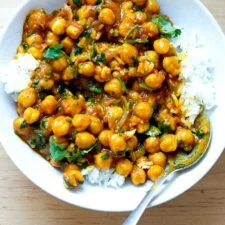
This one-pot curry simmers chickpeas in a warmly spiced tomato and coconut sauce, then gets a fresh finish of coriander. It is a satisfying meat-free dinner served over rice, with the heat easy to adjust to taste.
Ingredients
- 15 ml (1 tablespoon)olive oil
- 1onion, sliced
- to tastekosher salt
- 2 teaspoons (about 4 g)turmeric
- 2 teaspoons (about 4 g)curry powder
- 1 to 3 tablespoons (15 to 45 ml)Thai red curry paste
- 240 ml (1 cup) or 3 to 4canned crushed tomatoes, or fresh plum tomatoes, chopped
- 400 ml (1 can; 13.5 oz)unsweetened coconut milk
- 15 ml (1 tablespoon)fish sauce, optional
- 2 teaspoons (about 8 g)brown sugar
- 2 cans (425 g/15 oz each), drained and rinsed, or 3 cups cookedchickpeas
- 15 g (1/2 cup), or more or less to tastecoriander, roughly chopped
- to tastecooked basmati, jasmine or other rice
Instructions
- 1
Heat the oven
Preheat the oven to 200°C (400°F).
- 2
Soften the onion
Heat 15 ml (1 tablespoon) of olive oil in a large sauté pan over high heat. Add the onion with a pinch of salt, then turn the heat down to medium-low straight away. Cook for about 5 minutes, stirring occasionally, until softened and starting to brown at the edges.
- 3
Make the sauce
Stir the curry powder, turmeric and Thai red curry paste into the onion for about 1 minute, until coated. Add the crushed tomatoes and stir; if using fresh tomatoes, cook for about 1 minute, until they just start to soften. Pour in the coconut milk, then fill its empty can with water and add that too. Add the fish sauce and brown sugar, then whisk to combine. Bring the mixture to a simmer, taste and season with salt as needed.
- 4
Simmer the chickpeas
Add the chickpeas and bring the sauce back to a simmer. Transfer the uncovered pan to the oven and cook for 35 to 40 minutes, until the liquid has reduced to your preferred consistency. Cook for less time for a saucier curry or longer for a thicker one.
- 5
Finish and serve
Stir in the coriander and taste, adjusting the salt if needed. Spoon rice into bowls, top with the chickpeas and sauce, and serve straight away.
What is chickpea curry?
This recipe adapts a chicken curry the author learned to make while working at Fork in Philadelphia, replacing the chicken thighs with chickpeas. The result is a hearty curry with a tomato and coconut base, fragrant spices and a fresh coriander finish.
Curry is made in many styles around the world; this version brings together Thai red curry paste with curry powder and turmeric. The chickpeas make it a straightforward, meat-free main to serve with rice.
Nutrition and macros by portion
The nutrition label shows one serving as written: 650 calories, 16g protein, 80g carbs, 27g fat.
| Portion | Adjustment | kcal | Protein | Carbs | Fat |
|---|---|---|---|---|---|
| Lighter | Less rice, more greens | 455 kcal | 11g | 56g | 19g |
| This serving | As written | 650 kcal | 16g | 80g | 27g |
| Hungry | Larger rice portion | 975 kcal | 24g | 120g | 41g |
The chickpeas provide most of the carbohydrates and a share of the protein, while the coconut milk supplies much of the fat; rice adds more carbohydrates. Serve with a generous portion of the curry and a moderate scoop of rice, and add a green vegetable alongside to round out the plate.
Build the flavour base
Onion: Give the sliced onion about 5 minutes over medium-low heat after adding it to the hot oil. Softening it first helps it blend into the sauce rather than stay sharp.
Spices: Stir the turmeric, curry powder and red curry paste into the onion for about a minute. This brief cooking brings them together before the tomatoes and coconut milk go in.
Choose your curry paste
Heat level: The recipe allows 1 to 3 tablespoons of Thai red curry paste. Start at the lower end if you prefer a milder curry; you can taste the sauce and add more before it goes into the oven.
Saltiness: Curry paste and fish sauce can vary in saltiness. Simmer and taste the sauce before deciding how much kosher salt it needs.
Get the sauce consistency right
Coconut milk and water: The empty coconut milk can is used to measure the water, making a generous amount of sauce for the chickpeas and rice. Stir everything together well before adding the chickpeas.
Oven simmer: Bake the pan uncovered so the liquid can reduce. Check the consistency towards the end of the 35-to-40-minute cooking time and take it out when it is as saucy or thick as you like.
Use tinned or fresh tomatoes
Tinned tomatoes: Crushed tomatoes can go straight into the pan and be stirred into the spices.
Fresh tomatoes: If using 3 to 4 chopped plum tomatoes, give them about a minute in the pan, just until they begin to soften, before adding the coconut milk.
Keep the chickpeas tender
Tinned chickpeas: Drain and rinse them before adding them to the sauce. This makes preparation quick and lets them pick up the curry flavours as they simmer.
Cooked from scratch: The recipe also works with 3 cups of cooked chickpeas. Add them at the same point as the tinned chickpeas and follow the same oven timing.
Serve it with rice
Rice: Basmati and jasmine rice are both suggested, though another favourite rice will work too. Spoon the curry and plenty of sauce over each bowl.
Fresh finish: Stir the chopped coriander through the curry just before serving. Its fresh flavour contrasts nicely with the rich, spiced sauce.
Recipe notes & tips
- Start with the lower amount of Thai red curry paste if you are unsure about its heat.
- Taste the sauce after it simmers before adding salt, especially if using fish sauce.
- Stir the spices into the onions for about a minute so they coat the onion evenly.
- Use the empty coconut milk can to measure the water for the sauce.
- Check the curry near the end of the oven time and stop cooking when it reaches your preferred thickness.
- If making the curry ahead, add extra water when reheating because the sauce will have reduced.
Variations
- Make it vegan: Omit the fish sauce or use coconut aminos, then adjust the salt to taste.
- Use fresh tomatoes: Replace the crushed tomatoes with 3 to 4 chopped plum tomatoes.
- Cook dried chickpeas: Use 3 cups of cooked chickpeas in place of the drained tins.
- Adjust the heat: Use less red curry paste for a milder sauce or add more to taste.
- Change the rice: Serve with basmati, jasmine or another rice you enjoy.
Common mistakes to avoid
- Adding too much salt at first: Curry paste and fish sauce differ, so simmer and taste the sauce before seasoning further.
- Leaving the onions over high heat: Turn the heat down to medium-low straight after adding them so they soften without scorching.
- Skipping the spice stir: Cook the spices and paste with the onion for about a minute before adding the tomatoes.
- Covering the pan in the oven: Bake uncovered so the sauce can reduce.
- Cooking to a fixed thickness: Check the sauce as it cooks and allow less or more time to suit your preference.
- Reheating without extra water: The sauce thickens as it stands, so stir in more water when warming leftovers.
How to store
Store leftover curry in a covered container in the fridge for up to 3 days. Reheat gently in a pan, stirring in a little water to loosen the sauce; serve with freshly cooked rice if possible.
Frequently asked questions
Can I make this curry without fish sauce?
Yes. Omit it to keep the curry vegan, or use coconut aminos as suggested in the recipe notes. Taste at the end and add salt if needed.
How spicy is the curry?
The heat depends on the Thai red curry paste and how much you use. Start with 1 tablespoon, taste the sauce, and add more if you want a hotter curry.
Can I use fresh tomatoes instead of tinned?
Yes. Use 3 to 4 chopped plum tomatoes and cook them with the spiced onions for about a minute, until they just begin to soften.
Can I use dried chickpeas?
Yes, provided they are cooked first. Use 3 cups of cooked chickpeas in place of the two drained tins.
Why is my sauce too thick after reheating?
The sauce reduces as it cooks and continues to thicken as it sits. Stir in water a little at a time while reheating until it loosens to your liking.
Which rice goes best with this curry?
Basmati and jasmine rice are both recommended, but any rice you like will work. The recipe notes suggest rinsing rice well and letting it drain before cooking.
Cook it from the original
This recipe comes from alexandracooks.com. Their page has the author’s own photos, notes and tips — the best place to cook it from.
Open the recipe on alexandracooks.com