
French String Beans | Recipes
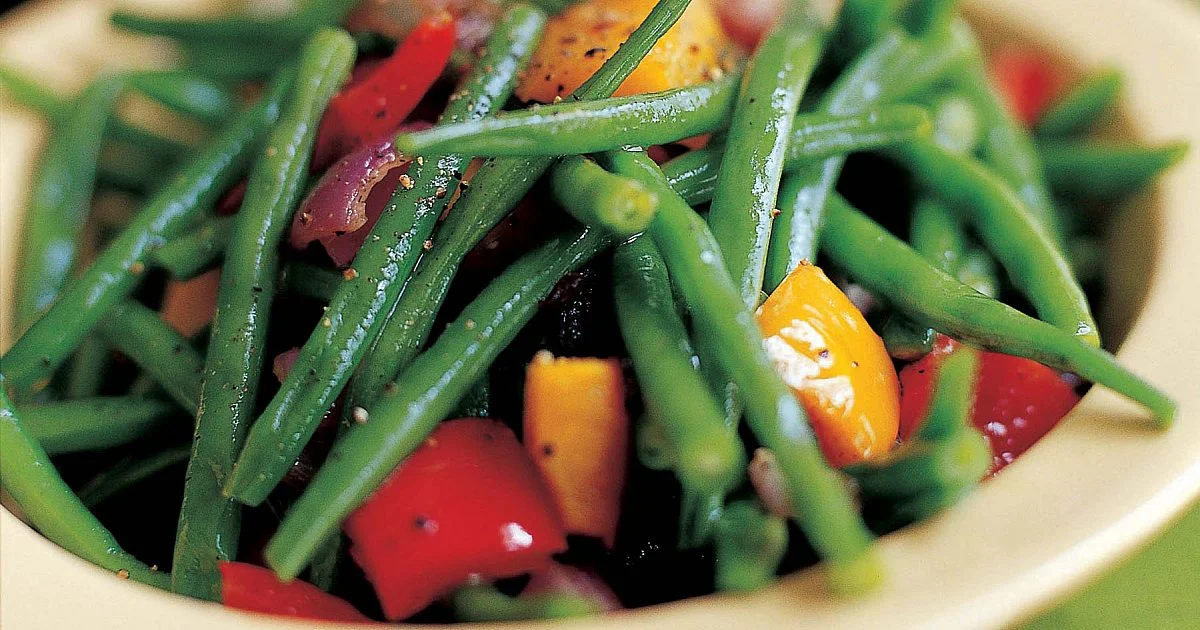
French string beans are blanched until tender-crisp, then served beneath a topping of roasted onion and peppers. The vegetables can be prepared ahead, making this colourful side dish easy to finish just before serving.
Ingredients
- 454 g (1 lb)French green beans, ends trimmed
- not specifiedonion
- not specifiedbell peppers
- 30 ml (2 tablespoons), plus a little for the panolive oil
- to tastesalt
- to tasteblack pepper
- as neededice
- as neededwater
Instructions
- 1
Preheat the oven
Heat the oven to 220°C (425°F).
- 2
Blanch the beans
Bring a large pot of salted water to the boil and cook the beans for 4 minutes. Drain them straight away and plunge them into a large bowl of ice water to stop the cooking. Once cool, drain and set aside.
- 3
Roast the vegetables
Toss the onion and bell peppers in a large bowl with 30 ml (2 tablespoons) of olive oil, then season generously with salt and pepper. Spread them in a single layer on a baking sheet and roast for about 15 minutes, turning them occasionally with a spatula so they cook evenly.
- 4
Finish and serve
Just before serving, warm the beans in a large sauté pan with a little olive oil. Season with salt and pepper, arrange them on a platter and spoon the roasted vegetables over the top. Serve hot or at room temperature.
What are French string beans?
French string beans are slender green beans, often called haricots verts. Green beans are widely used in French cooking, where they can be served simply as a vegetable side or combined with other seasonal produce.
This version pairs briefly blanched beans with roasted onion and bell peppers. The contrast between the beans’ fresh bite and the softer, sweet roasted vegetables gives the dish its appeal.
Nutrition and macros by portion
The nutrition label shows one serving as written: 110 calories, 3g protein, 12g carbs, 7g fat.
| Portion | Adjustment | kcal | Protein | Carbs | Fat |
|---|---|---|---|---|---|
| Lighter | Use less olive oil | 77 kcal | 2g | 8g | 5g |
| This serving | As written | 110 kcal | 3g | 12g | 7g |
| Hungry | Serve a larger portion | 165 kcal | 5g | 18g | 11g |
The beans, onion and peppers provide most of the carbohydrates and fibre, while olive oil contributes most of the fat. The vegetables provide a modest amount of protein; serve the beans alongside a protein-rich main and a starch to make a more substantial plate.
Blanching the beans
Salted water: cook the beans for the specified 4 minutes, then drain them promptly. The ice-water plunge halts the cooking and helps them keep their colour and firm texture.
Ahead of time: the beans can be blanched and cooled before the vegetables are roasted. Drain them well so excess water does not dilute the seasoning when they are warmed.
Roasting the topping
Single layer: spread the onion and peppers across the baking sheet rather than piling them up. Space gives them a better chance to roast instead of steaming.
Even cooking: toss the vegetables occasionally during their roughly 15 minutes in the oven. They are ready when softened and lightly coloured.
Finishing the beans
Gentle reheating: warm the beans in a sauté pan with only a little oil, just until heated through. They have already been cooked, so prolonged pan time can make them limp.
Seasoning: taste the beans after warming and adjust the salt and pepper before arranging them on the platter. The roasted vegetables go over the top rather than being mixed in during cooking.
Serving temperature and timing
Serve the dish hot or at room temperature, as the method allows. For the best contrast, finish warming the beans shortly before bringing the platter to the table.
The recipe gives a roasting time of about 15 minutes and a blanching time of 4 minutes; the overall preparation time is not specified.
What to serve alongside
These beans work well as a vegetable side with roast chicken, fish or a savoury tart. Their peppery, gently sweet topping also pairs neatly with simple grains or potatoes.
For a balanced plate, add a protein-rich main and a starch such as bread, rice or potatoes.
Recipe notes & tips
- Have the bowl of ice water ready before the beans finish blanching so you can cool them straight away.
- Trim both ends of the beans before cooking, as directed in the ingredient list.
- Spread the vegetables out on the baking sheet to encourage roasting rather than steaming.
- Turn the vegetables from time to time so they cook evenly.
- Warm the beans only briefly before serving to preserve their crisp-tender texture.
Variations
- Add garlic: toss a little chopped garlic with the onion and peppers before roasting.
- Use one pepper colour: choose red, yellow or orange bell peppers for a simpler topping.
- Add lemon: finish the platter with a squeeze of lemon juice for a brighter flavour.
- Include fresh herbs: scatter chopped parsley over the vegetables just before serving.
- Add toasted almonds: sprinkle them over the platter for a crunchy contrast.
Common mistakes to avoid
- Overcooking the beans: stick to the 4-minute blanch and cool them immediately in ice water.
- Skipping the ice bath: plunge the drained beans into ice water to stop them cooking further.
- Crowding the baking sheet: spread the vegetables in a single layer so they can roast evenly.
- Leaving the beans too long in the pan: reheat them only just before serving to avoid a soft texture.
- Underseasoning: taste the beans and vegetables and adjust the salt and pepper before serving.
How to store
Refrigerate leftovers in a covered container and use within 3 days. Reheat gently in a pan until warmed through, or serve at room temperature; the beans may soften after storage.
Frequently asked questions
Can I prepare the beans ahead?
Yes. Blanch and cool them in the ice bath, then drain and refrigerate until needed. Warm them in the sauté pan just before serving.
How do I know when the beans are done?
After 4 minutes, they should be tender but still have some bite. Cool them promptly to prevent carryover cooking.
Can I serve this dish at room temperature?
Yes. The recipe specifically allows for serving it hot or at room temperature.
Can I use ordinary green beans?
Yes. Trim them as directed and check their texture as they blanch, since thicker beans may need a little longer to become tender-crisp.
What can I use instead of the oven?
The method relies on roasting the onion and peppers, so an oven gives the intended result. If you do not have one, you can cook the vegetables in a pan until softened and lightly browned, though the texture will differ.
Cook it from the original
This recipe comes from barefootcontessa.com. Their page has the author’s own photos, notes and tips — the best place to cook it from.
Open the recipe on barefootcontessa.com