
Burghul & Freekeh Pilaf
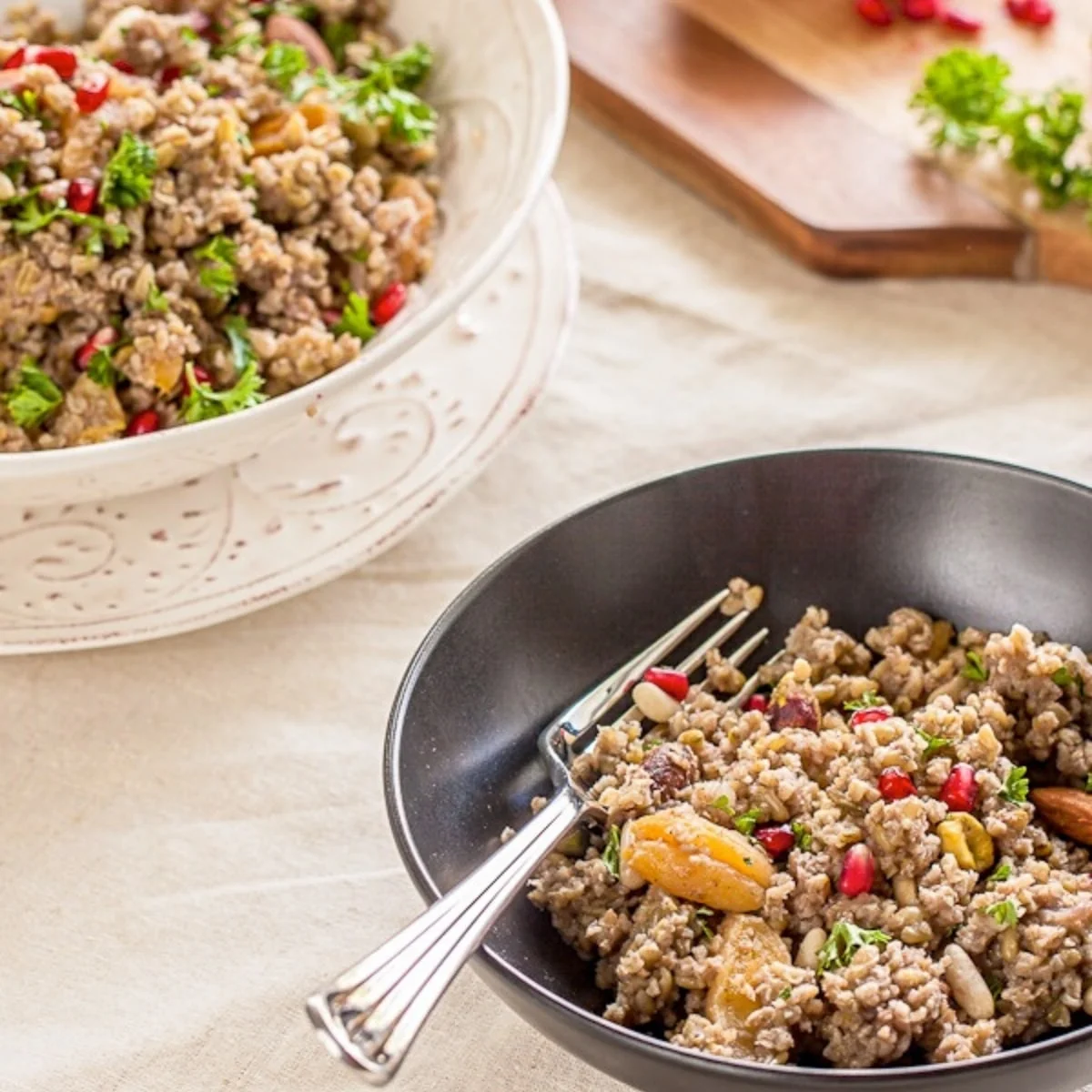
This pilaf combines coarse burghul and freekeh with vegetable stock, orange, dried apricots and toasted-tasting nuts. It makes a colourful, warmly spiced centrepiece or side, finished with fresh pomegranate and parsley.
Ingredients
- 4 tbsp (60 ml)olive oil
- ½red onion, chopped
- 180 g (1 cup)coarse burghul
- 180 g (1 cup)freekeh
- 710 ml (3 cups)vegetable stock
- 1 tspallspice
- 1orange, zested and juiced
- 80 g (½ cup)dried apricots, sliced
- 70 g (½ cup)pine nuts
- 60 g (½ cup)pistachios
- 70 g (½ cup)almonds
- to tastesalt and black pepper
- seeds from 1pomegranate, to garnish
- 30 g (½ cup)parsley, roughly chopped, to garnish
Instructions
- 1
Rinse the grains
Rinse the freekeh and burghul, then leave them to drain in a fine sieve.
- 2
Cook the pilaf
Set a medium pot over medium heat and add the olive oil and onion. Sauté until the onion is soft. Add the burghul and freekeh and toss to coat them in the oil, then pour in the stock. Add the orange zest and juice, allspice, apricots, salt and pepper. Bring to the boil, reduce to a simmer and stir in half of the pine nuts, almonds and pistachios. Cover and cook for 15 minutes.
- 3
Garnish and serve
Transfer the pilaf to a platter or large bowl. Garnish with the fresh pomegranate seeds, parsley and remaining nuts.
What is burghul and freekeh pilaf?
Pilaf is a family of grain dishes cooked with seasoned liquid and aromatics; versions are found across a wide area from the Middle East to Central and South Asia. Burghul is cracked wheat, while freekeh is green wheat that has been roasted and rubbed.
Here, two grains share the pot with vegetable stock, orange and dried apricots. Nuts add richness, and fresh pomegranate and parsley bring a bright finish.
Nutrition and macros by portion
The nutrition label shows one serving as written: 255 calories, 7g protein, 23g carbs, 16g fat.
| Portion | Adjustment | kcal | Protein | Carbs | Fat |
|---|---|---|---|---|---|
| Lighter | Use fewer nuts | 179 kcal | 5g | 16g | 11g |
| This serving | As written | 255 kcal | 7g | 23g | 16g |
| Hungry | Serve a larger portion | 383 kcal | 11g | 35g | 24g |
The burghul, freekeh and dried apricots provide most of the carbohydrates, while olive oil and the mixed nuts contribute much of the fat. The grains and nuts also supply protein. Pair a serving with a generous portion of vegetables or salad for a more balanced plate.
The grains and stock
Rinsing: Rinse both grains and drain them well before they go into the pot, as the method directs.
Vegetable stock: Stock provides the cooking liquid and savoury base. Use a well-seasoned stock, then add salt carefully because stock saltiness varies.
Building flavour in the pot
Soft onion: Sauté the onion in olive oil until soft before adding the grains; this gives the pilaf an aromatic starting point.
Orange and allspice: Orange zest and juice bring citrus fragrance, while allspice adds warm spice. Dried apricots contribute sweet, chewy pieces.
Getting the texture right
Gentle simmer: Once the stock boils, lower the heat before covering the pot and cooking for 15 minutes. A steady simmer helps the grains cook without vigorous bubbling.
Doneness: The recipe specifies a 15-minute covered cook. Check that the grains are tender before serving; if they need longer, continue cooking gently until they are.
Nuts and finishing touches
In the pot: Half of the pine nuts, almonds and pistachios cook with the grains, distributing their flavour through the pilaf.
As garnish: Keep the remaining nuts for the top, alongside the fresh pomegranate seeds and parsley. Add these after cooking so their colour and texture stand out.
Serving the pilaf
Serve it warm as a vegetarian main or alongside roasted vegetables, a crisp salad or a dish of yoghurt. The grains and nuts make it substantial, while the citrus and pomegranate help balance their richness.
For a generous table, place the pilaf in a wide serving bowl so the garnishes remain visible and easy to share.
Recipe notes & tips
- Drain the rinsed grains well so excess water does not affect the cooking liquid.
- Soften the onion over medium heat rather than browning it quickly.
- Stir the grains through the oil before adding the stock so they are evenly coated.
- Keep the pot covered during the 15-minute simmer.
- Reserve half the nuts and all the fresh garnishes for the final topping.
Variations
- More herbs: Add extra chopped parsley at the table for a fresher finish.
- Different citrus: Use a little lemon zest and juice in place of some orange for a sharper note.
- Nut swap: Replace one of the nuts with an equal amount of another variety you enjoy.
- Fruit change: Use chopped dried dates instead of apricots for a deeper sweetness.
- Extra vegetables: Serve with roasted vegetables alongside rather than changing the pilaf method.
Common mistakes to avoid
- Skipping the rinse: Rinse both grains first and let them drain in a fine sieve.
- High heat throughout: Reduce the heat to a simmer after the stock comes to the boil.
- Lifting the lid repeatedly: Keep the pot covered for the 15-minute cooking time.
- Adding all the nuts at once: Reserve half for the garnish so the finished dish has varied texture.
- Garnishing too early: Add the pomegranate and parsley after transferring the cooked pilaf to its serving dish.
How to store
Cool leftovers promptly and refrigerate them in a covered container for up to 3 days. Reheat until steaming hot, adding a small splash of water or stock if the grains have dried out; add fresh garnishes just before serving.
Frequently asked questions
Can I prepare the pilaf ahead?
Yes. Cook the pilaf ahead and refrigerate it, then reheat until steaming hot. Add the pomegranate, parsley and reserved nuts just before serving.
How do I know when the grains are cooked?
After the 15-minute covered simmer, taste both grains. They should be tender; if they are still firm, continue cooking gently until ready.
Can I use chicken stock instead?
Yes, though the recipe uses vegetable stock and chicken stock would make the dish non-vegetarian. Keep the quantity the same.
Can I use dried pomegranate seeds?
The recipe finishes with fresh pomegranate seeds. Dried seeds can be used if that is what you have, but they will give a chewier, more concentrated garnish.
What can I serve with this pilaf?
Serve it with a crisp salad, roasted vegetables or yoghurt. It can also be a side dish alongside other vegetarian dishes.
Can I make the pilaf without nuts?
You can leave them out, though they provide richness and crunch. Add extra parsley or pomegranate for a colourful finish.
Cook it from the original
This recipe comes from deliciouseveryday.com. Their page has the author’s own photos, notes and tips — the best place to cook it from.
Open the recipe on deliciouseveryday.com