
Mediterranean Flatbread with Flaky, Phyllo Crust
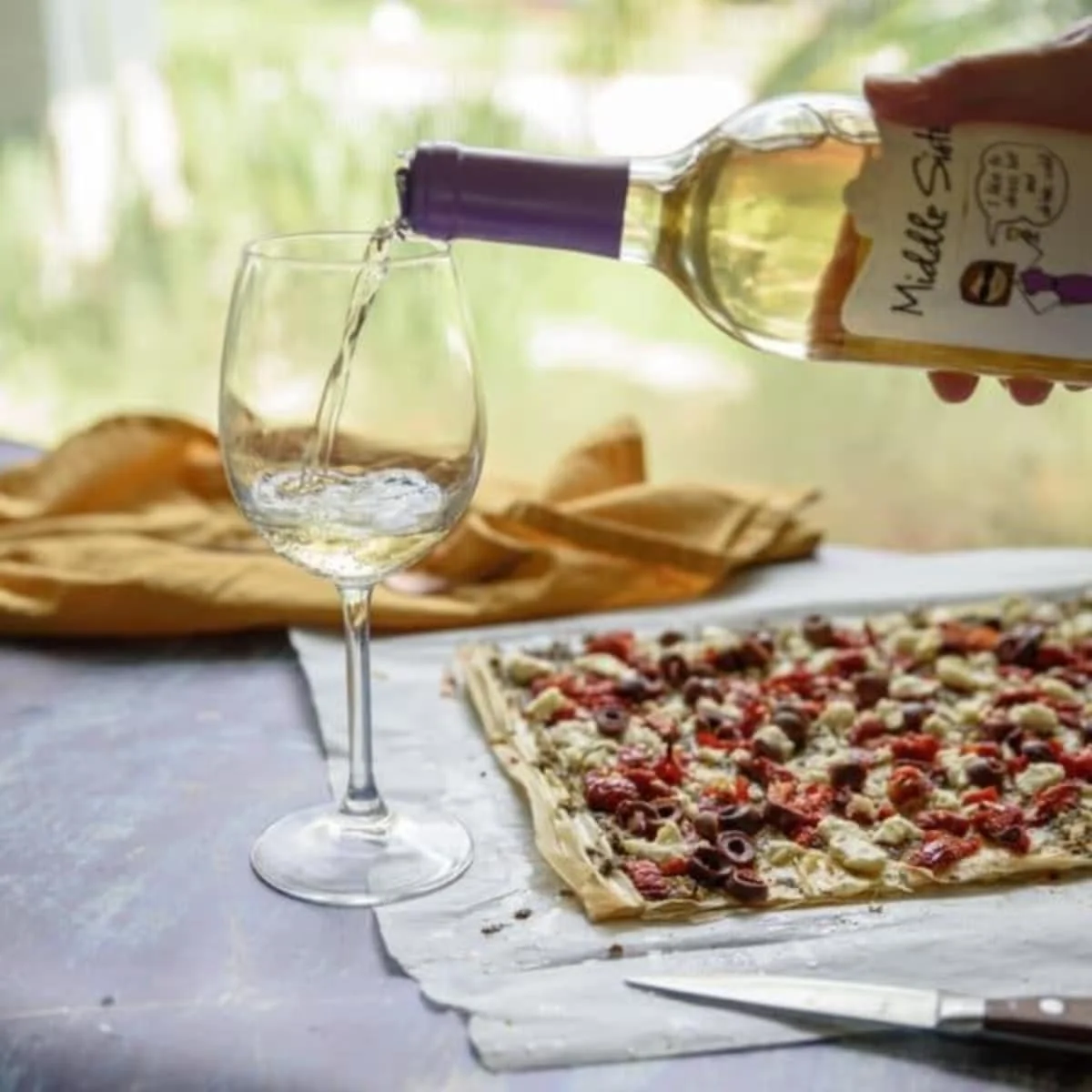
This Mediterranean-style flatbread layers buttery, crisp phyllo with pesto, feta, Kalamata olives and sun-dried tomatoes. It comes together quickly and makes a colourful appetiser or light meal.
Ingredients
- 227 g (8 oz; 1 roll)phyllo dough
- 113 g (½ cup), meltedbutter
- 60 ml (¼ cup)pesto
- 67 g (⅔ cup), crumbledfeta cheese
- 75 g (½ cup), slicedKalamata olives
- 35 g (¼ cup), juliennedsun-dried tomatoes
Instructions
- 1
Heat the oven
Preheat the oven to 190°C (375°F).
- 2
Prepare the tray
Line a baking sheet with baking parchment.
- 3
Butter the phyllo
Place one sheet of phyllo on the lined baking sheet and lightly brush it with melted butter.
- 4
Layer the sheets
Place another sheet on top and brush it lightly with butter. Repeat with the remaining sheets, brushing each one as you stack it.
- 5
Spread the pesto
Spread the pesto evenly over the top layer of phyllo.
- 6
Add the toppings
Scatter the crumbled feta, sliced Kalamata olives and sun-dried tomatoes over the pesto.
- 7
Bake until golden
Bake for 12–15 minutes, keeping a close eye on it. It is ready when the phyllo crust is golden brown.
What is Mediterranean flatbread?
Flatbread is a broad family of breads found across many cuisines, including those around the Mediterranean. This version swaps a usual bread base for layers of delicate phyllo, then adds familiar Mediterranean-style flavours from pesto, feta, olives and tomatoes.
The result is crisp and flaky rather than chewy, with salty, savoury toppings. A short bake brings the layers together without needing to make or prove dough.
Nutrition and macros by portion
The nutrition label shows one serving as written: 360 calories, 6g protein, 24g carbs, 26g fat.
| Portion | Adjustment | kcal | Protein | Carbs | Fat |
|---|---|---|---|---|---|
| Lighter | Use less butter | 252 kcal | 4g | 17g | 18g |
| This serving | As written | 360 kcal | 6g | 24g | 26g |
| Hungry | Serve with bean salad | 540 kcal | 9g | 36g | 39g |
The phyllo and sun-dried tomatoes provide most of the carbohydrate, while the butter and pesto contribute much of the fat. Feta adds some protein, though the portion is not especially protein-rich; serve a piece with beans or another protein-rich side to make a more balanced plate.
Why use phyllo?
Thin layers: Phyllo sheets become crisp and delicate when stacked with butter between them. Handle them gently, since the sheets can tear easily.
Building the layers
Butter: Brush each sheet lightly so the layers bake into a flaky crust. Too much butter can leave the base heavy rather than crisp.
Even stacking: Keep the sheets aligned on the baking parchment and spread each brush of butter across the surface. This helps the crust brown more evenly.
Balancing the toppings
Pesto: Spread it across the top layer in an even coating, leaving the phyllo supported beneath it. This gives each portion a similar base of flavour.
Salty toppings: Feta and Kalamata olives bring plenty of savoury character, while the sun-dried tomatoes add a concentrated tomato flavour. Distribute them across the surface rather than piling them in one spot.
How to tell when it is done
Colour cue: The recipe gives a 12–15 minute bake, but the best guide is the phyllo itself. Take the flatbread out when the crust has turned golden brown.
Keep watch: Phyllo is thin and can go from lightly coloured to too dark quickly. Check it closely towards the end of the baking time.
Serving ideas
Cut the flatbread into pieces and serve it warm, while the phyllo is crisp. It works as an appetiser to share or as a light meal alongside a green salad.
For a more filling plate, pair it with a bowl of soup or add a simple salad with beans for extra substance.
Recipe notes & tips
- Keep unused phyllo sheets covered while you work so they do not dry out.
- Brush the sheets lightly rather than soaking them with butter.
- Spread the pesto right to the edges for an even layer of flavour.
- Distribute the toppings evenly so each piece gets some of each.
- Watch the crust closely during the final minutes of baking.
Variations
- Add fresh herbs: Scatter chopped parsley or oregano over the flatbread after baking.
- Try a different pesto: Use a basil or sun-dried tomato pesto in place of the listed pesto.
- Add greens: Top with a handful of rocket after baking for a fresh contrast.
- Include artichokes: Add drained, chopped artichoke hearts with the other toppings.
- Make it spicier: Add a pinch of chilli flakes over the toppings before baking.
Common mistakes to avoid
- Dry phyllo: Keep the waiting sheets covered while layering so they remain workable.
- Heavy buttering: Brush on a thin coating rather than leaving pools between the sheets.
- Uneven layers: Align each sheet on the tray so the crust bakes more consistently.
- Topping overload: Spread the toppings out in a moderate layer so they do not weigh down the phyllo.
- Overbaking: Check the flatbread closely and remove it once the crust is golden brown.
How to store
For the best crisp texture, eat it soon after baking. If you have leftovers, refrigerate them in a covered container for up to 2 days and reheat in the oven until warm; the phyllo may soften in storage.
Frequently asked questions
Can I assemble it ahead of time?
It is best assembled just before baking, since pesto and toppings can soften the phyllo if left on it for too long. You can prepare the toppings in advance and layer them when ready to bake.
Can I use frozen phyllo?
Yes. Thaw it according to the packet instructions before using, and keep the sheets covered as you work.
How do I stop the phyllo from tearing?
Handle each sheet gently and keep the unused sheets covered so they do not dry out. Small tears are fine; the stacked layers will still form the crust.
Can I make this without olives?
Yes. Leave them out or replace them with another topping you enjoy, such as chopped artichokes. The flavour will change, but the phyllo method stays the same.
How should I reheat leftovers?
Reheat them in the oven until warmed through to help revive the crispness. A microwave warms the flatbread but is more likely to leave the phyllo soft.
Cook it from the original
This recipe comes from deliciouseveryday.com. Their page has the author’s own photos, notes and tips — the best place to cook it from.
Open the recipe on deliciouseveryday.com