
Los Tres Golpes [Video+Recipe] Dominican Breakfast
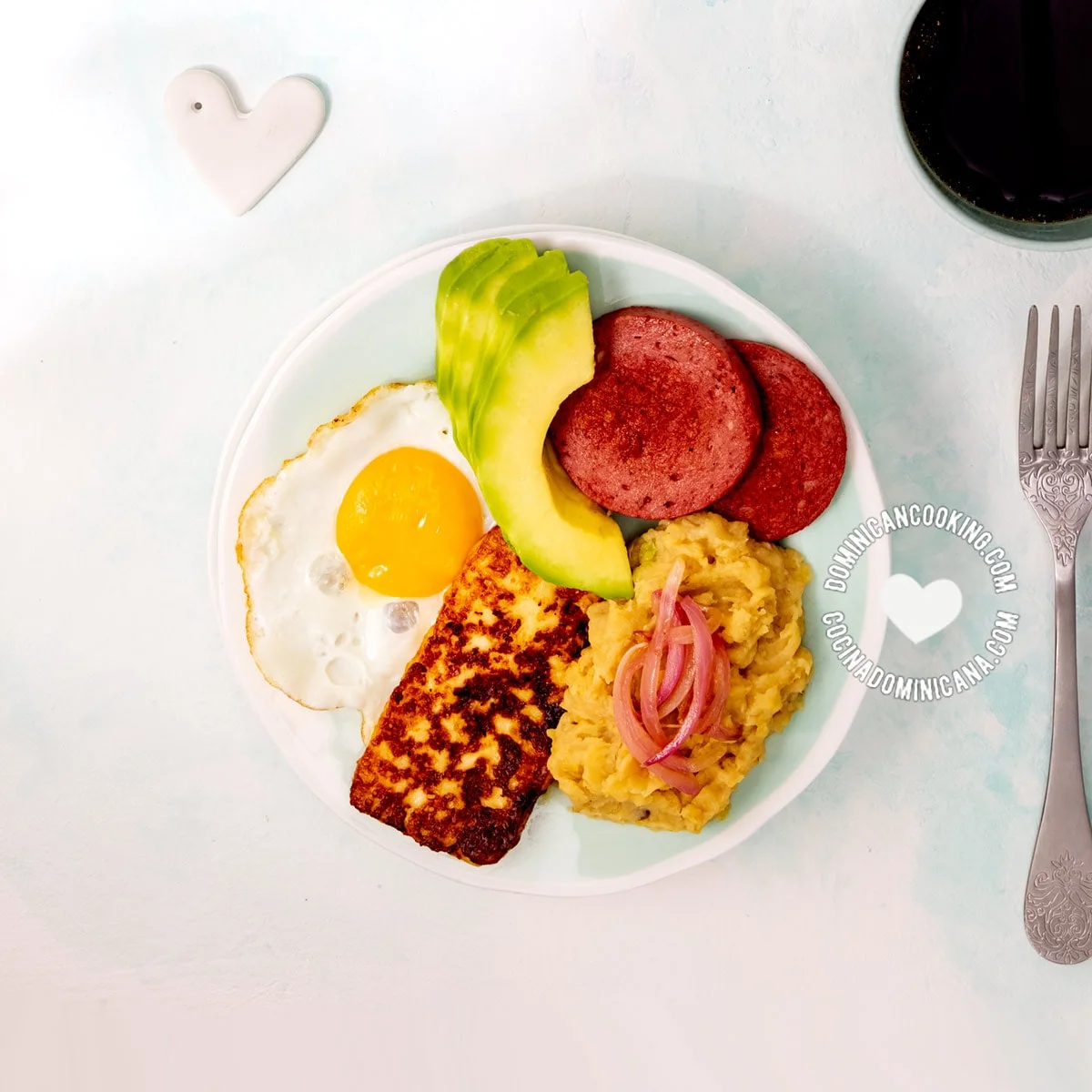
Los Tres Golpes is a hearty Dominican breakfast of mangú, fried cheese, salami and eggs, served with onions softened in vinegar. It brings together creamy, savoury and crisp textures in a substantial plate.
Ingredients
- 4green, unripe plantains, peeled and chopped
- 7.5 ml (1½ tsp)salt
- 20 ml (4 tsp)olive oil or butter
- 240 ml (1 cup)water, at room temperature
- 30 ml (2 tablespoons)olive oil
- 60 ml (4 tablespoons)olive oil
- 2 largered onions, thinly sliced
- 30 ml (2 tablespoons)apple cider vinegar
- 5 ml (1 teaspoon), or more to tastesalt
- 12 mediumeggs
- 240 ml (1 cup)oil for frying, also used for the salami and cheese
- 454 g (1 pound)queso de freír or plain halloumi
- 454 g (1 pound)Dominican-style salami, thinly sliced
Instructions
- 1
Cook and mash
Peel and boil the plantains in a large pot. Mash them in a large bowl with a fork or potato masher to make mangú.
- 2
Sauté the onions
Cook the onions over low heat, then add the vinegar, salt and pepper.
- 3
Fry the cheese
Fry the cheese until golden brown and crisp.
- 4
Fry the eggs
Heat oil in a non-stick frying pan over medium heat. Fry the eggs one at a time, sunny-side up.
- 5
Fry the salami
Heat oil over medium-high heat and fry the salami, turning it halfway through, until browned on both sides. Transfer it to a paper towel to absorb excess oil.
What is Los Tres Golpes?
Los Tres Golpes is a classic Dominican breakfast built around mangú, mashed green plantains, with fried cheese, salami and eggs. Its name means “the three hits”, commonly referring to the three accompaniments served with the plantain base.
This version combines soft, starchy mangú with salty, browned toppings and tangy onions. The different textures and flavours make it a filling meal for breakfast or brunch.
Nutrition and macros by portion
The nutrition label shows one serving as written: 978 calories, 47g protein, 44g carbs, 69g fat.
| Portion | Adjustment | kcal | Protein | Carbs | Fat |
|---|---|---|---|---|---|
| Lighter | Less frying oil | 685 kcal | 33g | 31g | 48g |
| This serving | As written | 978 kcal | 47g | 44g | 69g |
| Hungry | Larger portion | 1467 kcal | 71g | 66g | 104g |
The plantains supply most of the carbohydrates, while the eggs, cheese and salami contribute much of the protein and fat; the frying oil adds further fat. For a more balanced plate, serve a smaller share of the fried accompaniments alongside a generous portion of vegetables or fruit.
The plantain base
Green plantains: These are starchy and less sweet than ripe plantains, which is why they make a savoury mash. Boil them until tender enough to mash, then work them while warm.
Getting smooth mangú
Mashing: Use a fork or potato masher in a large bowl, breaking up the plantain pieces as you go. Add the listed water and olive oil or butter as you mash, aiming for a soft consistency rather than leaving large chunks.
Tangy onions
Low heat: Cook the thinly sliced onions gently so they soften without quickly browning. The vinegar adds a sharp counterpoint to the rich eggs, cheese and salami.
Seasoning: The method mentions pepper, although it is not included in the ingredient list. If using it, season to taste; the listed salt is also adjustable.
Frying the accompaniments
Cheese: Queso de freír and halloumi are both suited to frying. Let the pieces turn golden and crisp before taking them out.
Salami: Brown the slices on both sides, turning them halfway through. Resting them on paper towel helps remove excess surface oil.
Eggs and serving
Sunny-side up: Fry the eggs individually in a non-stick pan over medium heat, as directed. This keeps the yolks intact and gives you control over each egg.
To serve: Spoon the mangú onto plates and serve it with the onions, cheese, salami and eggs. The recipe does not specify plating quantities, so divide the components according to appetite.
Recipe notes & tips
- Use green plantains rather than ripe ones for a savoury mangú.
- Mash the plantains while they are still warm for easier handling.
- Keep the onions over low heat so they soften without scorching.
- Fry the eggs one at a time, as the method directs.
- Give the fried salami a brief rest on paper towel before serving.
Variations
- Use halloumi: Choose plain halloumi if queso de freír is unavailable.
- Choose butter: Use the listed butter instead of olive oil when mashing the plantains.
- Adjust the onions: Add more or less of the listed salt to suit your taste.
- Serve the eggs differently: Cook them to your preferred doneness while keeping the same pan method.
- Scale the plate: Divide the toppings unevenly to suit different appetites.
Common mistakes to avoid
- Using ripe plantains: They are sweeter and softer; choose green, unripe plantains for this mash.
- Leaving large chunks: Mash thoroughly with a fork or potato masher for a more even texture.
- Browning the onions too quickly: Keep the heat low so they soften gently.
- Crowding the cheese: Fry in batches if needed so the pieces can turn golden and crisp.
- Skipping the salami turn: Flip the slices halfway through so both sides brown.
How to store
Refrigerate leftover components promptly in separate airtight containers and use within 3 days. Reheat the mangú and accompaniments until hot; fry fresh eggs for the best texture.
Frequently asked questions
Can I use halloumi instead of queso de freír?
Yes. The ingredient list gives plain halloumi as an alternative; fry it until golden and crisp.
Can I make the mangú ahead?
It is best freshly mashed, but you can refrigerate leftovers and reheat them until hot. Add a little water while reheating if the mash has become too firm.
What does the method mean by pepper?
The onion instructions mention pepper, but the ingredient list does not specify an amount. Add it to taste if you want to include it.
Can I fry the eggs in the same oil as the other ingredients?
The recipe lists oil for frying and directs you to heat oil for the eggs. For cleaner flavours and easier cooking, use a separate non-stick pan for the eggs.
How do I know when the cheese is ready?
Take it out when the outside is golden brown and crisp, as specified in the method.
Can I serve Los Tres Golpes for lunch?
Yes. It can be served as a filling brunch or lunch as well as breakfast.
Cook it from the original
This recipe comes from dominicancooking.com. Their page has the author’s own photos, notes and tips — the best place to cook it from.
Open the recipe on dominicancooking.com