
Pan Telera [Video+Recipe] Easy Telera Bread
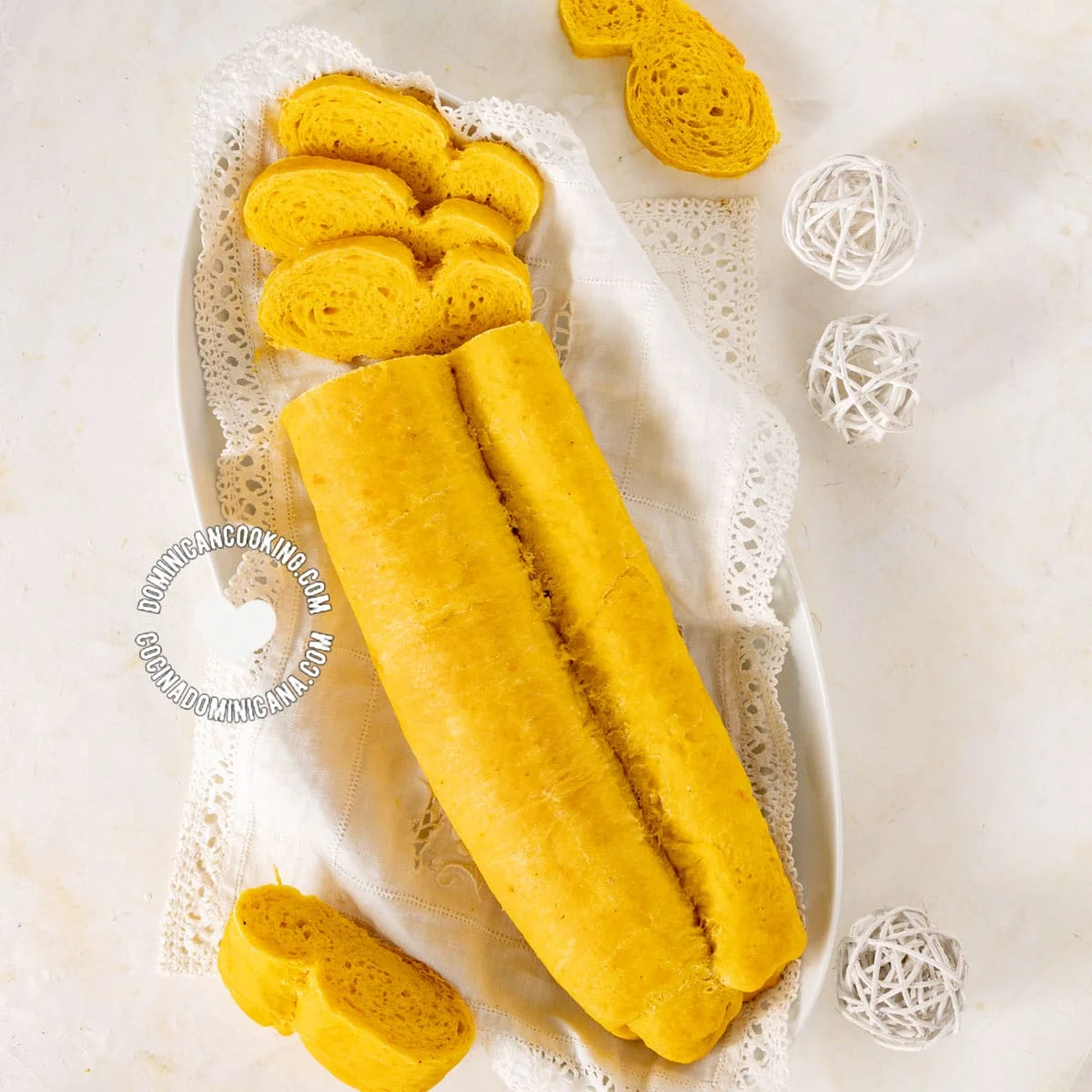
Telera is a soft, enriched Dominican bread with a golden crust and a gentle anise flavour. This home-baked version brings together a simple dough, a shaped centre seam and a long rise for a festive loaf you can make wherever you live.
Ingredients
- 240 g (2 cups), plus a little extra for workingplain flour or strong bread flour
- 8 g (2 teaspoons)white granulated sugar
- 5 g (1 teaspoon)salt
- 3 g (1 teaspoon)instant yeast
- 0.5 g (¼ teaspoon), optionalbija (annatto or achiote) powder
- 60 ml (¼ cup)cold water
- 60 ml (4 tablespoons)cold milk
- 1egg
- 57 g (¼ cup)salted butter, at room temperature
- 0.5 g (¼ teaspoon)ground sweet aniseed
Instructions
- 1
Combine ingredients
Put the flour, salt, sugar, instant yeast, egg, water and milk in the bowl of a stand mixer.
- 2
Knead the dough
Using the dough hook at medium speed, knead for 5 minutes, until the ingredients are combined and the dough is smooth. Add the butter and knead for 5 more minutes, scraping down the sides halfway through if needed. Cover the bowl with a clean kitchen towel and let the dough rest for 1 minute.
- 3
Check the dough
With wet fingers, stretch a piece of dough until it is translucent without tearing. If it is not ready, knead for 5 more minutes. The finished dough should be soft and shiny.
- 4
Add aniseed and rest
Stretch out the dough, sprinkle it with the aniseed and fold it a few times to mix it in. Shape the dough into a ball, put it in a glass or greased bowl, cover and refrigerate for 1 hour.
- 5
Shape the telera
Take the dough out of the refrigerator and lightly flour the work surface. Roll the dough into a rectangle, then roll in the long edges until they form two cylinders meeting in the centre, with one slightly larger than the other.
- 6
Let it rise
Set the loaf on a baking tray lined with parchment paper or a silicone liner, with the joined edges underneath so they do not unroll. Cover with plastic wrap or a clean towel and leave to rise for 45 minutes to 1 hour, or until doubled in size.
- 7
Heat the oven
Preheat the oven to 200°C (400°F), then reduce the temperature to 190°C (375°F).
- 8
Bake the bread
Using another baking sheet to help, turn the loaf so the rolled side faces up and transfer it straight into the oven. Bake for 20 to 30 minutes, until golden brown; if using a thermometer, the centre should reach 82–88°C (180–190°F). Remove the loaf from the tray and cool completely on a rack before serving.
What is telera bread?
Telera is a soft bread associated with Dominican Christmas celebrations. This version enriches the dough with egg, milk and butter, and seasons it with aniseed for a lightly aromatic loaf.
The shaped rolls meet along the centre, creating telera’s distinctive form. A cold rest followed by a warm proof gives the dough time to develop before baking.
Nutrition and macros by portion
The nutrition label shows one serving as written: 365 calories, 10g protein, 49g carbs, 14g fat.
| Portion | Adjustment | kcal | Protein | Carbs | Fat |
|---|---|---|---|---|---|
| Lighter | Thinner bread slices | 255 kcal | 7g | 34g | 10g |
| This serving | As written | 365 kcal | 10g | 49g | 14g |
| Hungry | Serve a larger slice | 548 kcal | 15g | 74g | 21g |
The flour supplies most of the carbohydrates, while butter and egg contribute much of the fat; the flour, milk and egg also provide protein. Pair a slice with a protein-rich savoury filling and fruit or vegetables for a more balanced plate.
Choosing the ingredients
Flour: Plain flour or strong bread flour both work here. The extra flour is just for dusting the work surface when shaping.
Flavourings: Aniseed is folded into the dough after kneading. Bija, also called annatto or achiote, is optional; it is listed among the ingredients but is not used in the supplied method.
Kneading and the windowpane test
Butter: Add it only after the first 5 minutes of kneading, so it can be worked into the dough after the other ingredients have come together. Scrape the bowl if dough is sticking to its sides.
Gluten: Stretch a small piece with wet fingers until you can see light through it without it breaking. If it tears, knead for another 5 minutes and test again.
Shaping the centre seam
Rectangle: Roll the dough out on a lightly floured surface before shaping. Keep the thickness reasonably even so the loaf rises consistently.
Joined rolls: Roll in the two long edges until they meet in the middle, making one side slightly larger. Place the join underneath on the tray to help the shape stay closed during proofing.
Proofing and baking cues
Rise: Allow 45 minutes to 1 hour for the shaped loaf to double. The dough’s growth is a better cue than the clock alone.
Bake: The loaf is ready when its crust is golden. A thermometer reading of 82–88°C in the centre is the recipe’s additional doneness check.
Serving the loaf
Cool the bread fully on a rack before slicing, as the method specifies. This gives the interior time to set rather than compressing under the knife.
Serve it as part of a festive meal or alongside a savoury spread. Its mild sweetness and aniseed note also suit a simple breakfast slice.
Recipe notes & tips
- Bring the butter to room temperature so it blends into the dough more readily.
- Use wet fingers for the windowpane test to make stretching the dough easier.
- Dust the surface lightly when shaping; too much extra flour can make the dough harder to roll.
- Keep the seam underneath when placing the loaf on the tray.
- Check for a doubled size before baking, even if the rise takes the full hour.
- Let the loaf cool completely before cutting into it.
Variations
- Skip the bija: Leave out the optional powder for a version without it.
- Use strong flour: Choose bread flour for a dough made with higher-protein flour.
- Omit the aniseed: Leave out the ground spice for a milder flavour.
- Serve with cheese: Pair slices with cheese for a savoury snack.
- Make smaller loaves: Divide the dough before shaping and keep an eye on the bake, as smaller pieces may cook sooner.
Common mistakes to avoid
- Adding butter too early: Knead the other ingredients first, then work in the butter.
- Skipping the dough test: Stretch a small piece and knead for another 5 minutes if it tears.
- Using too much bench flour: Dust lightly so the dough remains soft and workable.
- Leaving the seam exposed: Place the shaped loaf seam-side down to help prevent it opening.
- Baking before the dough doubles: Give it 45 minutes to 1 hour and use the rise as your cue.
- Cutting while hot: Cool the loaf completely on a rack before slicing.
How to store
Once completely cool, store the bread in an airtight container at room temperature and use within 2 days for the best texture. Rewarm slices briefly in a low oven or toaster.
Frequently asked questions
Can I use plain flour instead of bread flour?
Yes. The ingredient list allows either plain flour or bread flour.
Is bija essential?
No, it is marked optional in the ingredient list. The supplied method does not specify when to add it.
How do I know when the dough has risen enough?
The shaped loaf should have doubled in size, which is expected to take 45 minutes to 1 hour.
What if the dough fails the windowpane test?
Knead it for another 5 minutes, then test again by stretching a piece with wet fingers.
Can I make the dough ahead?
The method includes a 1-hour covered rest in the refrigerator. For longer storage, the supplied recipe does not give instructions.
How can I tell when the bread is baked?
Look for a golden-brown crust. If you have a thermometer, the stated internal temperature is 82–88°C.
Cook it from the original
This recipe comes from dominicancooking.com. Their page has the author’s own photos, notes and tips — the best place to cook it from.
Open the recipe on dominicancooking.com