
Pechuga a la Plancha [Video+Recipe] Juicy Grilled Chicken Breast
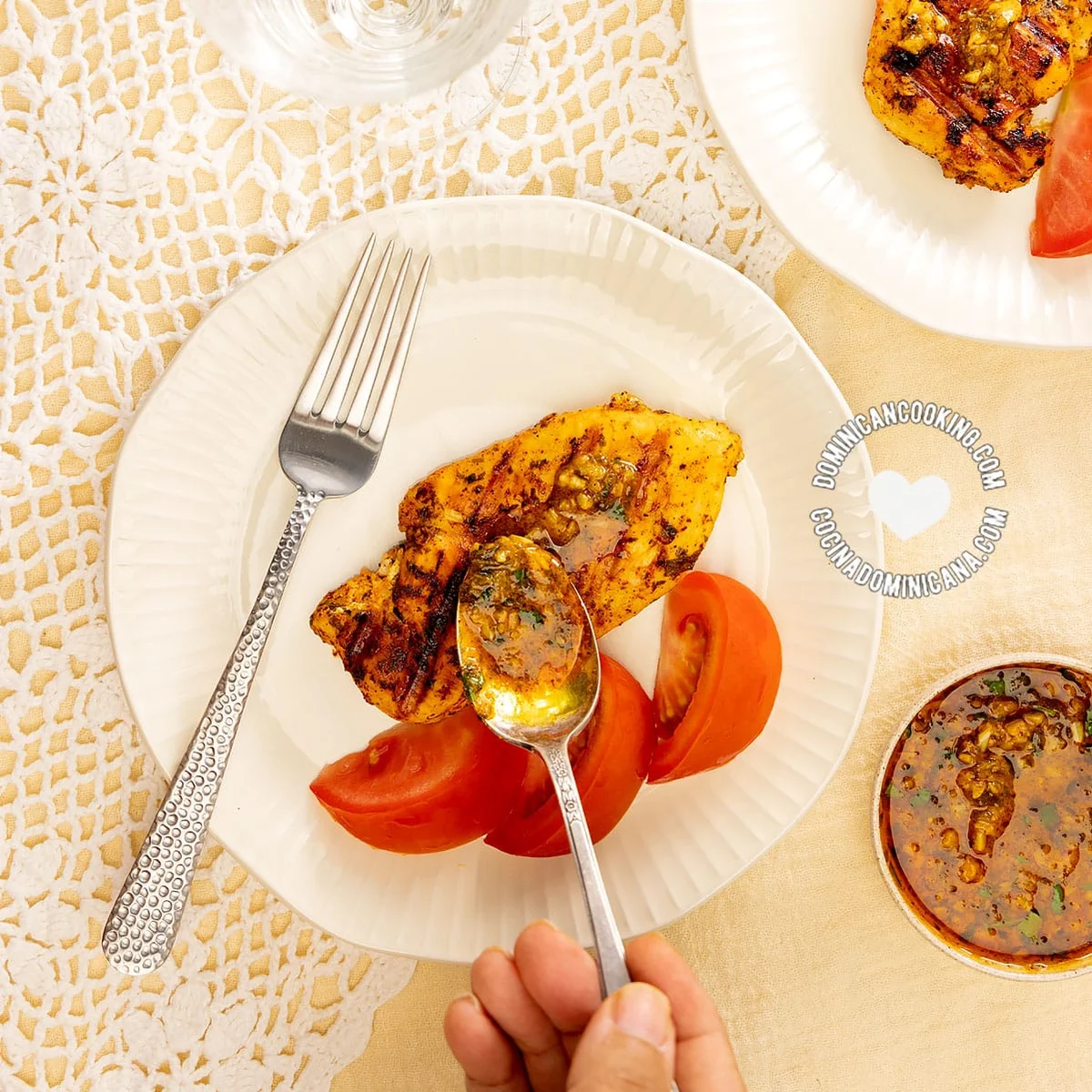
Pechuga a la plancha is chicken breast marinated with garlic, herbs, citrus and annatto, then cooked quickly on a hot grill or griddle. It is a straightforward, budget-friendly main that gets plenty of flavour from the marinade and a reduced sauce.
Ingredients
- 15 gchopped coriander (or parsley, if preferred)
- 1 headgarlic, minced
- 22.5 mlsalt
- 15 mlground black pepper
- 45 ml sour orange juice (or 60 ml lime juice)sour orange juice (or lime juice)
- 60 mlolive oil
- 15 mlground annatto
- 4boneless, skinless whole chicken breasts
Instructions
- 1
Mix the marinade
In a large bowl, combine the coriander, minced garlic, salt, black pepper, sour orange juice, olive oil and annatto. Leave the mixture to stand while you prepare the chicken.
- 2
Butterfly the chicken
Using a sharp knife, butterfly each chicken breast so that it opens out and can be divided into two separate fillets.
- 3
Marinate the chicken
Add the fillets to the bowl and turn them until coated in the marinade. Cover the bowl with a lid or cling film and refrigerate for 2–3 hours.
- 4
Cook the chicken
Heat a griddle, grill or frying pan over a high heat. Cook two or three fillets at a time, depending on the cooking surface, for 3 minutes or until lightly browned. Turn them over and cook the other side until the centre reaches 74°C (165°F), about 6 minutes in total.
- 5
Reduce the sauce
While the chicken cooks, heat the leftover marinade in a small saucepan over a medium heat until it has reduced by half. Take the pan off the heat.
- 6
Serve the chicken
Serve the chicken with the reduced sauce in a small bowl alongside.
What is pechuga a la plancha?
Pechuga a la plancha means chicken breast cooked on a hot flat surface. The name is Spanish, and this version draws on bold barbecue-style flavours rather than a complicated cooking method.
Citrus, garlic, coriander and annatto season the chicken before it is quickly grilled or griddled. Butterflying the breasts makes them into thinner fillets that cook more evenly.
Nutrition and macros by portion
The nutrition label shows one serving as written: 475 calories, 62g protein, 6g carbs, 22g fat.
| Portion | Adjustment | kcal | Protein | Carbs | Fat |
|---|---|---|---|---|---|
| Lighter | Use less oil | 333 kcal | 43g | 4g | 15g |
| This serving | As written | 475 kcal | 62g | 6g | 22g |
| Hungry | Add rice and vegetables | 713 kcal | 93g | 9g | 33g |
Chicken supplies most of the protein, while the olive oil contributes much of the fat; the small amount of carbohydrate comes mainly from the citrus and seasonings. Pair a fillet with plenty of vegetables, and add rice or potatoes if you want a more substantial plate.
The citrus marinade
Citrus: Sour orange juice gives the marinade a distinctive tang; lime juice is the suggested alternative if sour orange is unavailable. The acidity brings brightness to the garlic, herbs and spices.
Annatto: Ground annatto contributes colour and a warm, earthy note. Mix it thoroughly into the oil and juice so it coats the chicken evenly.
Prepare the chicken evenly
Butterfly carefully: Open each breast with a sharp knife, then divide it into two fillets as directed. Aim for pieces of similar thickness so they finish cooking at roughly the same time.
Marinate chilled: Cover the bowl and refrigerate the chicken for 2–3 hours. Keep the reserved marinade separate from ready-to-eat food, as it has been in contact with raw chicken.
Get a good sear
Hot surface: Heat the griddle, grill or pan well before adding the chicken. Cook only two or three fillets at once, depending on the space available, so they have room to brown.
Cook through: Start with 3 minutes on the first side, then turn the fillets. Use a meat thermometer to check that the thickest part reaches 74°C; the stated total cooking time is about 6 minutes, but thickness and heat can affect it.
Reduce the marinade safely
Small pan: While the chicken cooks, heat the leftover marinade over a medium heat and reduce it by half. Because it has held raw chicken, bring it to a thorough boil and keep it simmering as it reduces before serving.
Serve on the side: A small bowl lets everyone add as much sauce as they like. Keep it separate from the cooked chicken until serving.
What to serve with it
Fresh sides: A crisp salad, grilled vegetables or steamed greens add freshness alongside the savoury chicken. Lime wedges can echo the citrus in the marinade.
Heartier plates: Rice, potatoes or warm flatbread make the meal more substantial and pair well with the reduced sauce.
Recipe notes & tips
- Use a sharp knife and a stable chopping board when butterflying the chicken.
- Allow the pan or griddle to heat fully before adding the first fillets.
- Cook in batches rather than crowding the cooking surface.
- Check the thickest part of a fillet with a meat thermometer for doneness.
- Keep the chicken covered in the refrigerator throughout its 2–3-hour marinating time.
Variations
- Use parsley: Swap the coriander for parsley as suggested in the ingredient list.
- Choose lime: Use 60 ml lime juice instead of 45 ml sour orange juice.
- Add heat: Mix a little chilli into the marinade for a spicier finish.
- Grill outdoors: Cook the fillets on a barbecue grill instead of a griddle or frying pan.
- Serve with salad: Add a crisp green salad and lime wedges for a fresh contrast.
Common mistakes to avoid
- Crowding the pan: The fillets may not brown well; cook two or three at a time according to the available space.
- Uneven fillets: Different thicknesses can cook at different rates; butterfly each breast into similar-sized pieces.
- Guessing doneness: Colour alone is not a reliable check; measure the thickest part and cook to 74°C.
- Skipping the marinating time: The recipe calls for 2–3 hours in the fridge, so allow for this before cooking.
- Serving marinade raw: It has contacted raw chicken; heat it thoroughly and simmer it as it reduces before serving.
How to store
Refrigerate leftover cooked chicken in a covered container and use within 3–4 days. Store the sauce separately, then reheat both until piping hot; avoid keeping or reusing marinade that has not been cooked.
Frequently asked questions
Can I use lime juice instead of sour orange juice?
Yes. The recipe gives 60 ml lime juice as the alternative to 45 ml sour orange juice.
How long should the chicken marinate?
Cover it and refrigerate for 2–3 hours, as directed.
Can I cook this in a frying pan?
Yes. The method allows a griddle, grill or frying pan; heat the surface well and cook the fillets in batches.
How can I tell when the chicken is done?
Check the thickest part with a meat thermometer. It should reach 74°C (165°F).
Is it safe to serve the leftover marinade as a sauce?
Only after it has been thoroughly heated. Reduce it in a saucepan and bring it to a boil, keeping it simmering as it reduces.
Can I prepare the chicken ahead?
You can marinate it in advance for the recipe's 2–3-hour period, keeping it covered in the refrigerator. Cook it just before serving for the best texture.
Cook it from the original
This recipe comes from dominicancooking.com. Their page has the author’s own photos, notes and tips — the best place to cook it from.
Open the recipe on dominicancooking.com