
Vegetarian Bolognese Sauce
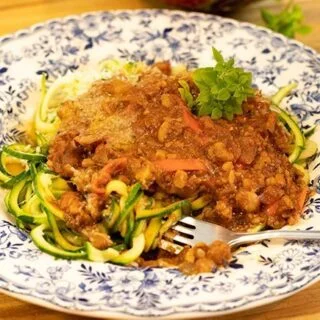
This vegetarian Bolognese is a thick, savoury tomato sauce made hearty with chickpeas and two kinds of mushrooms. Let it simmer until rich, then serve it over pasta, courgette noodles or with toasted bread.
Ingredients
- 60 ml (¼ cup)olive oil
- 1onion, finely chopped
- 1red pepper, thinly sliced
- 3 clovesgarlic, grated
- 227 g (8 oz)mushrooms, finely chopped
- 28 g (1 oz)dried porcini mushrooms
- 794 g (28 oz)tinned tomatoes, puréed
- 1 tablespoontomato purée
- 425 g (15 oz)cooked chickpeas or lentils
- to tastesalt and black pepper
- 1 teaspoondried oregano
- ¼ teaspooncrushed chilli flakes
- to garnishfresh basil
- optional, to tastegrated or shredded cheese
Instructions
- 1
Soak the porcini
Put the porcini mushrooms in a bowl and cover them with 240 ml (1 cup) hot water. Leave for 20–30 minutes, or until softened. Chop them coarsely and keep the soaking water.
- 2
Soften the onion
Warm the olive oil in a pot over medium heat. Cook the onion for about 7–8 minutes, until soft and golden.
- 3
Warm the garlic
Add the grated garlic and cook for 30–40 seconds.
- 4
Cook the mushrooms
Add the red pepper and both kinds of mushrooms. Season lightly with salt and pepper, then cook for 8 minutes or until softened.
- 5
Add the sauce
Stir in the puréed tomatoes, tomato purée, oregano, chickpeas or lentils, and reserved porcini soaking water.
- 6
Simmer until thick
Cook over medium-low heat for 30–35 minutes, until the sauce has thickened.
- 7
Adjust the seasoning
Taste the sauce and add more seasoning if needed.
- 8
Serve the sauce
Serve over pasta or courgette noodles, or alongside toasted bread.
- 9
Add the garnish
Finish with fresh basil and shredded cheese, if using.
What is vegetarian Bolognese?
Bolognese is a rich Italian-style sauce traditionally made with meat, aromatic vegetables and tomatoes, then simmered until thick. This meat-free take builds savouriness with fresh mushrooms and dried porcini instead.
Chickpeas or lentils add substance, while the porcini soaking liquid brings extra depth to the tomato base. The sauce is also well suited to making ahead, as its flavours continue to meld.
Nutrition and macros by portion
The nutrition label shows one serving as written: 235 calories, 9g protein, 31g carbs, 9g fat.
| Portion | Adjustment | kcal | Protein | Carbs | Fat |
|---|---|---|---|---|---|
| Lighter | Use less olive oil | 165 kcal | 6g | 22g | 6g |
| This serving | As written | 235 kcal | 9g | 31g | 9g |
| Hungry | Add extra chickpeas | 353 kcal | 14g | 47g | 14g |
The chickpeas or lentils supply much of the carbohydrates and plant protein, while the olive oil provides most of the fat. Tomatoes, mushrooms and pepper contribute additional carbohydrates, with cheese adding more fat and protein if used. Serve with a generous helping of vegetables alongside pasta or bread to round out the plate.
Why use two kinds of mushrooms?
Fresh mushrooms: chopping them finely helps them soften into the sauce and gives it a hearty texture.
Dried porcini: soaking rehydrates them and creates a flavourful liquid. Keep that liquid to add to the pot, but chop the softened mushrooms before cooking.
Build the flavour gently
Golden onion: give it the full 7–8 minutes to soften and lightly colour in the oil; this creates a savoury foundation.
Garlic and pepper: the garlic needs only 30–40 seconds before the other vegetables go in, while the pepper and mushrooms cook for about 8 minutes until soft.
Let the sauce thicken
Simmer: keep the heat at medium-low for 30–35 minutes so the tomatoes reduce without the sauce catching on the bottom of the pot.
Check the texture: the sauce should be noticeably thicker and hold together on a spoon. If it is still loose, continue cooking and check it regularly.
Choose a satisfying base
Pasta: spoon the sauce over cooked pasta for a classic meal. Courgette noodles are another option, while toasted bread makes a good choice for scooping up the thick sauce.
Finish: fresh basil adds a fragrant contrast, and grated cheese is an optional savoury topping.
Make it ahead
The sauce can be prepared in advance and reheated when you are ready to serve. Its flavour often develops further after resting overnight.
It also freezes well, so you can portion any extra sauce for another meal. Freeze it without pasta or bread for the most flexible leftovers.
Recipe notes & tips
- Chop the fresh mushrooms finely so they blend into the sauce.
- Save all the porcini soaking liquid and add it with the tomatoes.
- Salt the mushrooms lightly at first, then adjust the seasoning at the end.
- Stir occasionally while the sauce simmers to prevent it catching on the pot.
- For the best texture, cook the pasta separately and spoon the sauce over it.
Variations
- Use lentils: swap the chickpeas for cooked lentils for a softer, more integrated texture.
- Add more chilli: increase the crushed chilli flakes for a hotter sauce.
- Try another herb: replace the oregano with dried thyme for a different savoury note.
- Make it dairy-free: leave out the optional cheese or use a dairy-free alternative.
- Serve with polenta: spoon the sauce over cooked polenta instead of pasta.
Common mistakes to avoid
- Skipping the soaking liquid: it carries porcini flavour, so add it to the pot along with the tomatoes.
- Cooking the garlic too long: it can turn bitter; add the peppers and mushrooms after 30–40 seconds.
- Rushing the simmer: the sauce may stay thin, so cook it for the full 30–35 minutes and check its consistency.
- Adding too much salt early: season lightly at first, then taste and adjust after the sauce has reduced.
- Using whole mushrooms: large pieces can make the sauce uneven; chop the fresh mushrooms finely.
How to store
Cool the sauce and refrigerate it in a covered container for up to 3 days. Reheat gently in a saucepan, stirring occasionally, until hot throughout. Freeze in portions for up to 3 months and thaw in the fridge before reheating.
Frequently asked questions
Can I use lentils instead of chickpeas?
Yes. Use the same amount of cooked lentils as chickpeas; the sauce will have a softer texture.
Can I make the sauce ahead?
Yes. Refrigerate it after cooling, then reheat gently when needed. The flavours have time to meld as it rests.
Do I need to use the porcini soaking water?
Yes, it adds flavour to the sauce. Pour it into the pot with the tomatoes, taking care not to include any grit that may have settled at the bottom of the bowl.
What can I serve with vegetarian Bolognese?
Serve it over pasta or courgette noodles, or with toasted bread. It can also be spooned over polenta.
Can I freeze this sauce?
Yes. Freeze it in portions, ideally without pasta or bread, and thaw it in the fridge before reheating.
How do I know when the sauce is ready?
After 30–35 minutes of simmering, it should be thick rather than watery. If it still looks loose, cook it a little longer over medium-low heat.
Cook it from the original
This recipe comes from dimitrasdishes.com. Their page has the author’s own photos, notes and tips — the best place to cook it from.
Open the recipe on dimitrasdishes.com