
Puerco Asado [Video+Recipe] Pernil or Lechón Asado (Pork Roast)
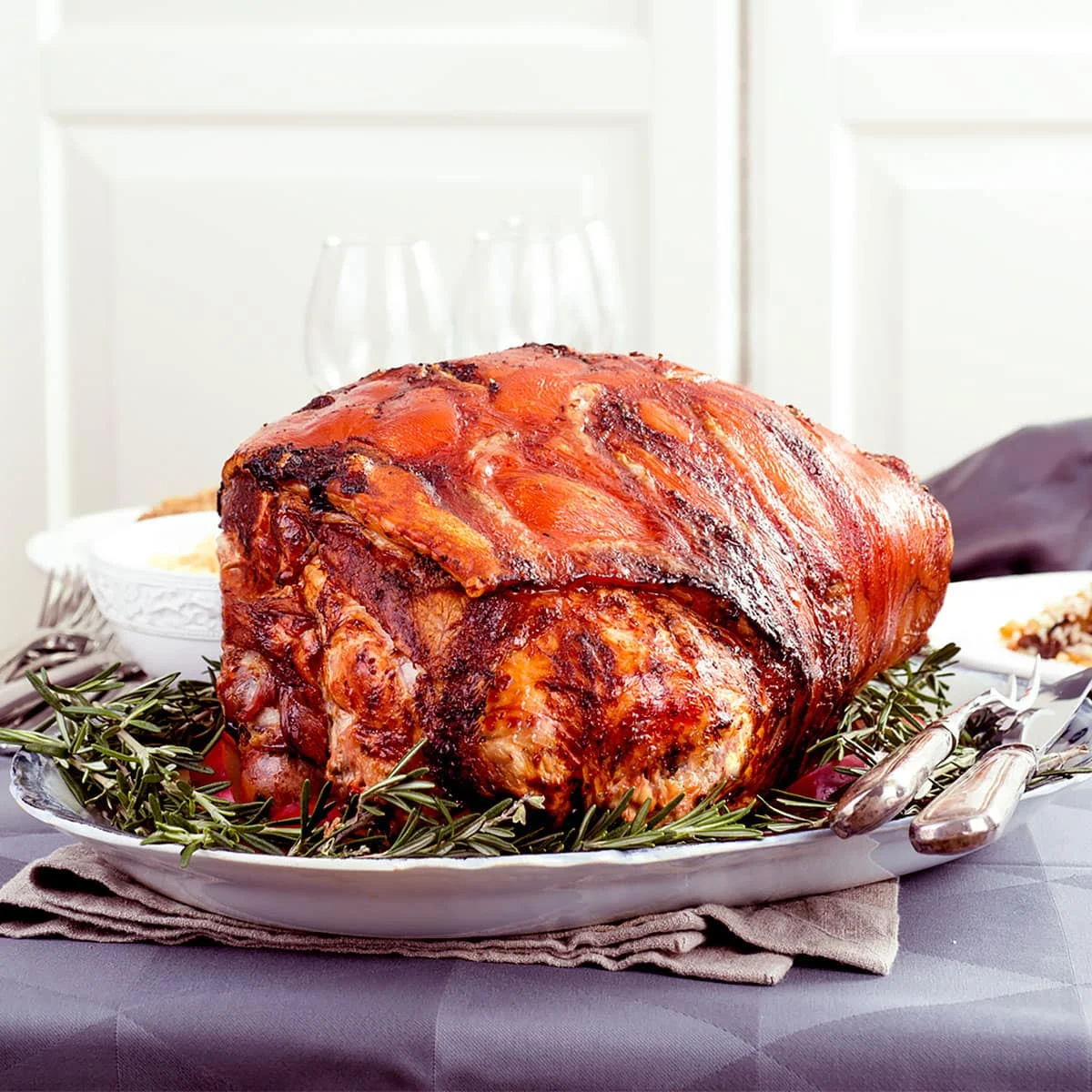
Puerco asado, also known as pernil or lechón asado, is a Dominican roast pork traditionally served for Christmas. A boldly seasoned marinade, an overnight rest and a final blast of heat for the skin make it a celebratory centrepiece.
Ingredients
- 120 ml (½ cup)pitted green olives
- 120 ml (½ cup)capers
- 1 largered onion
- 1 large head, peeledgarlic
- 4 tablespoonsdried ground oregano
- 2 tablespoonsfreshly cracked or ground pepper
- 2cubanelle peppers, diced (or green bell pepper)
- 80 ml (⅓ cup)lime juice (or sour orange juice)
- 4 tablespoonskosher salt (non-iodised sea salt)
- 5.5 kg (12 lb)bone-in pork leg or shoulder
- 3 tablespoonskosher salt (crushed non-iodised sea salt)
Instructions
- 1
Blend the seasoning
Blend the green olives, capers, chopped onion, peeled garlic, oregano, pepper, cubanelle peppers, lime juice and 4 tablespoons of kosher salt to make a coarse paste.
- 2
Season the pork
Set the pork skin-side down on a baking tray. Cut deep holes in the meat on the side opposite the skin, spacing them about 7.5 cm (3 inches) apart without piercing the skin. Use a teaspoon to pack the seasoning into the holes, then spread the rest over that side of the pork.
- 3
Rest overnight
Cover the pork tightly with aluminium foil and refrigerate for 24 hours.
- 4
Prepare to roast
Put the pork skin-side up on a roasting tray lined with aluminium foil and fitted with a wire rack. Pat the skin dry with paper towels, rub it with the remaining 3 tablespoons of salt, then loosely cover the pork with foil. Heat the oven to 175°C (350°F).
- 5
Roast the pork
Roast for 20 minutes per pound of meat, or until the centre reaches 75°C (165°F). For a 5.5 kg (12 lb) leg, start checking the temperature after 4 hours, inserting the thermometer tip into the centre. Once cooked, remove the foil and return the pork to the oven until the skin is golden brown. For bubbly, crackly skin, finish it under the grill.
- 6
Rest and serve
Take the pork out of the oven, cover it with a clean tea towel and rest for 20 to 30 minutes before serving. To keep it warm without drying it out, place it in an insulated cool box after resting and serve within two hours.
What is puerco asado?
Puerco asado is a traditional Dominican roast pork, also called pernil or lechón asado. It is especially associated with Christmas, when a large roast becomes the centrepiece of a festive meal.
This version relies on a coarse, savoury seasoning paste and a long rest so its flavours have time to work into the meat. The skin is dried and salted separately to help it brown at the end.
Nutrition and macros by portion
The nutrition label shows one serving as written: 505 calories, 82g protein, 4g carbs, 16g fat.
| Portion | Adjustment | kcal | Protein | Carbs | Fat |
|---|---|---|---|---|---|
| Lighter | Smaller pork portion | 354 kcal | 57g | 3g | 11g |
| This serving | As written | 505 kcal | 82g | 4g | 16g |
| Hungry | Larger pork portion | 758 kcal | 123g | 6g | 24g |
The pork provides most of this serving's protein and fat, while the small amount of carbohydrate comes mainly from the seasoning ingredients. Pair a portion with vegetables or salad, and add rice or beans if you want a more filling plate.
The seasoning paste
Savoury base: Olives, capers, garlic and onion give the paste its salty, aromatic character. Blend them with the oregano, pepper, cubanelle peppers, lime juice and salt until coarse rather than completely smooth.
Citrus: Lime juice brings brightness to the rich pork; sour orange juice is an alternative if you have it.
Seasoning a large joint
Deep pockets: Cut holes into the meat side, keeping them about 7.5 cm (3 inches) apart. Avoid cutting through the skin, which needs to stay intact for the roasting stage.
Even coverage: Spoon seasoning into each hole, then spread the remainder over the exposed meat side. The 24-hour refrigerated rest gives the paste time to flavour the joint.
Roasting and checking doneness
Steady heat: Roast at 175°C (350°F), allowing 20 minutes per pound as a guide. For a 5.5 kg (12 lb) leg, begin checking at 4 hours, as oven performance and the shape of the joint can affect timing.
Temperature check: Measure in the centre of the meat and look for 75°C (165°F). Keep the thermometer tip away from the bone for a useful reading.
Getting the skin crisp
Dry surface: Pat the skin thoroughly with paper towels before rubbing it with the reserved salt. Keep the seasoning paste on the meat side rather than coating the skin.
Final colour: Roast covered loosely with foil, then uncover once the pork is cooked and return it to the oven until the skin is golden. A brief finish under the grill can make the skin more blistered and crackly; watch it closely.
Resting and serving
Rest the roast for 20 to 30 minutes under a clean tea towel before carving. This gives the meat time to settle after roasting and makes serving a large joint easier.
Serve it with rice, beans, salad or roast vegetables to make a substantial meal. If holding it warm, follow the recipe's suggestion to use an insulated cool box and serve within two hours of resting.
Recipe notes & tips
- Chop the onion and garlic into pieces that blend easily with the olives and capers.
- Keep the holes on the meat side and leave the skin unpierced.
- Refrigerate the pork for the full 24-hour seasoning rest.
- Pat the skin dry before adding the reserved salt.
- Use a thermometer and start checking a 5.5 kg (12 lb) leg after 4 hours.
- Watch closely if finishing the skin under the grill, as it can brown quickly.
Variations
- Use sour orange: Replace the lime juice with sour orange juice for a different citrus note.
- Swap the pepper: Use green bell pepper instead of cubanelle peppers.
- Choose shoulder: Use a bone-in pork shoulder in place of the leg.
- Adjust the pepper: Use freshly cracked pepper for a coarser, more pronounced seasoning.
- Serve with rice: Add rice and beans alongside the roast for a more substantial meal.
Common mistakes to avoid
- Piercing the skin: Cut seasoning pockets only on the meat side so the skin remains intact.
- Shallow seasoning holes: Make deep pockets so you can fill them with the paste.
- Skipping the rest: Refrigerate the covered pork for 24 hours to give the seasoning time to permeate the meat.
- Damp skin: Pat it dry before salting so the surface is ready to brown.
- Guessing doneness: Check the centre with a thermometer and cook to 75°C (165°F).
- Leaving the roast un-rested: Cover it with a clean tea towel and rest for 20 to 30 minutes before carving.
How to store
Refrigerate leftover pork in a covered container once cool, and use within 3 to 4 days. Reheat portions until piping hot; the skin may soften, so refresh it briefly under a hot grill if needed.
Frequently asked questions
Can I make the seasoning ahead?
Yes. Blend the paste ahead and refrigerate it in a covered container. Season the pork and allow it to rest in the fridge for 24 hours as directed.
Can I use pork shoulder instead of leg?
Yes, the ingredient list allows for a bone-in shoulder. Since its shape and size may differ from a leg, use the temperature as your doneness guide and check it as it roasts.
How long does a 5.5 kg (12 lb) leg take to roast?
The recipe gives 20 minutes per pound as a guide and says to start checking a 12 lb leg after 4 hours. Roast until the centre reaches 75°C (165°F).
How do I make the skin crackly?
Pat the skin dry, rub it with the reserved salt, and uncover the pork once the meat is cooked. For a bubbly finish, put it under the grill and keep a close eye on it.
Can I prepare this without sour orange?
Yes. Lime juice is the listed option, and sour orange juice can be used in its place if available.
Can I keep the roast warm before serving?
After the 20 to 30 minute rest, the recipe suggests holding it in an insulated cool box and serving it within two hours.
Cook it from the original
This recipe comes from dominicancooking.com. Their page has the author’s own photos, notes and tips — the best place to cook it from.
Open the recipe on dominicancooking.com