
Dill Soda Bread
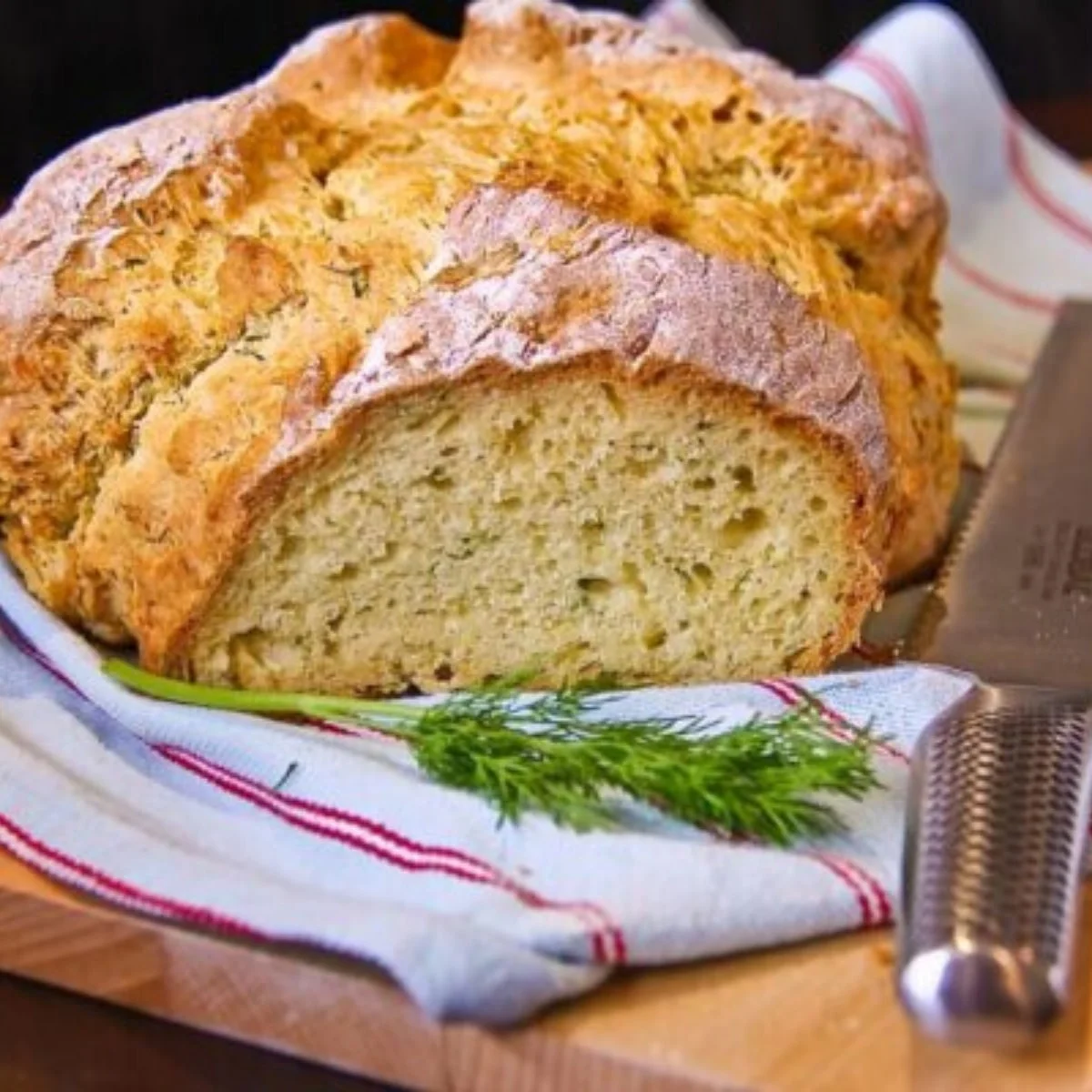
Dill soda bread is a quick Irish-style loaf raised with bicarbonate of soda and self-raising flour. Bake it until crusty, then serve warm alongside minestrone or another hearty soup.
Ingredients
- 250 g (2 cups)plain flour
- 250 g (2 cups)self-raising flour
- 57 g (4 tbsp)butter, cubed
- 10 g (2 tsp)bicarbonate of soda
- 540 ml (2¼ cups)buttermilk
- 10 g (⅓ cup)fresh dill, chopped
- 5 g (1 tsp)salt
Instructions
- 1
Preheat the oven
Heat the oven to 180°C (350°F).
- 2
Sift the dry ingredients
Sift both flours, the salt and the bicarbonate of soda into a large bowl.
- 3
Rub in butter
Add the cubed butter and rub it into the flour mixture until combined.
- 4
Mix the dough
Add the buttermilk and chopped dill, then mix to make a dough.
- 5
Prepare the surface
Cover a section of the kitchen worktop with cling film, leaving enough room to knead the dough, and dust it with flour.
- 6
Shape the dough
Turn the dough out onto the floured surface and knead it into a ball.
- 7
Score the loaf
Line a baking tray with baking paper and place the dough ball in the middle. Use a knife to score a cross in the top.
- 8
Bake the bread
Bake for 40 to 45 minutes.
What is dill soda bread?
Soda bread is a quick bread associated with Ireland, traditionally made with bicarbonate of soda rather than yeast as its raising agent. This version combines plain and self-raising flour with buttermilk and fresh dill.
The herbs give the loaf a fragrant savoury note, while the cross scored on top is a familiar feature of soda-bread shaping. It is a useful choice when you want warm bread without waiting for yeast dough to rise.
Nutrition and macros by portion
The nutrition label shows one serving as written: 639 calories, 19g protein, 100g carbs, 18g fat.
| Portion | Adjustment | kcal | Protein | Carbs | Fat |
|---|---|---|---|---|---|
| Lighter | Smaller bread slice | 447 kcal | 13g | 70g | 13g |
| This serving | As written | 639 kcal | 19g | 100g | 18g |
| Hungry | Larger bread slice | 959 kcal | 29g | 150g | 27g |
The flour supplies most of the carbohydrates, while butter contributes much of the fat and buttermilk adds protein along with the flour. Serve a slice with vegetable- and bean-rich soup to make a more balanced meal.
Why use two flours?
Plain flour: this forms part of the loaf’s flour base and balances the self-raising flour.
Self-raising flour: it contributes raising agents alongside the bicarbonate of soda, so measure it accurately and sift it evenly with the other dry ingredients.
Handle the butter and dough gently
Rub in the butter: work the cubes into the flour until distributed through the mixture. This helps prevent large pieces of butter from remaining in the dough.
Knead briefly: bring the mixture together into a ball on the floured surface. Avoid prolonged kneading; the method calls for shaping, not developing a stretchy yeast-bread dough.
What should the dough feel like?
Buttermilk: mix it in with the dill until the ingredients come together as a dough. Add it as listed, taking care to mix thoroughly rather than leaving dry flour in the bowl.
Shape: the finished dough should hold together well enough to form a ball. Dust the worktop with flour to make handling easier.
Why score a cross?
The cross is cut into the top of the shaped loaf before baking, as directed in the method. Make the score clearly with a knife without cutting the dough into separate pieces.
Place the loaf in the middle of the lined tray so it has room to bake. The baking paper also helps keep the loaf from sticking to the tray.
How to serve the loaf
Serve the bread warm with minestrone, as suggested, or alongside another soup. Its dill flavour also works well with simple savoury meals.
For a fuller plate, pair a slice with soup that includes vegetables and beans. The loaf is also easy to slice and share at the table.
Recipe notes & tips
- Sift the flours, salt and bicarbonate of soda together so they are evenly combined.
- Cut the butter into cubes before rubbing it into the flour.
- Chop the dill before mixing it into the dough.
- Dust the worktop with flour before turning out the dough.
- Line the baking tray with baking paper before placing the loaf on it.
- Score the cross before baking, not after the loaf is cooked.
Variations
- More dill: increase the chopped dill for a more pronounced herbal flavour.
- Dried dill: use dried dill if fresh is unavailable, adding it to the dry ingredients.
- Herb blend: combine the dill with another chopped soft herb for a different savoury note.
- Soup pairing: serve the loaf with a thick vegetable soup instead of minestrone.
- Toasted slices: toast leftover slices and serve them with a savoury topping.
Common mistakes to avoid
- Uneven dry mix: sift the flours, salt and bicarbonate of soda together before adding the wet ingredients.
- Large butter pieces: cube the butter and rub it through the flour mixture.
- Dry patches: mix in the buttermilk and dill until the dough comes together.
- Sticky worktop: dust the cling-film-covered surface with flour before kneading.
- Skipping the score: cut a cross into the dough ball before it goes into the oven.
- Guessing the bake: allow 40 to 45 minutes as stated in the method.
How to store
Once cooled, store the bread wrapped or in an airtight container at room temperature and eat within 2 days. Reheat slices briefly in a warm oven or toast them; freezing slices is also an option.
Frequently asked questions
Can I use only plain flour?
The recipe specifies both plain and self-raising flour, so using only plain flour would change the loaf’s raising. Follow the listed flour combination for the intended result.
Can I replace the buttermilk?
Buttermilk is part of the dough as written. A substitute may alter its texture and flavour, so use buttermilk if you can.
How do I know when the loaf is baked?
The method gives a baking time of 40 to 45 minutes. Check the loaf at the earlier end of that range and continue baking if it needs more time.
Do I need to let the dough rise?
No separate rising stage is included in this method. Shape the dough and bake it after mixing.
Can I make the dough ahead?
It is best to bake the dough soon after mixing, as the recipe includes bicarbonate of soda as a raising agent. You can measure the dry ingredients ahead, then mix in the butter, buttermilk and dill when ready to bake.
Cook it from the original
This recipe comes from deliciouseveryday.com. Their page has the author’s own photos, notes and tips — the best place to cook it from.
Open the recipe on deliciouseveryday.com