
Pita Bread
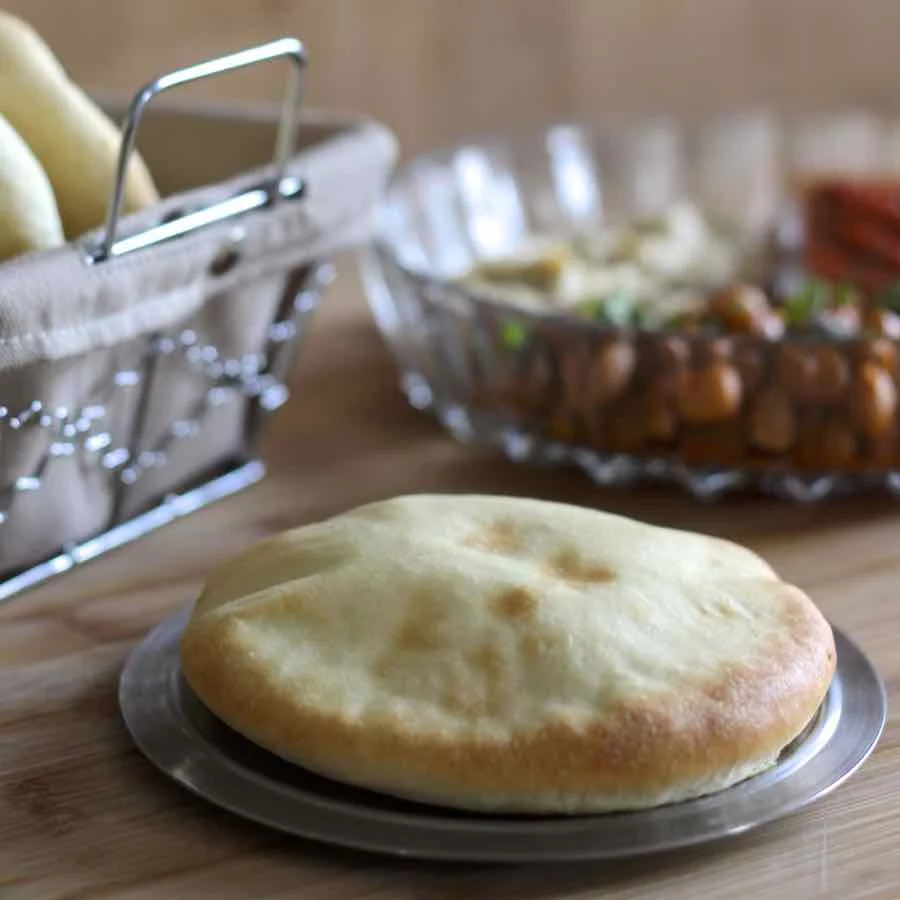
These soft, thin pita breads are baked quickly on a preheated tray until they puff and develop a tender interior. Make a batch to serve with dips, salads and grilled dishes, or fill them for an easy meal.
Ingredients
- 1 kg (8 cups)plain flour
- 18 g (2 tablespoons)active dry yeast
- 4 g (1 teaspoon)sugar
- 10 g (2 teaspoons)salt
- 120 ml (½ cup)olive oil
- 600 ml (2½ cups)warm water
- 1stand mixer
- 1room-temperature water spray bottle
Instructions
- 1
Activate the yeast
Dissolve the yeast in a little warm water and leave it for 10 minutes to begin rising.
- 2
Combine the ingredients
Put the flour in the stand mixer bowl and make a well in the middle. Add the yeast, sugar and olive oil to the well.
- 3
Knead the dough
Fit the dough hook and start kneading, gradually adding the warm water until the dough is smooth and uniform.
- 4
Add the salt
Mix in the salt and knead for 10 minutes, until the dough is soft.
- 5
Let it rise
Cover the bowl with a cloth and leave the dough in a warm place for 1 hour.
- 6
Shape the rounds
Punch down the dough on a work surface and divide it into 18 pieces. Shape each piece into a ball and leave them to rest for 15 minutes.
- 7
Roll the dough
Use a rolling pin to roll each ball to about 1 cm (½ inch) thick.
- 8
Heat the oven
Preheat the oven to 240°C (460°F) with a baking sheet inside. Both the oven and the sheet need to be very hot.
- 9
Bake the pita
Spray all the loaves with warm water and place them on the hot baking sheet. Bake for 5–6 minutes.
What is pita bread?
Pita is a soft, round flatbread eaten across the Near East and Middle East, as well as in parts of Southern Europe and the Balkans. Its familiar pocket can form when a thin round of dough cooks quickly in strong heat.
This Israeli-style version uses olive oil in the dough and a very hot baking sheet. The brief bake helps the rounds puff while keeping their crumb tender.
Nutrition and macros by portion
The nutrition label shows one serving as written: 255 calories, 6g protein, 42g carbs, 7g fat.
| Portion | Adjustment | kcal | Protein | Carbs | Fat |
|---|---|---|---|---|---|
| Lighter | Smaller pita portions | 179 kcal | 4g | 30g | 5g |
| This serving | As written | 255 kcal | 6g | 42g | 7g |
| Hungry | Two pita breads | 383 kcal | 9g | 64g | 10g |
Most of the carbohydrates and some of the protein come from the flour; the olive oil supplies most of the fat. Pair a pita with a protein-rich filling and plenty of salad or vegetables for a more rounded plate.
Building the dough
Yeast: dissolving it in warm water and giving it 10 minutes to rise gets it started before it goes into the flour.
Water: add it gradually while the mixer runs, stopping when the dough is smooth and homogeneous. The recipe gives a total quantity, but the gradual addition helps it come together evenly.
Salt and oil: olive oil contributes softness, while salt is mixed in after the dough begins to form.
Kneading and rising
Kneading: once the salt is added, knead for the full 10 minutes to develop an even, soft dough.
First rise: cover the dough and leave it in a warm place for 1 hour. It should look expanded before you punch it down and divide it.
Shaping evenly
Portions: divide the dough into 18 pieces and shape each into a ball, then rest them for 15 minutes. This pause makes the dough easier to roll.
Thickness: roll each piece to about 1 cm (½ inch), as specified in the method. Aim for a similar thickness across the rounds so they bake at a similar rate.
The hot-tray bake
Preheating: put the baking sheet in the oven as it heats to 240°C (460°F). A thoroughly hot surface gives the dough an immediate burst of heat.
Timing: bake each batch for 5–6 minutes. Keep an eye on the loaves and take them out once they have puffed and are cooked through.
Serving the pita
Use the breads warm alongside hummus, dips, salads or grilled food, or cut them open and fill them. Their soft texture also makes them useful for scooping up sauces.
If you are baking in batches, keep the cooked rounds covered with a clean cloth while the remaining dough goes into the oven.
Recipe notes & tips
- Measure the warm water before mixing so you can add it gradually.
- Let the dough rest for the full 15 minutes after shaping it into balls.
- Preheat the baking sheet along with the oven rather than placing the dough on a cool tray.
- Keep the dough rounds covered while you roll them, so they do not dry out.
- Bake in batches if needed, leaving room on the hot sheet for the breads to puff.
- Cover baked pita with a clean cloth to help keep it soft.
Variations
- Wholemeal flour: replace some of the plain flour with wholemeal flour for a deeper, nuttier flavour.
- Herb dough: knead dried herbs into the dough with the salt for a savoury note.
- Garlic oil: brush the baked breads lightly with garlic-infused olive oil before serving.
- Mini pita: divide the dough into smaller portions and keep a close eye on the shorter bake.
- Seeded tops: scatter sesame seeds over the damp rounds before baking.
Common mistakes to avoid
- Adding water all at once: add it gradually so the dough can become smooth without turning overly wet.
- Skipping the rest: give the shaped balls 15 minutes to relax before rolling.
- Using a cool tray: preheat the baking sheet in the oven so the dough gets the strong initial heat it needs.
- Uneven rolling: aim for a consistent thickness so the breads cook at a similar pace.
- Overbaking: check from 5 minutes and remove the breads once cooked through, rather than leaving them to dry out.
How to store
Once cool, store the pita in an airtight bag or container at room temperature for up to 2 days, or freeze for up to 3 months. Reheat briefly in a warm oven or on a dry pan until soft and warmed through.
Frequently asked questions
Why does the baking sheet need to be hot?
The recipe relies on a very hot surface to give the thin dough an immediate burst of heat. Preheat the sheet in the oven before placing the rounds on it.
Can I make the dough without a stand mixer?
Yes. Mix the ingredients in a large bowl, then knead by hand until smooth and soft, following the same rising and resting times.
How can I tell when the pita is baked?
Bake for 5–6 minutes as directed, checking that the rounds have puffed and are cooked through. Avoid leaving them in longer than needed, or they may become dry.
Why didn't my pita puff?
The oven and baking sheet need to be very hot, and the dough should be rolled evenly. Check that the oven has fully preheated before baking.
Can I freeze pita bread?
Yes. Let the breads cool completely, then seal them in a freezer-safe bag. Thaw and warm briefly before serving.
Cook it from the original
This recipe comes from 196flavors.com. Their page has the author’s own photos, notes and tips — the best place to cook it from.
Open the recipe on 196flavors.com