
Turkish Delight Recipe
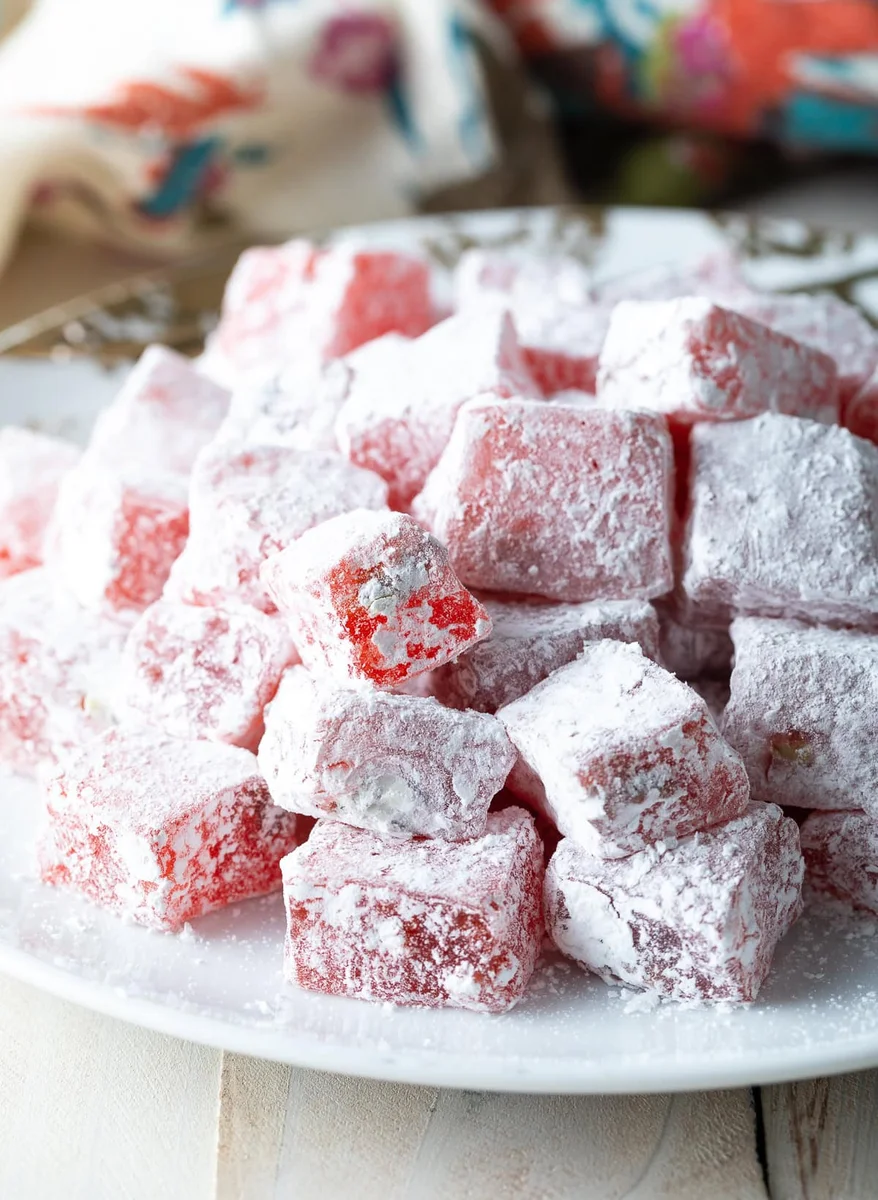
Turkish delight, or lokum, is a soft, chewy sweet made by cooking sugar syrup with a thickened cornflour mixture. Rosewater, raspberry and orange give this version a floral-fruity flavour, while pistachios add a little crunch.
Ingredients
- 800 g (4 cups)granulated sugar
- 1.01 litres (4¼ cups), dividedwater
- 45 ml (3 tablespoons)lemon juice
- 160 g (1¼ cups)cornflour
- 1 teaspooncream of tartar
- 30 ml (2 tablespoons), optionalrosewater
- 7.5 ml (1½ teaspoons)raspberry extract
- 7.5 ml (1½ teaspoons)orange extract
- ½ teaspoonsalt
- 30 g (¼ cup), optionalchopped pistachios
- 120 g (1 cup)icing sugar
- 4–6 drops, optionalred food colouring
Instructions
- 1
Prepare the equipment
Set two large stockpots, each 3.8–5.7 litres, on the hob and attach a sugar thermometer to one. Line a 23 cm square baking tin with foil, spray it generously with non-stick cooking spray and set it aside.
- 2
Boil the syrup
Put the sugar and 355 ml (1½ cups) of the water in the pot with the thermometer. Bring to the boil over high heat and cook until the syrup reaches 115.6°C (240°F).
- 3
Thicken the cornflour
Meanwhile, add the remaining 650 ml (2¾ cups) water to the second pot. Whisk in the lemon juice, cornflour and cream of tartar until smooth, with no lumps. Cook over high heat, whisking continuously, until it forms a thick white paste with a consistency like petroleum jelly; whisk thoroughly to remove any lumps.
- 4
Combine the mixtures
When the syrup reaches the required temperature, slowly pour it into the cornflour paste a little at a time, taking care to keep the mixture smooth and lump-free. The original method notes that this is easier with two people.
- 5
Cook until glossy
Return the pot to medium heat and simmer for about 45 minutes, stirring occasionally, until the mixture resembles thick, golden-orange jelly.
- 6
Add the flavourings
Turn off the heat and stir in the rosewater, raspberry extract, orange extract and salt. Add the food colouring if using, then pour half the mixture into the prepared tin.
- 7
Layer with pistachios
Quickly scatter the chopped pistachios over the mixture, then pour the remaining candy mixture on top before it cools and becomes too thick to pour. Alternatively, stir the pistachios into the mixture and pour it into the tin in one go.
- 8
Chill until firm
Place the tin in the refrigerator for 30–60 minutes, until the Turkish delight is firm.
- 9
Cut into squares
Turn the Turkish delight out of the tin and peel away the foil. Use a sharp knife or kitchen shears to cut it into about 100 small squares.
- 10
Coat in icing sugar
Put the icing sugar in the empty tin. As you cut each piece, shake it in the sugar to coat all sides.
- 11
Let the sweets soften
The pieces will be somewhat firm straight after chilling and will soften as they sit at room temperature.
What is Turkish delight?
Turkish delight, also called lokum, is a sweet made by cooking sugar with a starch-thickened liquid until it sets into a soft, chewy confection. It is associated with Türkiye and is often cut into small pieces and dusted with icing sugar.
This home version layers pistachios through a mixture flavoured with rosewater, raspberry and orange. The cornflour paste and carefully cooked syrup create its characteristic chewy texture.
Nutrition and macros by portion
The nutrition label shows one serving as written: 38 calories, 1g protein, 9g carbs, 1g fat.
| Portion | Adjustment | kcal | Protein | Carbs | Fat |
|---|---|---|---|---|---|
| Lighter | Use fewer pieces | 27 kcal | 1g | 6g | 1g |
| This serving | As written | 38 kcal | 1g | 9g | 1g |
| Hungry | Serve a larger handful | 57 kcal | 2g | 14g | 2g |
The sugar is the main source of carbohydrate, while the pistachios contribute most of the fat and some protein. Enjoy a few pieces with fruit or unsalted nuts for a more varied snack.
The sugar syrup
Temperature matters: cook the sugar syrup to 115.6°C (240°F) and check it with a sugar thermometer. That gives you a more reliable cue than judging the syrup by appearance alone.
Slow addition: pour the hot syrup into the cornflour paste gradually, whisking as you go. A steady pour helps the two mixtures combine without lumps.
A smooth cornflour paste
Start lump-free: whisk the cornflour, water, lemon juice and cream of tartar thoroughly before heating. Keep whisking as the mixture thickens, paying attention to the bottom and sides of the pot.
Thick cue: the paste should become dense and smooth before the syrup is added. If lumps remain, they can carry through into the finished sweets.
Flavour and colour
Rosewater: it is optional, so leave it out if you prefer a fruitier taste. The raspberry and orange extracts provide the other main flavours.
Food colouring: add the red colouring only if you want a stronger tint. Stir it in after turning off the heat, along with the flavourings and salt.
Layering and setting
Work promptly: once the flavourings are stirred in, pour half the mixture into the prepared tin and add the pistachios. The candy thickens as it cools, so add the remaining mixture while it is still pourable.
Chill: refrigerate for 30–60 minutes, until firm enough to turn out and cut. The pieces will soften again at room temperature.
Cutting and coating
Small pieces: a sharp knife or kitchen shears can divide the slab into about 100 squares. Wipe the blade if the candy starts to cling.
Even coating: shake each cut piece in icing sugar so all sides are covered. This is easiest while working in batches.
Serving ideas
Serve the sweets in small pieces alongside tea or coffee, or arrange them on a mixed sweet platter. Their floral and fruity flavours pair well with plain drinks that let the candy stand out.
For a balanced snack plate, add fresh fruit or a handful of unsalted nuts alongside a piece or two.
Recipe notes & tips
- Use a sugar thermometer to check that the syrup reaches 115.6°C (240°F).
- Whisk the cornflour mixture before heating and keep stirring until it is smooth.
- Pour the syrup into the paste gradually to help avoid lumps.
- Have the lined tin ready before cooking, since the mixture becomes harder to pour as it cools.
- If you do not need a visible pistachio layer, stir the nuts into the mixture before pouring it into the tin.
Variations
- Rosewater-free: omit the optional rosewater for a less floral flavour.
- Citrus-led: leave out the raspberry extract and let the orange flavour take the lead.
- Raspberry-led: omit the orange extract for a simpler berry flavour.
- Pistachio throughout: stir the chopped nuts into the full mixture before pouring it into the tin.
- No colouring: skip the red food colouring and keep the candy's natural golden-orange shade.
Common mistakes to avoid
- Guessing the syrup temperature: use a sugar thermometer and wait for 115.6°C (240°F).
- Lumpy paste: whisk the dry ingredients into the water before heating and keep whisking as it thickens.
- Adding syrup too quickly: pour it in slowly so it can combine evenly with the paste.
- Waiting too long to pour: add the second layer while the candy mixture is still pourable.
- Cutting before chilling: refrigerate for 30–60 minutes, until the slab is firm enough to handle.
How to store
Keep the pieces in an airtight container in a cool, dry place, with icing sugar between layers to limit sticking. If they firm up, leave them at room temperature before serving; they soften as they sit.
Frequently asked questions
Can I leave out the rosewater?
Yes. It is optional, and the raspberry and orange extracts will still flavour the Turkish delight.
Do I need a sugar thermometer?
A thermometer is the most reliable way to check that the syrup reaches 115.6°C (240°F), as specified in the recipe.
How do I stop the mixture from going lumpy?
Whisk the cornflour mixture until smooth before heating, then pour in the syrup gradually while mixing carefully.
Can I mix the pistachios through the candy?
Yes. Stir them into the mixture and pour it into the tin in one go, rather than making a separate middle layer.
How long should I chill the Turkish delight?
Chill it for 30–60 minutes, until firm enough to turn out and cut.
Why does it soften after chilling?
The recipe notes that the pieces are somewhat firm straight from the refrigerator and soften as they sit at room temperature.
Cook it from the original
This recipe comes from aspicyperspective.com. Their page has the author’s own photos, notes and tips — the best place to cook it from.
Open the recipe on aspicyperspective.com