
Poke Bowl Recipe
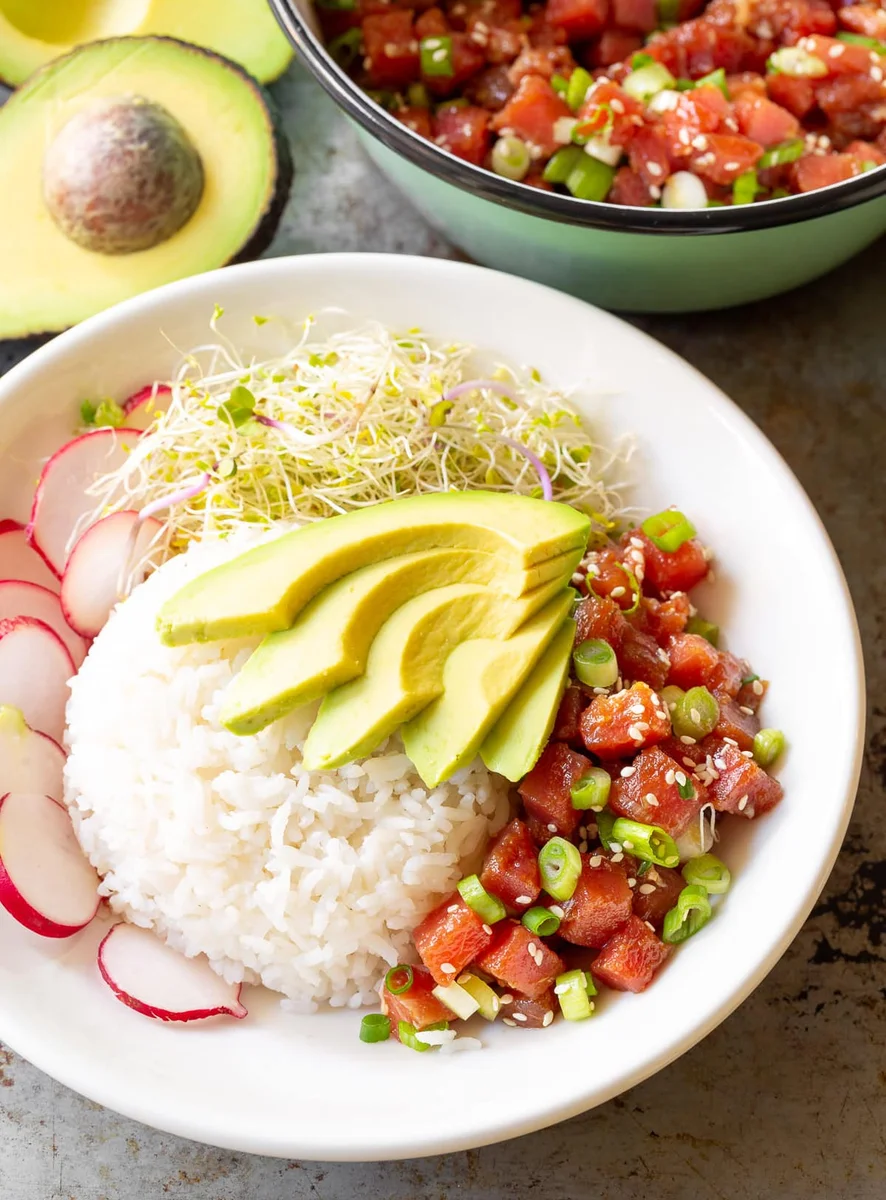
These poke bowls pair seasoned sashimi-grade ahi tuna with jasmine rice, avocado, radishes and sprouts. They make a fresh, colourful lunch or dinner, with the rice and toppings prepared in about 35 minutes.
Ingredients
- 370 g (2 cups)dried jasmine rice
- 454 g (1 pound)sashimi-grade ahi tuna
- 45 ml (3 tablespoons)gluten-free soy sauce
- 10 ml (2 teaspoons)honey
- 5 ml (1 teaspoon)sesame oil
- 2.5–5 ml (½–1 teaspoon)wasabi paste
- 75 g (¾ cup), choppedgreen onions, including the green and white parts
- 7.5 ml (1½ teaspoons)sesame seeds
- 1ripe avocado
- 1 bunchradishes
- 240 ml (1 cup)sprouts (alfalfa, broccoli or bean)
- To tastefurikake rice seasoning
Instructions
- 1
Cook the rice
Put the rice in a medium saucepan with 950 ml (4 cups) of water. Cover and bring to the boil. Once boiling, stir well, cover again and reduce the heat to medium-low. Simmer for 15–20 minutes, until the water has been absorbed and air holes appear on top of the rice. Remove from the heat, fluff with a fork, then cover to keep warm and set aside.
- 2
Season the tuna
Cut the ahi tuna into cubes 6–8 mm (¼–⅓ inch) wide and put them in a bowl. Add the soy sauce, honey, sesame oil and wasabi paste, then toss to coat. Stir in the chopped green onions and sesame seeds.
- 3
Assemble the bowls
Slice the avocado and radishes. Once the rice is cooked, spoon a heaped portion into 4–6 salad bowls. Add the ahi poke beside the rice and arrange the sprouts and sliced radishes around it. Lay several avocado slices on top and finish with furikake.
What is a poke bowl?
Poke is a Hawaiian dish of seasoned, bite-sized raw fish; the word refers to cutting or slicing into pieces. These bowls bring the tuna together with rice and fresh toppings for a meal with contrasting textures and flavours.
This version keeps the tuna seasoning simple, using soy, honey, sesame oil and wasabi. Avocado, radishes, sprouts and furikake round out each bowl.
Nutrition and macros by portion
The nutrition label shows one serving as written: 415 calories, 24g protein, 56g carbs, 10g fat.
| Portion | Adjustment | kcal | Protein | Carbs | Fat |
|---|---|---|---|---|---|
| Lighter | More sprouts, less rice | 291 kcal | 17g | 39g | 7g |
| This serving | As written | 415 kcal | 24g | 56g | 10g |
| Hungry | Larger rice portion | 623 kcal | 36g | 84g | 15g |
The rice supplies most of the carbohydrates, while the tuna is the main source of protein. Fat comes chiefly from the avocado and sesame oil; serve with extra sprouts or vegetables if you want to add more fresh produce to the plate.
Choosing the tuna
Sashimi-grade tuna: Use tuna sold for eating raw, and keep it chilled until you are ready to cut and season it. Cut the fish into similarly sized cubes so each bite is easy to pick up with the rice and toppings.
Getting the rice right
Water absorption: Keep the saucepan covered while the rice simmers, and check for absorbed water and air holes on the surface as the recipe’s doneness cues. Fluff it with a fork once it is off the heat, then cover it to keep warm.
Balancing the tuna seasoning
Wasabi: Start with ½ teaspoon for a milder kick, or use up to 1 teaspoon for more heat. Toss the tuna with the sauce before adding the green onions and sesame seeds so the fish is coated first.
Building each bowl
Fresh toppings: Slice the avocado and radishes while the rice cooks, then arrange them with the sprouts around the rice and tuna. This keeps the toppings distinct and gives each bowl a mix of soft, crisp and tender textures.
Furikake: Sprinkle it over the assembled bowls at the end. Its seasoning adds a final savoury touch without needing to mix it into the rice.
Serving and timing
Rice first: The rice takes 15–20 minutes to simmer, so prepare the tuna and slice the toppings while it cooks. The recipe makes 6 servings, and the assembly method allows for 4–6 bowls depending on portion size.
On the side: Serve the bowls as they are for a light lunch or dinner, or add a simple soup or extra vegetables if you want a fuller spread.
Recipe notes & tips
- Keep the tuna refrigerated until just before you season it.
- Cut the tuna into evenly sized cubes for a consistent coating.
- Use the lower amount of wasabi first, then add more if you prefer a stronger kick.
- Slice the avocado shortly before assembling the bowls.
- Fluff the cooked rice gently so the grains stay separate.
Variations
- Extra crunch: Add thinly sliced cucumber alongside the radishes.
- More heat: Use the full teaspoon of wasabi paste.
- Different sprouts: Choose alfalfa, broccoli or bean sprouts to suit what you have.
- Brown rice: Use brown rice instead, following its own cooking instructions.
- Citrus note: Serve with lime wedges for a fresh squeeze at the table.
Common mistakes to avoid
- Using ordinary raw tuna: Choose sashimi-grade tuna intended for eating raw.
- Overcooking the rice: Check for absorbed water and air holes after 15 minutes, then continue simmering only as needed up to 20 minutes.
- Adding too much wasabi at once: Begin with ½ teaspoon and increase it to taste.
- Cutting uneven tuna pieces: Aim for cubes around 6–8 mm so the seasoning coats them evenly.
- Assembling too early: Add the sliced avocado and toppings when you are ready to serve.
How to store
Keep any leftover tuna poke refrigerated in a covered container and eat it as soon as possible; because it is raw fish, do not leave it at room temperature. Store leftover rice and sliced vegetables separately in covered containers in the fridge, and reheat the rice until steaming before serving.
Frequently asked questions
Can I make the rice ahead?
Yes. Cook it ahead and refrigerate it promptly in a covered container. Reheat until steaming, then assemble the bowls.
How spicy is the tuna?
The heat comes from the wasabi, and the amount can range from ½ to 1 teaspoon. Use the smaller amount for a milder flavour.
Can I use another type of rice?
Jasmine rice is specified here, but another rice can work. Follow that rice’s own water ratio and cooking time.
Can I prepare the bowls in advance?
You can cook the rice and prepare the vegetables ahead, but keep the tuna chilled and assemble close to serving. Slice the avocado shortly before serving.
What can I use instead of furikake?
The recipe does not specify a substitute. You can leave it out or use another savoury rice seasoning you enjoy.
How many bowls does this make?
The recipe lists 6 servings, while its assembly instructions say to divide the rice among 4–6 bowls. The number depends on how generously you portion them.
Cook it from the original
This recipe comes from aspicyperspective.com. Their page has the author’s own photos, notes and tips — the best place to cook it from.
Open the recipe on aspicyperspective.com