
Steamed Mussels in Saffron Chorizo Broth
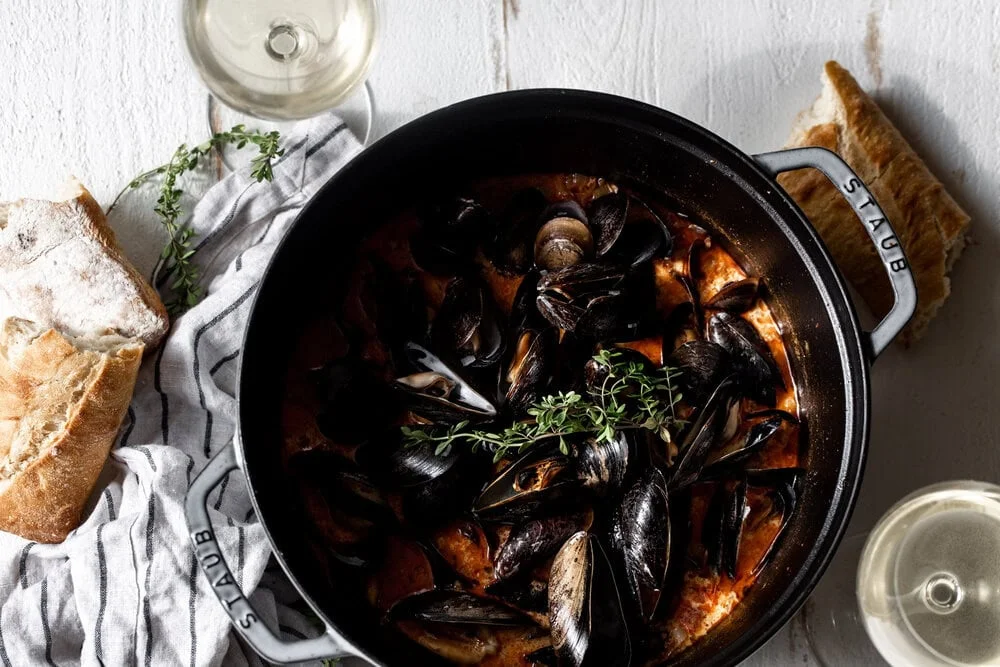
Mussels are steamed open in white wine, then served in a creamy saffron broth enriched with pork chorizo, vegetables and fish stock. Make it when you want a quick Spanish-inspired seafood supper with plenty of broth for dipping toasted baguette.
Ingredients
- 900 g (2 pounds)mussels, scrubbed and debearded
- 30 g (1/4 cup)plain flour
- 3 tablespoonsextra-virgin olive oil
- 142 g (5 ounces; about 180 ml)Mexican pork chorizo
- 1 smallyellow onion, finely diced
- 1 mediumleek, white and tender green parts only, finely diced
- 3 clovesgarlic, minced
- 1 mediumRoma tomato, cored and finely diced
- 1/4 teaspoonsaffron, crumbled
- 710 ml (3 cups)fish stock
- 240 ml (1 cup)dry white wine
- 1 tablespoonshallots, finely minced
- 120 ml (1/2 cup)double cream
- as neededkosher salt
- as neededfreshly ground black pepper
- 1 teaspoonthyme, chopped
- as neededFrench baguette, sliced and toasted, for serving
Instructions
- 1
Soak the mussels
Put the mussels in a large bowl of cold water with the flour. Leave them to soak so excess grit can loosen and the mussels can plump up.
- 2
Cook the chorizo
Heat the olive oil in a large pot over medium heat. Add the chorizo, leek and onion; cook, stirring occasionally, for about 6–8 minutes, until the chorizo is cooked through and the onion is tender.
- 3
Simmer the broth
Stir in the garlic, tomato and saffron and cook for about 4 minutes, until fragrant. Add the fish stock and bring it to the boil, then turn the heat to low and simmer for 20 minutes.
- 4
Steam the mussels
While the broth simmers, put the wine and shallots in another large pot and bring to the boil. Rinse and drain the mussels, add them to the wine, cover and cook over high heat for about 5 minutes, until they open.
- 5
Strain the liquor
Pour the mussel cooking liquid through a fine-mesh strainer into a large bowl, then add it to the chorizo and fish stock broth. Cover the mussels and set them aside.
- 6
Finish the broth
When the broth has finished simmering, raise the heat to medium and whisk in the double cream until combined. Season with salt, pepper and thyme.
- 7
Serve the mussels
Divide the mussels between bowls and ladle the broth over them. Serve hot with toasted baguette on the side for dipping.
What are steamed mussels in saffron chorizo broth?
Mussels cooked in wine and served with a rich, aromatic broth are a familiar style of Spanish-inspired seafood cooking, where shellfish and savoury cooking juices take centre stage. This version builds extra depth with pork chorizo, saffron, fish stock and cream.
The mussels steam separately from the chorizo broth, so their wine-scented cooking liquid can be strained and stirred in at the end. That brings the two parts together while keeping the shellfish tender.
Nutrition and macros by portion
The nutrition label shows one serving as written: 541 calories, 25g protein, 22g carbs, 34g fat.
| Portion | Adjustment | kcal | Protein | Carbs | Fat |
|---|---|---|---|---|---|
| Lighter | Less cream and chorizo | 379 kcal | 18g | 15g | 24g |
| This serving | As written | 541 kcal | 25g | 22g | 34g |
| Hungry | Extra mussels and bread | 812 kcal | 38g | 33g | 51g |
The baguette and flour contribute carbohydrates, while olive oil, chorizo and double cream account for much of the fat; mussels and chorizo provide protein. Pair a serving with a generous salad or extra vegetables, and choose how much bread to serve alongside.
Choosing the ingredients
Chorizo: Mexican pork chorizo is the version specified here and gives the broth a soft, savoury richness. It is not the same as firm Spanish-style cured chorizo, so use the type listed for the intended texture.
Saffron: Crumbling the threads helps disperse their aroma through the stock. Fish stock and dry white wine provide the liquid base, while cream rounds it out at the finish.
Building the broth
Vegetables first: Cook the chorizo with the leek and onion until the meat is cooked through and the onion is tender. Add the garlic, tomato and saffron afterwards so they become fragrant without spending the full simmer in the pot.
Gentle simmer: Once the stock boils, lower the heat and let the broth simmer for 20 minutes. This gives the ingredients time to mingle before the strained mussel liquor is added.
Steaming mussels well
Clean shells: Soaking the mussels in cold water with flour is the method used here to help loosen grit. Rinse and drain them before they go into the wine and shallots.
Covered pot: Keep the mussels covered over high heat for about 5 minutes, checking for opened shells. Remove them from the heat once they have opened rather than continuing to cook them.
Getting the texture right
Strained liquor: Pass the mussel cooking liquid through a fine-mesh strainer before adding it to the broth. This catches grit while retaining the savoury liquid from steaming.
Cream at the end: Whisk the double cream into the finished broth over medium heat, then season with salt, pepper and thyme. The broth should be cohesive and pourable, ready to ladle over the mussels.
Serving and timing
Serve the mussels hot in bowls with the broth spooned over them. Toasted baguette is a practical accompaniment for soaking up the chorizo, saffron and shellfish juices.
The mussels steam while the broth simmers, so the two parts can be prepared in parallel. Have bowls and bread ready before finishing the broth, as the mussels are best served promptly.
Recipe notes & tips
- Scrub the mussels and remove their beards before soaking.
- Dice the onion, leek and tomato finely so they blend into the broth.
- Keep the pot covered while the mussels steam to retain heat.
- Strain the mussel liquor carefully before adding it to the broth.
- Taste the broth before adding salt, as the stock, chorizo and mussel liquor may already be seasoned.
- Toast the baguette while the broth finishes so it is ready for serving.
Variations
- Add parsley: Finish the bowls with chopped parsley for a fresh herbal note.
- Use a different bread: Serve with toasted sourdough instead of baguette.
- Adjust the saffron: Use a little less for a subtler aroma, or keep the listed amount for its distinctive flavour.
- Add heat: Stir a pinch of chilli flakes into the broth with the garlic.
- Skip the cream: Leave it out for a broth with a lighter, less creamy finish.
Common mistakes to avoid
- Skipping the rinse: Grit can remain on the shells, so rinse the mussels after soaking and before steaming.
- Overcooking the mussels: They can turn tough if left on the heat after opening; check them at about 5 minutes.
- Adding cream too early: Whisk it in after the broth has simmered, as directed, for a smooth finish.
- Using unstrained liquor: Fine grit can end up in the broth; pass the cooking liquid through a fine-mesh strainer.
- Salting before tasting: Chorizo and stock can bring plenty of seasoning, so adjust salt at the end.
How to store
Refrigerate leftover mussels and broth promptly in a covered container and eat within 1–2 days. Reheat gently in a covered pan until hot, taking care not to boil the mussels; store bread separately and toast it again before serving.
Frequently asked questions
How can I tell when the mussels are cooked?
The recipe cooks them covered for about 5 minutes over high heat, until they open. Take them off the heat once opened rather than leaving them to cook further.
Should I eat mussels that stay closed?
Discard mussels that remain closed after cooking. Do not force them open.
Can I make the broth ahead?
You can prepare the chorizo and fish stock broth ahead, then reheat it gently. Steam the mussels close to serving time and add their strained cooking liquid before finishing with cream and seasoning.
What should I serve with the mussels?
Toasted sliced French baguette is the suggested accompaniment and is ideal for dipping into the broth. A simple salad or cooked vegetables can also go alongside.
Can I use Spanish chorizo instead?
The recipe specifies Mexican pork chorizo, which has a different texture from firm Spanish-style chorizo. If substituting, expect a different result and chop the Spanish chorizo finely.
Can I use frozen mussels?
Fresh mussels are used in this method because they steam open in the wine. Follow the package instructions if using frozen mussels, as their preparation and cooking time may differ.
Cook it from the original
This recipe comes from cookingwithcocktailrings.com. Their page has the author’s own photos, notes and tips — the best place to cook it from.
Open the recipe on cookingwithcocktailrings.com