
Fried Chicken Recipe (Without Buttermilk)
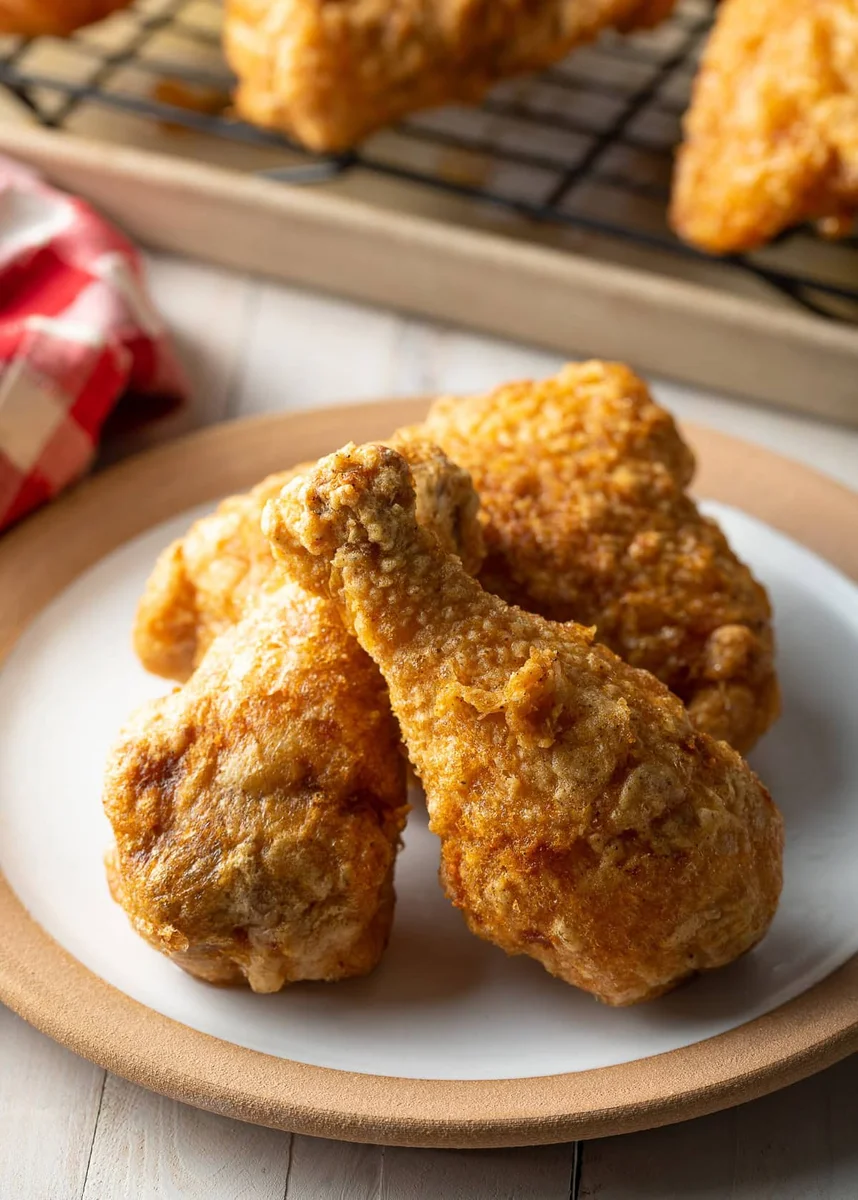
This American-style fried chicken is brined, coated in seasoned starch and flour, dipped in egg white and fried until golden and crisp. It skips buttermilk, letting the chicken’s flavour come through beneath a crunchy crust.
Ingredients
- 1.81 kg (4 pounds; about 16 pieces)chicken legs and bone-in thighs
- 68 g (1/4 cup) + 2 teaspoons, dividedsalt
- 192 g (1 1/2 cups)cornflour
- 125 g (1 cup)plain flour (or gluten-free baking mix)
- 1 teaspoonpaprika (smoked paprika recommended)
- 1 teaspoongarlic powder
- 1 teaspoononion powder
- 1/2 teaspoonground black pepper
- 1/4–1/2 teaspooncayenne pepper
- 10egg whites
- 1.36 kg (48 ounces)peanut oil (or another high-heat oil)
- 240 ml (1 cup), plus enough cold water to cover the chickenwater
Instructions
- 1
Make the brine
Measure 68 g (1/4 cup) salt into a large bowl that can hold all the chicken. Add 240 ml hot tap water and stir until the salt dissolves, then fill the bowl about one-third full with cold water. Add the chicken and enough additional cold water to cover every piece. Refrigerate for 1–2 hours.
- 2
Dry the chicken
Place a wire rack over a large rimmed baking sheet and arrange the chicken on it. Let the pieces air-dry for 30–60 minutes, until very dry, patting them with paper towels to help if needed.
- 3
Mix the coating
Set out two large, clean bowls. In one, whisk together the cornflour, plain flour, 2 teaspoons salt, paprika, garlic powder, onion powder, black pepper and cayenne. In the other, whisk the egg whites just to break them up.
- 4
Coat the chicken
Heat the oven to 120°C (250°F). Once the chicken is very dry, roll each piece in the flour mixture and return it to the wire rack. Leave it to rest while you prepare the oil.
- 5
Heat the oil
Set a large Dutch oven or wide, deep sauté pan over medium-high heat and attach a cooking thermometer. Pour in the oil and heat it to 182°C (360°F), adjusting the burner as needed to maintain the temperature.
- 6
Dip and fry
Dip one piece of chicken at a time into the egg whites, let the excess drip off and carefully lower it into the hot oil. Turn the chicken with tongs, then repeat until the pan is full.
- 7
Cook until golden
Fry for 14–15 minutes, turning the pieces with tongs every 2 minutes. Monitor the thermometer and adjust the heat if the oil falls below 177°C (350°F) or rises above 182°C (360°F).
- 8
Keep warm
Set a clean wire rack over another rimmed baking sheet, or line a tray with paper towels. Transfer the fried chicken to it and place it in the warm oven to keep crisp. Fry the remaining chicken in one or two more batches, then serve warm.
What is tavern fried chicken?
This is an American-style fried chicken made from bone-in legs and thighs, with a brine and a crisp, seasoned coating. The recipe describes its approach as the Yankee way: no buttermilk, just brined chicken, egg whites and a flour-and-cornflour mixture.
The method is built around a contrast between juicy meat and a crackly exterior. Drying the brined pieces thoroughly before coating helps the crust fry up crisp.
Nutrition and macros by portion
The nutrition label shows one serving as written: 287 calories, 14g protein, 18g carbs, 18g fat.
| Portion | Adjustment | kcal | Protein | Carbs | Fat |
|---|---|---|---|---|---|
| Lighter | Add a larger salad | 201 kcal | 10g | 13g | 13g |
| This serving | As written | 287 kcal | 14g | 18g | 18g |
| Hungry | Add another chicken piece | 431 kcal | 21g | 27g | 27g |
The chicken and egg whites provide most of the protein, while the flour and cornflour contribute carbohydrates. The frying oil is the main source of fat; serve a piece with a generous helping of vegetables or salad to balance the plate.
Why brine the chicken?
Salt brine: the chicken sits in salted water for 1–2 hours before frying. This seasons the pieces throughout and gives the surface time to drain and dry afterwards.
Cold water: add enough to cover every piece, and keep the bowl refrigerated during the brining time. Don’t skip the drying stage after the chicken comes out.
What makes the coating crisp?
Cornflour: it makes up a substantial part of the coating and contributes to its light, crisp texture. Plain flour rounds out the mixture and helps the seasoned coating cover the chicken.
Egg whites: these form the second layer after the dry coating. Dip each piece just before frying and let excess egg white drip away so the coating does not become overly wet.
How to manage the frying
Steady heat: bring the oil to 182°C and keep it between 177°C and 182°C while frying. A thermometer makes it easier to adjust the burner as the chicken goes into the pan.
Room in the pan: fry in batches rather than crowding the pieces. The recipe allows one or two further batches after the first, depending on the size of your pan.
When is it ready?
Timing: fry each batch for 14–15 minutes, turning the pieces every 2 minutes as directed. Keep watching both the chicken and the oil temperature throughout.
Appearance: the chicken should have a golden, crisp coating when lifted from the oil. The recipe does not give a separate internal temperature, so use a reliable food thermometer if you need to check that bone-in chicken is cooked through.
Serving ideas
Serve the chicken warm, straight from the final batch or after a short rest in the low oven. A fresh, crunchy side such as coleslaw or a green salad offers contrast to the crisp coating.
For a more substantial plate, add potatoes or another starchy side. Keep sauces on the side if you want the crust to stay crisp.
Recipe notes & tips
- Use a bowl large enough to keep every chicken piece submerged in the brine.
- Pat the chicken dry and allow 30–60 minutes for air-drying before coating.
- Whisk the coating ingredients thoroughly so the seasonings are evenly distributed.
- Use a thermometer to monitor the oil rather than relying on appearance alone.
- Turn the pieces every 2 minutes and adjust the burner to maintain the specified oil temperature.
- Keep finished pieces on a wire rack in the warm oven while you fry the remaining batches.
Variations
- Use smoked paprika: choose it for the smoky note suggested in the recipe.
- Adjust the heat: use 1/4 teaspoon cayenne for milder chicken or 1/2 teaspoon for more warmth.
- Make it gluten-free: replace the plain flour with a gluten-free baking mix, as suggested.
- Choose another oil: use a different high-heat oil in place of peanut oil.
- Serve with slaw: add a crisp cabbage slaw alongside the hot chicken.
Common mistakes to avoid
- Wet chicken: the coating can turn pasty; dry the pieces thoroughly before coating.
- Oil too cool: the coating may not crisp as intended; wait for 182°C before frying.
- Oil too hot: the exterior can brown too quickly; adjust the burner to stay at or below 182°C.
- Crowded pan: the oil temperature can dip; fry in batches and leave room around the pieces.
- Skipping the turns: some surfaces may cook unevenly; turn the chicken every 2 minutes.
- Excess egg white: it can make the coating overly wet; let each dipped piece drip before frying.
How to store
Refrigerate leftover chicken in a covered container once cooled and eat within 3–4 days. Reheat in an oven until hot throughout to help revive the crisp coating; a microwave will soften it.
Frequently asked questions
Can I make this without buttermilk?
Yes. This recipe uses a salt-water brine and egg whites instead of buttermilk.
Can I use chicken breasts?
The recipe is written for bone-in legs and thighs, so breasts may need different cooking times. For best results, use the specified cuts and check that any chicken is cooked through.
Why does the chicken need to dry before coating?
A dry surface helps the flour mixture adhere without becoming wet and clumpy. The recipe allows 30–60 minutes of air-drying, with paper towels to help.
Can I use a different frying oil?
Yes. The recipe allows another high-heat oil in place of peanut oil.
How can I keep the first batch crisp?
Place the fried pieces on a wire rack over a baking sheet and hold them in the 120°C oven while the remaining chicken fries.
Can I prepare the chicken in advance?
You can complete the 1–2-hour brine and drying stage before frying. Keep the chicken refrigerated during brining, and fry it after it has dried.
Cook it from the original
This recipe comes from aspicyperspective.com. Their page has the author’s own photos, notes and tips — the best place to cook it from.
Open the recipe on aspicyperspective.com