
Pork Katsu Sandwich
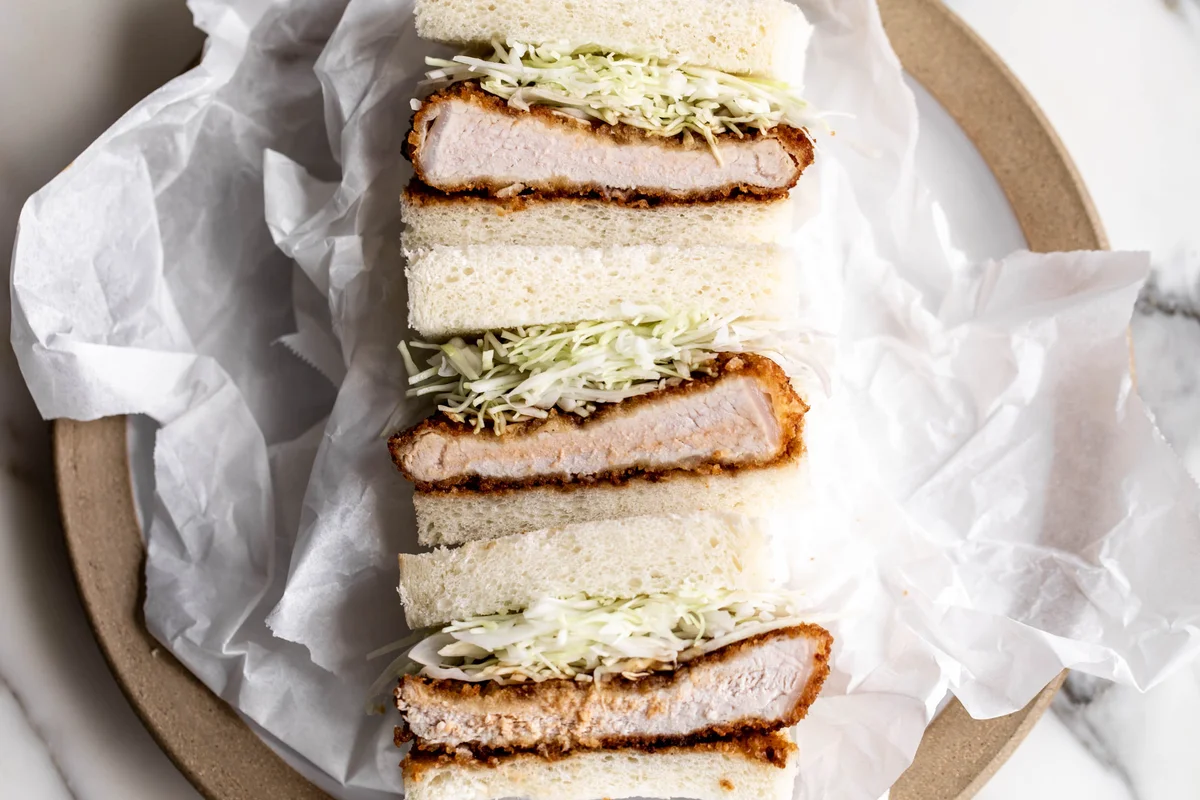
Crisp, panko-coated pork, tangy cabbage and tonkatsu sauce are tucked into soft Japanese milk bread for a satisfying Japanese-style lunch. The cutlets fry quickly, so the sandwiches come together in about 30 minutes.
Ingredients
- 2 (about 340 g / ¾ lb)boneless pork chops
- as neededkosher salt
- 60 g (½ cup)plain flour
- 2 largeeggs
- 100 g (1 cup)panko breadcrumbs
- as needed, for fryingrapeseed oil
- about 150 g (2 cups)finely shredded green cabbage
- 10 ml (2 teaspoons)rice wine vinegar
- 45 ml (3 tablespoons)tonkatsu sauce
- 4 slicesJapanese milk bread, crusts removed
Instructions
- 1
Pound the pork
Gently pound the pork chops with a mallet until they are 1.3 cm (½ inch) thick. Season them with salt.
- 2
Set up coating
Put the flour in a shallow bowl. In a second bowl, beat the eggs with 30 ml (2 tablespoons) of water. Place the panko in a third bowl.
- 3
Heat the oil
Pour enough oil into a cast-iron pan or Dutch oven to come at least 2.5 cm (1 inch) up the sides. Heat over medium heat to 180°C (350°F). Coat one piece of pork in flour, then egg, letting excess drip away, and finally panko, pressing the crumbs on to help them stick.
- 4
Fry the cutlets
Carefully lower the pork into the hot oil and fry until the underside is crisp and golden, about 1 minute. Turn with tongs and fry for about 1 minute more.
- 5
Drain the pork
Lift the cutlets onto a cooling rack set over a baking sheet lined with paper towels. Repeat with the remaining pork.
- 6
Dress the cabbage
Put the cabbage in a small bowl and toss it with the rice wine vinegar.
- 7
Build the sandwiches
Spread some tonkatsu sauce on the bottom slices of bread and place a cutlet on each. Drizzle with more sauce, add the cabbage and close the sandwiches. Cut each in half or into thirds and serve straight away.
What is a pork katsu sandwich?
Katsu is a Japanese dish of meat coated in breadcrumbs and fried until crisp; the word is associated with the cutlet-style preparation. In this sandwich, the pork is paired with tonkatsu sauce and shredded cabbage, then enclosed in soft Japanese milk bread.
The contrast makes this version work: crunchy coating and sharp, lightly dressed cabbage against tender pork and pillowy bread. It is a quick lunch built around freshly fried cutlets.
Nutrition and macros by portion
The nutrition label shows one serving as written: 664 calories, 49g protein, 85g carbs, 13g fat.
| Portion | Adjustment | kcal | Protein | Carbs | Fat |
|---|---|---|---|---|---|
| Lighter | More cabbage, less sauce | 465 kcal | 34g | 59g | 9g |
| This serving | As written | 664 kcal | 49g | 85g | 13g |
| Hungry | Add extra milk bread | 996 kcal | 74g | 128g | 20g |
The bread and panko provide much of the carbohydrate, while the pork is the main source of protein. Frying oil and tonkatsu sauce contribute fat, with the sauce also adding some carbohydrate. Serve with extra cabbage or another vegetable to add freshness and balance the plate.
The coating that keeps its crunch
Flour: A thin first layer gives the egg something to cling to, helping the crumbs stay in place.
Egg: Let excess egg drip back into the bowl so the coating does not become thick or patchy.
Panko: Press the coarse breadcrumbs gently onto the pork for an even coat, without compacting them too firmly.
Frying the cutlets
Oil depth: Use a pan that can hold enough oil to reach at least 2.5 cm (1 inch) up its sides, leaving ample space at the top.
Temperature: Bring the oil to 180°C (350°F) before adding the pork. Fry one piece at a time as directed so the cutlets have room to cook evenly.
Doneness: The coating should turn crisp and golden in about 1 minute per side. The method gives a visual cue but no internal temperature; check that the pork is cooked through before serving.
Keep the cabbage crisp
Shred the cabbage finely so it sits neatly in the sandwich and is easy to bite through. Toss it with the rice wine vinegar shortly before assembling to keep it fresh and lightly tangy.
Avoid adding the cabbage to a hot cutlet well in advance. Assembling just before serving helps preserve the contrast between the crunchy pork and crisp salad.
Sauce and bread
Tonkatsu sauce: Spread some on the bread and drizzle more over the cutlet, so its sweet-savoury flavour reaches each part of the sandwich.
Milk bread: The crusts are removed for a soft, even bite. If the cutlets are wider than the bread, cut them to fit rather than letting them overhang too much.
Serving the sandwiches
Cut the sandwiches in half or into thirds and serve immediately, while the coating is at its crispest. A simple side of extra cabbage or a light vegetable salad works well alongside.
The listed ingredients make two sandwiches. Prepare the cabbage and bowls for coating before heating the oil so assembly can happen promptly after frying.
Recipe notes & tips
- Pound the pork evenly so the cutlets cook at a similar rate.
- Arrange the flour, egg and panko bowls in coating order before you begin.
- Let excess egg drip off before pressing on the panko.
- Fry the cutlets individually rather than crowding the pan.
- Toss the cabbage with vinegar close to serving time.
- Assemble the sandwiches just before eating to help the coating stay crisp.
Variations
- Add mustard: Spread a thin layer on the bread for a sharper flavour.
- Use chicken: Substitute boneless chicken cutlets and pound them to an even thickness.
- Add cucumber: Tuck in thin slices for extra crunch.
- Make it spicy: Mix a little chilli sauce into the tonkatsu sauce.
- Toast the bread: Lightly toast the slices if you prefer a firmer sandwich.
Common mistakes to avoid
- Uneven pork: Pound the chops to a consistent thickness so thinner spots do not overcook.
- Loose coating: Let the excess egg drip away and press the panko gently onto the cutlet.
- Oil not hot enough: Wait until it reaches 180°C (350°F) before frying so the coating can crisp.
- Crowded pan: Fry one cutlet at a time as directed to leave room for even cooking.
- Soggy cabbage: Dress it shortly before assembling rather than letting it sit for a long time.
- Early assembly: Build the sandwiches just before serving to keep the bread and coating in better shape.
How to store
For the best texture, eat the sandwiches immediately. Refrigerate leftover pork and cabbage separately in airtight containers for up to 3 days; reheat the pork in an oven or air fryer until hot, then assemble with fresh bread and cabbage.
Frequently asked questions
Can I prepare the pork ahead?
You can pound and season the pork ahead, then keep it covered in the fridge. Coat and fry it shortly before serving for the crispest result.
How do I know when the oil is ready?
Use a kitchen thermometer and heat the oil to 180°C (350°F), as specified in the method. Take care when lowering the cutlets into the hot oil.
Can I use a different type of bread?
Japanese milk bread is soft and well suited to this sandwich. If you cannot find it, use another soft white sandwich loaf.
Can I make the sandwiches without deep frying?
The method calls for frying in oil at the stated depth. A shallow-frying or oven method would change the technique and may give a different crumb texture.
What can I serve with pork katsu sandwiches?
Serve them with extra shredded cabbage or a simple vegetable salad. The sandwiches are also easy to cut into smaller pieces for sharing.
Can I use the same oil for both cutlets?
Yes, fry the cutlets one after the other in the same pan, checking that the oil remains at 180°C (350°F).
Cook it from the original
This recipe comes from cookingwithcocktailrings.com. Their page has the author’s own photos, notes and tips — the best place to cook it from.
Open the recipe on cookingwithcocktailrings.com