
Black Eyed Pea Soup
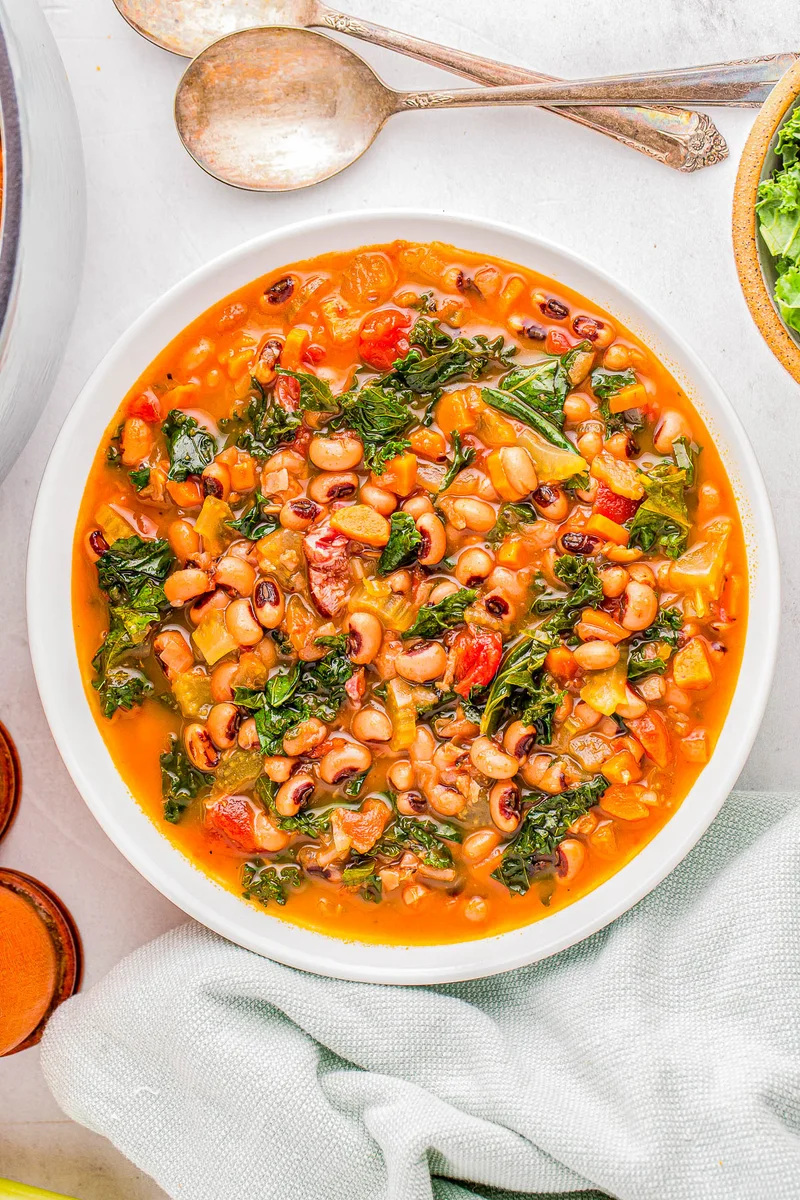
A hearty soup of black-eyed peas, vegetables, kale and smoky ham, simmered in beef broth until the peas are tender. It is a warming one-pot meal, with lemon juice to lift the savoury flavours just before serving.
Ingredients
- 30 ml (2 tablespoons)olive oil
- 1 mediumyellow onion, finely diced (white or sweet Vidalia onion may be substituted)
- 2 mediumcarrots, peeled and finely diced
- 2celery stalks, cut into small half-moons
- 3 clovesgarlic, finely minced
- 411 g (14.5 ounces)tin diced fire-roasted tomatoes, undrained (use petite diced tomatoes if you are sensitive to heat)
- 1½ teaspoonsground cumin
- 1½ teaspoonssmoked paprika (regular paprika may be used, but the soup will be less smoky)
- 240 ml (1 cup)dried black-eyed peas
- 1 mediumham hock, optional (or 2 cups cooked, diced ham; omit the ham if preferred)
- 1.42 litres (6 cups)reduced-salt beef stock (reduced-salt chicken stock may be substituted)
- 2bay leaves
- 480 ml (2 cups)kale leaves
- 15 ml (1 tablespoon), or morelemon juice, optional and to taste
- 1 teaspoon, or to tastesalt
- 1 teaspoon, or to tastefreshly ground black pepper
Instructions
- 1
Soften the vegetables
Heat the olive oil in a large Dutch oven or pot over medium-high heat. Add the onion, carrots and celery and cook for about 7 minutes, stirring often, until softened.
- 2
Cook the garlic
Add the garlic and cook for 1 minute, stirring continuously.
- 3
Add soup ingredients
Add the undrained tomatoes, cumin, smoked paprika, dried peas and optional ham hock. Pour in the stock, add the bay leaves and bring the soup to the boil.
- 4
Simmer the peas
Once boiling, turn the heat to low, cover the pot and simmer for about 1 to 3 hours, stirring every 20 to 30 minutes, until the peas are tender but still hold their shape. Taste a few to check that none are hard. If using canned peas instead, add them with the stock, bring the soup to the boil and simmer for 10 to 15 minutes before continuing.
- 5
Add ham and kale
When the peas are cooked, remove the bay leaves and, if used, the ham hock. Shred the meat and return it to the pot. If using cooked or deli ham instead, add 1 to 2 cups, or as much as desired, now along with the kale.
- 6
Wilt the kale
Stir for a few minutes, just until the kale wilts.
- 7
Season and serve
Turn off the heat and taste the soup. Stir in the lemon juice if using, then add salt and pepper to taste. Serve immediately.
What is black-eyed pea soup?
Black-eyed pea soup is a filling, brothy dish built around the legume commonly used in Southern US cooking, where black-eyed peas are especially associated with New Year meals. This version combines them with vegetables, greens and ham for a substantial one-pot supper.
Smoked paprika, fire-roasted tomatoes and ham bring savoury depth, while a little lemon juice at the end can brighten the whole pot.
Nutrition and macros by portion
The nutrition label shows one serving as written: 285 calories, 20g protein, 26g carbs, 12g fat.
| Portion | Adjustment | kcal | Protein | Carbs | Fat |
|---|---|---|---|---|---|
| Lighter | Omit the ham hock | 200 kcal | 14g | 18g | 8g |
| This serving | As written | 285 kcal | 20g | 26g | 12g |
| Hungry | Add extra cooked ham | 428 kcal | 30g | 39g | 18g |
The black-eyed peas and vegetables provide most of the carbohydrates, while olive oil and ham contribute much of the fat. Ham and peas supply protein, with the exact balance depending on whether you use a ham hock, cooked ham or no ham. For a balanced plate, serve a bowl with a side salad or extra vegetables.
The ingredients that build flavour
Aromatic base: Onion, carrot and celery soften first in olive oil, giving the soup a sweet, savoury foundation. Cut them small so they become tender as the peas simmer.
Smoky notes: Fire-roasted tomatoes and smoked paprika provide the soup's characteristic warmth. Regular paprika works, but the result will be less smoky.
Ham and stock: A ham hock seasons the broth as it cooks and contributes meat to shred back into the soup. Reduced-salt stock gives you more room to adjust the final seasoning.
Getting the peas tender
Cooking time: Dried peas can take about 1 to 3 hours, depending on the simmer and the space in the pot. Keep the heat low and check them as they cook rather than relying on the clock alone.
Doneness: Taste a few peas; they should be tender without falling apart, and none should have a hard centre. Stir every 20 to 30 minutes to check the bottom of the pot and keep the ingredients moving.
Choosing the ham option
Ham hock: Simmering it with the peas lets its flavour infuse the stock. Remove it when the peas are done, shred the meat and return that meat to the soup.
Cooked ham: Leftover or deli ham needs less cooking, so stir it in with the kale near the end. The soup also works without ham; taste and adjust the seasoning to suit.
Finishing the soup
Kale: Add the leaves once the peas are tender, then stir for a few minutes until they wilt. This keeps the greens from simmering for the full length of the recipe.
Lemon and seasoning: Lemon juice is optional, but its acidity can balance the rich, savoury broth. Start with the stated salt and pepper, taste, and add more only as needed, since ham and stock can vary in saltiness.
What to serve with it
Serve the soup as a meal on its own or alongside crusty bread for dipping. A simple green salad or another light vegetable side also pairs well with its hearty broth.
Recipe notes & tips
- Dice the onion, carrots and celery to a similar small size so they soften evenly.
- Keep the pot at a gentle simmer; a vigorous boil can make the peas break apart.
- Stir every 20 to 30 minutes and check that the soup is not catching on the bottom.
- Taste several peas before deciding they are done, as they may soften at different rates.
- Add salt gradually, especially when using ham or stock that is already seasoned.
- Stir in lemon juice a little at a time and taste as you go.
Variations
- Use chicken stock: Substitute reduced-salt chicken stock for the beef stock.
- Swap the tomatoes: Use petite diced tomatoes for a milder result.
- Use cooked ham: Stir in 1 to 2 cups of diced cooked ham with the kale.
- Leave out the ham: Omit the ham hock for a meat-free version and adjust the seasoning to taste.
- Use canned peas: Add them with the stock and simmer for 10 to 15 minutes before proceeding.
Common mistakes to avoid
- Boiling too hard: A rolling boil can break up the peas; lower the heat to maintain a gentle simmer.
- Judging by time alone: Peas cook at different rates, so taste them and continue until they are tender.
- Adding cooked ham too early: It only needs to heat through, so add it with the kale near the end.
- Over-salting at the start: Ham and stock can be salty, so season gradually and taste before serving.
- Skipping the final taste: Check the balance after cooking and adjust with salt, pepper or lemon juice as needed.
How to store
Cool leftovers and refrigerate them in a covered container for up to 3 days. Reheat gently in a saucepan until hot throughout, adding a splash of stock or water if the soup has thickened.
Frequently asked questions
Do I need to soak the dried black-eyed peas?
This method does not call for soaking; the dried peas go straight into the pot. They may take about 1 to 3 hours to become tender.
Can I use canned black-eyed peas?
Yes. Add them with the stock, bring the soup to the boil and simmer for 10 to 15 minutes before moving on to the ham and kale.
How do I know when the peas are cooked?
Taste a few. They should be tender but still hold their shape, with no hard centre.
Can I make the soup without ham?
Yes. Omit the ham hock, or leave out cooked ham if using that option. Taste the soup before serving and adjust the seasoning.
When should I add leftover ham?
Add diced cooked ham with the kale after the peas are tender, so it warms through without simmering for the full cooking time.
Why add lemon juice?
It is optional, but a little lemon can brighten the savoury broth. Add it gradually and taste until the flavour is balanced to your liking.
Cook it from the original
This recipe comes from averiecooks.com. Their page has the author’s own photos, notes and tips — the best place to cook it from.
Open the recipe on averiecooks.com