
Bun Cha Gio
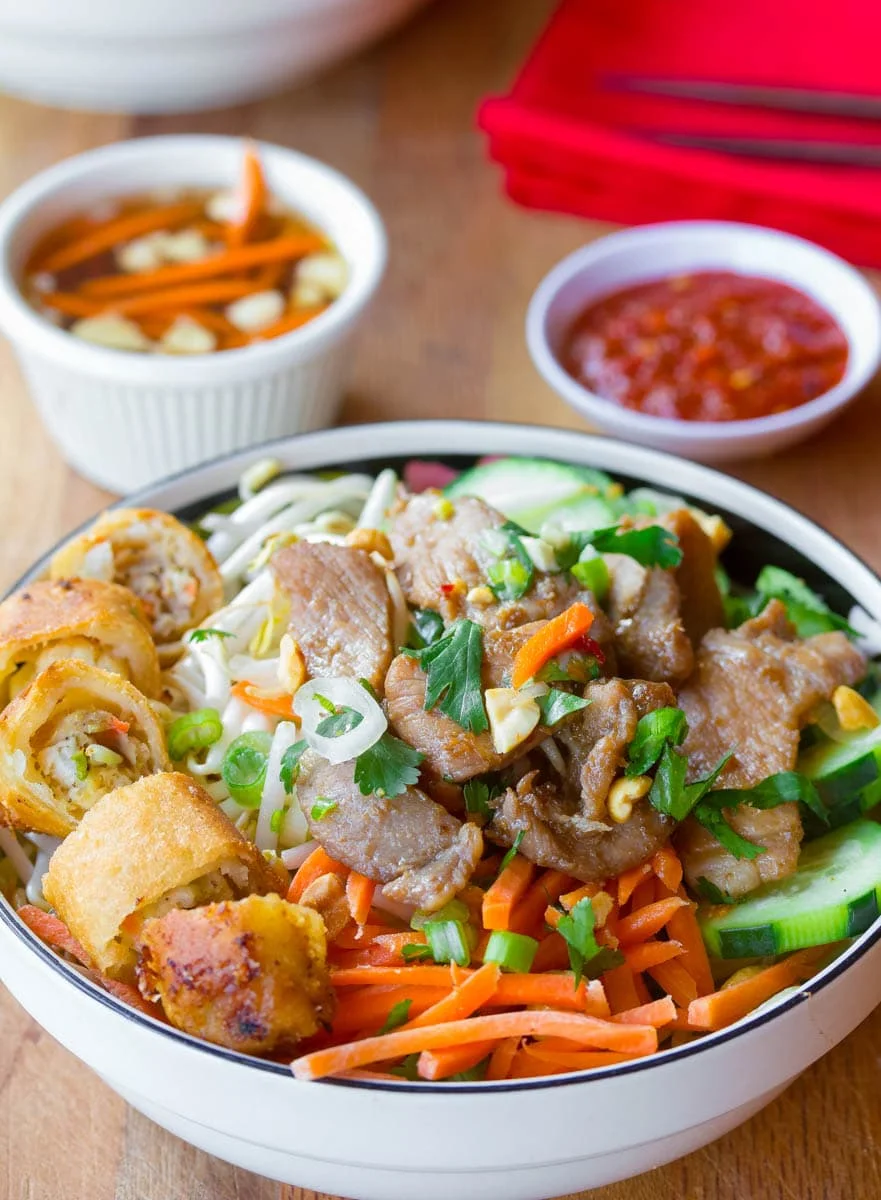
Bun cha gio is a Vietnamese noodle bowl combining marinated pork, fresh vegetables, herbs and crisp spring rolls, served with a tangy, savoury dipping sauce. It makes a colourful, satisfying meal with plenty of contrasting textures and flavours.
Ingredients
- 454 g (1 pound)boneless pork chops
- 1½ tablespoonsfreshly grated ginger
- 1 clove, mincedgarlic
- 60 ml (¼ cup)fish sauce
- 2 tablespoonsgluten-free soy sauce
- 2 tablespoonssugar
- 120 ml (½ cup)warm water
- 3 tablespoonssugar
- 120 ml (½ cup)rice vinegar
- 1 tablespoonfish sauce
- 1 clove, mincedgarlic
- 1 teaspoonchilli-garlic sauce
- ¼ teaspoonsalt
- about 15 g (⅛ cup)shredded carrots
- 1 packagecooked rice vermicelli noodles
- 2 cupsmung bean sprouts
- about 110 g (1 cup)shredded carrots
- about 150 g (1 cup)sliced cucumbers
- about 15 g (½ cup)chopped coriander or basil
- about 60 g (½ cup)chopped peanuts
- ½ cupchopped spring onions
- 1 packagefrozen gluten-free spring rolls
- a littleoil, for the baking tray
- 1 tablespoonpeanut or vegetable oil
Instructions
- 1
Slice and marinate
Freeze the pork for 30 minutes to firm it up. Halve each chop lengthways, then slice thinly, about 1 mm thick; if the pork is already frozen, let it thaw halfway before slicing. Mix the ginger, garlic, 60 ml fish sauce, soy sauce and 2 tablespoons sugar, then toss with the pork. Leave to marinate for 30 minutes.
- 2
Mix the dressing
Stir the warm water and 3 tablespoons sugar in a small bowl until the sugar dissolves. Add the rice vinegar, 1 tablespoon fish sauce, garlic, chilli-garlic sauce, salt and the ⅛ cup shredded carrots. Set the nuoc cham aside.
- 3
Bake spring rolls
Heat the oven to the temperature specified on the spring-roll packet. Drizzle a little oil over a baking tray and turn the frozen spring rolls in it. Bake them according to the packet instructions.
- 4
Cook pork
Heat a large wok or frying pan over high heat and drain the pork well. Add 1 tablespoon peanut or vegetable oil, then stir-fry the pork for 1–3 minutes. Chop the cooked spring rolls into 1.25 cm (½-inch) pieces.
- 5
Assemble bowls
Divide a large handful of noodles among four bowls. Top with the sprouts, shredded carrots, cucumber, coriander or basil, and spring onions. Add the pork and spring-roll pieces, then scatter over the peanuts. Serve the nuoc cham on the side so everyone can add as much as they like.
What is bun cha gio?
Bun cha gio is a Vietnamese noodle bowl built around rice vermicelli, fresh herbs and vegetables, and cha gio, or fried spring rolls. This version adds thinly sliced marinated pork and a bright nuoc cham dressing.
The bowl works because it balances soft noodles and tender meat with crisp vegetables, crunchy peanuts and spring rolls. The dressing brings salty, sweet, sour and spicy notes together.
Nutrition and macros by portion
The nutrition label shows one serving as written: 605 calories, 36g protein, 75g carbs, 18g fat.
| Portion | Adjustment | kcal | Protein | Carbs | Fat |
|---|---|---|---|---|---|
| Lighter | More vegetables, fewer noodles | 424 kcal | 25g | 53g | 13g |
| This serving | As written | 605 kcal | 36g | 75g | 18g |
| Hungry | Add extra noodles | 908 kcal | 54g | 113g | 27g |
The rice vermicelli and sugar provide most of the carbohydrates, while pork and peanuts contribute protein and fat. To balance the plate, add extra cucumber, sprouts or herbs alongside your bowl.
The pork marinade
Thin slices: Chilling the pork first helps make it easier to cut into very fine pieces, which cook quickly in a hot pan.
Balanced seasoning: Ginger, garlic, fish sauce, soy sauce and sugar season the pork. Drain it well before stir-frying so it browns rather than releasing too much marinade into the pan.
Getting the nuoc cham right
Dissolve the sugar: Stir it into the warm water before adding the remaining ingredients, so the dressing is evenly sweet rather than grainy.
Adjust at the table: The fish sauce, vinegar and chilli-garlic sauce make this dressing punchy. Serving it on the side lets each person choose how much to pour over their bowl.
Fresh toppings and crunch
Vegetables and herbs: Bean sprouts, carrot, cucumber and coriander or basil provide freshness and a range of crisp textures. Keep them ready to add just before serving.
Spring rolls and peanuts: Chop the baked rolls into bite-size pieces and add them at the end, along with the peanuts, to keep their crunch distinct from the noodles.
Timing the cooking
Start with the pork: Its 30-minute marinade is the longest hands-on wait, so use that time to prepare the dressing and toppings.
Finish with heat: Bake the spring rolls according to their packet, then stir-fry the pork just before assembling. The pork’s very thin slices need only 1–3 minutes in a hot wok or pan.
How to serve the bowls
Divide the noodles and toppings evenly between four bowls so each gets pork, spring rolls, vegetables and herbs. Keep the dressing separate until the bowls reach the table.
Serve on its own as a complete bowl, or add extra fresh herbs and cucumber at the table. If preparing ahead, keep the cooked components and fresh toppings separate until serving.
Recipe notes & tips
- Partially freezing the pork makes it easier to slice thinly and evenly.
- Keep the pan hot and cook the pork in batches if needed to avoid crowding.
- Use the spring-roll packet’s oven temperature and cooking time.
- Prepare the vegetables and herbs while the pork marinates.
- Serve the dressing separately so the noodles and crisp toppings do not soften before eating.
Variations
- Choose herbs: Use coriander or basil according to your preference.
- Turn up the heat: Add more chilli-garlic sauce to the nuoc cham.
- Add extra crunch: Scatter more bean sprouts or peanuts over the bowls.
- Swap the pork: Use thinly sliced chicken in place of the pork and cook it through.
- Use fresh spring rolls: Serve cooked spring rolls alongside the bowl rather than chopping them over the top.
Common mistakes to avoid
- Thick pork slices: They take longer to cook; slice the meat as thinly as possible.
- Wet marinated pork: Excess liquid can stop the meat browning; drain it well before stir-frying.
- Crowded pan: The pork can steam instead of sear; cook it in batches if the pan is small.
- Guessing the spring-roll cooking time: Follow the packet directions for the oven temperature and timing.
- Dressing the bowls early: The noodles and crisp toppings can soften; serve nuoc cham on the side.
How to store
Refrigerate leftover pork, noodles, vegetables and dressing in separate airtight containers and use within 2 days. Reheat the pork until hot, and bake or reheat spring rolls according to their packet; assemble with the fresh toppings just before serving.
Frequently asked questions
Can I prepare any parts ahead?
Yes. Mix the nuoc cham and prepare the vegetables ahead, storing them separately in the fridge. Cook the pork and spring rolls close to serving for the best texture.
Can I use dried rice vermicelli?
Yes. Cook it according to its packet instructions, then drain it well before dividing it between the bowls.
How thin should I slice the pork?
Aim for slices about 1 mm thick, as specified in the method. Partially freezing the pork first makes this easier.
How do I keep the spring rolls crisp?
Bake them according to the packet and chop them just before serving. Add them to the bowls at the last moment rather than letting them sit in the dressing.
Can I make the dressing less spicy?
Yes. Use less chilli-garlic sauce, or leave it out if you prefer a milder nuoc cham.
What can I use instead of coriander?
The recipe suggests basil as an alternative. Use the same amount of chopped basil.
Cook it from the original
This recipe comes from aspicyperspective.com. Their page has the author’s own photos, notes and tips — the best place to cook it from.
Open the recipe on aspicyperspective.com