
California roll
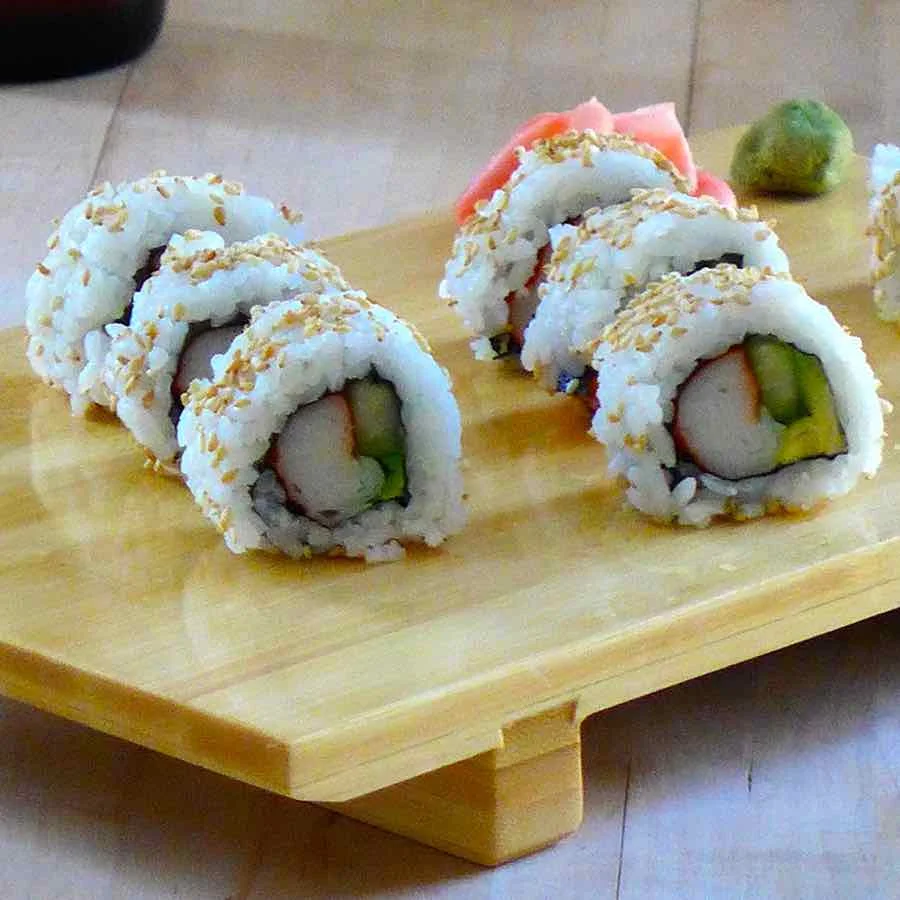
California rolls are uramaki sushi, with seasoned rice on the outside and nori wrapped around surimi, cucumber and avocado. This version makes eight rolls and pairs the cool, creamy filling with sesame, pickled ginger, wasabi and soy sauce.
Ingredients
- 1.2 kgsushi rice
- 1.5 litreswater
- 6 tablespoons (90 ml)rice vinegar
- 6 tablespoonssugar
- 2 tablespoonssalt
- As above (see sushi rice method)sushi rice
- 4 sheetsnori (dried seaweed)
- 300 gsurimi sticks
- 1cucumber
- 1avocado
- To tastetoasted sesame seeds
- To tastegari (pickled ginger)
- To tastewasabi
- To tastesoy sauce
Instructions
- 1
Rinse the rice
Put the sushi rice in a bowl and cover it with cold water. Swirl the grains, pour off the water and repeat two to three times, or until the water runs clear.
- 2
Cook the rice
Put the rice and 1.5 litres of water in a saucepan over high heat. Bring to the boil uncovered, then turn the heat to low, cover and cook for 15 minutes.
- 3
Rest the rice
Take the pan off the heat and leave the rice covered for 10 minutes.
- 4
Make the seasoning
Mix the rice vinegar, sugar and salt in a small bowl. Microwave on full power for 30 seconds.
- 5
Season the rice
Transfer the rice to a large wooden or glass bowl, not a metal one, and add the vinegar mixture. Fold gently with a wooden or plastic spatula so the seasoning coats the grains.
- 6
Cool the rice
Leave the rice to cool to room temperature. Do not refrigerate it, as chilling changes its texture.
- 7
Prepare the avocado
Halve the avocado and remove the stone. Peel each half and cut it into thin slices, 3–4 mm thick.
- 8
Prepare the cucumber
Cut the cucumber to the length of a nori sheet, then halve it lengthways. Scoop out the centre with a spoon and cut the cucumber into thin sticks.
- 9
Set up the mat
Halve the nori sheets. Before assembling the sushi, prepare a bowl of cold water and a clean, damp tea towel. Wrap a bamboo mat in cling film.
- 10
Spread on the rice
Place half a nori sheet on the bamboo mat and rinse your hands. Take a ball of rice and spread it over the nori; use the gathered thumb, index and middle fingers to help cover the whole sheet.
- 11
Turn the nori
Flip the nori over so that the rice is in contact with the cling film.
- 12
Add the filling
Arrange avocado lengthways, followed by surimi and a cucumber stick, around the first third of the sheet.
- 13
Roll the first turn
Lift and roll the bamboo mat to form the first cylinder, pressing it gently.
- 14
Finish the roll
Unroll the mat, then roll again to enclose the whole maki. Roll the mat over the maki and press lightly to shape it.
- 15
Add the sesame
Sprinkle toasted sesame seeds over the sides of the maki.
- 16
Slice the maki
Dip a sharp knife in water before cutting. If you do not have a very sharp Japanese knife, use a bread knife to cut without crushing the roll; the cucumber can be a little firm to slice.
- 17
Serve the rolls
Cut each maki into eight equal pieces. Serve with gari, wasabi and soy sauce.
What is a California roll?
A California roll is a type of uramaki: sushi rolled with rice on the outside and nori around the filling. The style is associated with Japanese-influenced sushi developed in North America, and combines surimi, avocado and cucumber.
This version relies on well-seasoned, room-temperature rice and a tightly shaped roll. Sesame on the outside adds a toasted note and a little texture.
Nutrition and macros by portion
The nutrition label shows one serving as written: 586 calories, 12g protein, 130g carbs, 4g fat.
| Portion | Adjustment | kcal | Protein | Carbs | Fat |
|---|---|---|---|---|---|
| Lighter | More cucumber, less rice | 410 kcal | 8g | 91g | 3g |
| This serving | As written | 586 kcal | 12g | 130g | 4g |
| Hungry | Add another roll | 879 kcal | 18g | 195g | 6g |
Most of the carbohydrates come from the sushi rice and the sugar in its seasoning; the avocado and sesame contribute much of the fat, while surimi provides some protein. Serve the rolls with a vegetable-rich side, and use soy sauce sparingly if you want to keep the salt in check.
Getting the rice right
Rinsing: wash the rice in several changes of cold water until it runs clear. This removes loose surface starch and helps the cooked grains stay distinct.
Seasoning: fold the vinegar mixture through the rice gently rather than crushing or stirring it vigorously. Let it cool at room temperature, as the method specifies, instead of refrigerating it.
Preparing the filling
Avocado: cut the slices evenly and keep them thin enough to lie neatly along the roll. This helps the filling distribute without making the roll difficult to close.
Cucumber: remove the watery centre before cutting the flesh into sticks. Aim for a length that fits the nori and a thickness that sits comfortably beside the surimi.
Rolling uramaki
Rice layer: spread the rice across the nori with damp hands, using light, even pressure. Once the sheet is turned over, keep the filling in the first third so the roll can close around it.
Bamboo mat: use the first roll to tuck the filling into a cylinder, then roll again to shape the whole maki. Gentle, even pressure helps hold it together without squeezing out the filling.
Slicing clean pieces
A sharp, damp knife makes cleaner cuts through the rice and filling. Wipe or re-wet the blade as needed, and use a bread knife if your other knife is not sharp enough to cut the cucumber without flattening the roll.
Serving the rolls
Serve the pieces with gari, wasabi and soy sauce, adding each to taste. A simple miso soup or a light salad can make the sushi part of a fuller meal without competing with the delicate filling.
Recipe notes & tips
- Keep a bowl of cold water nearby and dampen your hands before handling the sticky rice.
- Use a clean, damp tea towel to wipe your hands between rolls.
- Spread the rice gently and evenly so the outside layer is not too thick in one spot.
- Keep the filling in the first third of the nori to make the roll easier to close.
- Cut the rolls with a sharp, damp blade to reduce sticking and crushing.
Variations
- Use crab: replace the surimi with cooked crab meat, keeping the filling in compact strips.
- Add spring onion: place finely sliced spring onion alongside the other fillings for a sharper note.
- Make it spicy: mix a little wasabi into the filling before rolling.
- Swap the sesame: use black sesame seeds instead of toasted sesame seeds for a different finish.
- Add carrot: cut a small amount of carrot into thin sticks and roll it with the cucumber.
Common mistakes to avoid
- Skipping the rinse: excess surface starch can make the cooked rice clump; rinse until the water runs clear.
- Chilling the rice: refrigeration can change its texture; let it cool at room temperature as directed.
- Overfilling the nori: too much filling makes the roll hard to close; keep it near the first third of the sheet.
- Pressing too hard: heavy pressure can squash the rice and filling; use a light, even touch with the mat.
- Using a blunt knife: a dull blade can crush the roll; choose a sharp knife or the suggested bread knife.
How to store
For the best texture, serve California rolls soon after making them. If needed, refrigerate leftovers in an airtight container and eat within 1 day; keep soy sauce and accompaniments separate, and note that the rice may firm up when chilled.
Frequently asked questions
Can I make the sushi rice ahead?
It is best to season the rice and let it cool to room temperature shortly before assembling the rolls. The method advises against refrigerating it because chilling changes the texture.
Why is the rice on the outside?
California rolls are uramaki, or inside-out sushi: the rice faces out and the nori wraps around the filling. Turning the rice-covered nori over before adding the filling creates that arrangement.
How do I stop the rice sticking to my hands?
Rinse your hands and keep them slightly damp while spreading the rice. Avoid soaking them, as excess water can make the rice slippery.
Can I use a regular knife to cut the rolls?
Use a very sharp knife if you have one. The method recommends a bread knife as an alternative, as its serrated edge can cut the cucumber without crushing the maki.
Can I make California rolls without surimi?
Yes. Use cooked crab or another suitable filling in its place, cut into strips that fit neatly alongside the avocado and cucumber.
What does gari go with?
Serve gari on the side with the rolls, along with wasabi and soy sauce. Add each accompaniment to taste.
Cook it from the original
This recipe comes from 196flavors.com. Their page has the author’s own photos, notes and tips — the best place to cook it from.
Open the recipe on 196flavors.com