
Mashed Potato Cakes
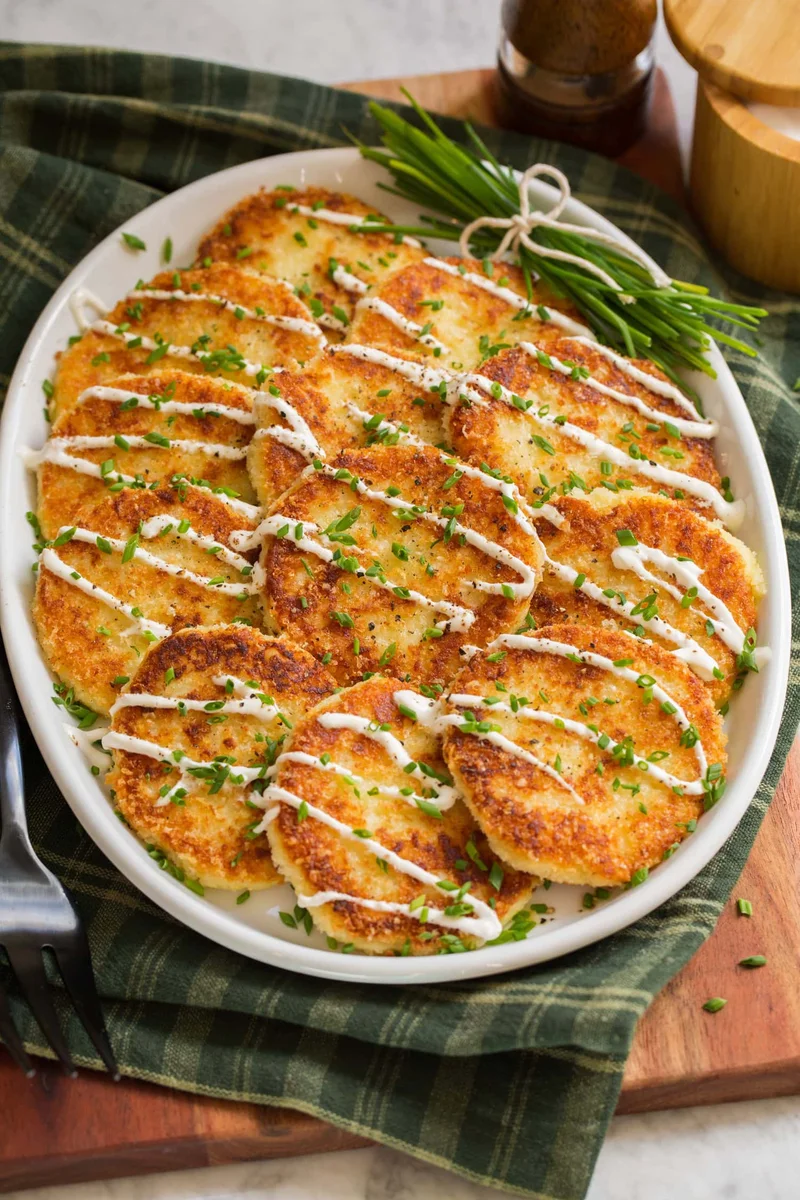
These crisp potato cakes turn chilled leftover mashed potatoes into golden, cheesy patties with a soft centre. They make a handy side or a satisfying way to use up mash.
Ingredients
- 450 g (2 cups)leftover mashed potatoes, well chilled
- 1 largeegg, whisked
- 40 g (⅓ cup), or a little more as neededplain flour
- 2.5 ml (½ tsp)baking powder
- 1.25 ml (¼ tsp, heaped)garlic powder
- 1.25 ml (¼ tsp, heaped)onion powder
- to tastesalt and black pepper
- 30 g (½ cup)panko breadcrumbs
- 50 g (½ cup)finely shredded Parmesan
- 45 ml (3 tbsp), dividedolive oil
- 60 ml (¼ cup), thinned with a little milk to a drizzling consistency (optional)natural sour cream
- 22.5 ml (1½ tbsp), minced (optional)fresh chives
Instructions
- 1
Mix the potatoes
Put the mashed potatoes in a medium mixing bowl. Drizzle in the whisked egg, then sprinkle over the flour, baking powder, garlic powder, onion powder, and salt and pepper to taste.
- 2
Bring together
Gently toss and stir the mixture with a fork until it holds together, taking care not to overwork it or the potatoes may turn gluey. If needed, mix in a few more tablespoons of flour to help it hold.
- 3
Portion the mixture
Use a 45 ml (3 tbsp) cookie scoop to portion the potatoes onto parchment paper or a greased baking sheet.
- 4
Mix the coating
Toss the panko breadcrumbs and Parmesan together in a shallow bowl.
- 5
Heat the oil
Heat 22.5 ml (1½ tbsp) olive oil in a 30 cm (12-inch) non-stick frying pan over medium heat.
- 6
Shape and coat
Spray your hands with non-stick cooking spray. Working with one portion at a time, shape the potato mixture into an even disc about 6–7.5 cm (2½–3 inches) across, then press it lightly into the panko-Parmesan mixture to coat both sides.
- 7
Fry the cakes
Cook 6 potato cakes at a time for about 1½–2 minutes per side, until golden underneath. Flip and cook until golden on the other side, then transfer to a plate. Repeat with the remaining 22.5 ml (1½ tbsp) olive oil and the remaining 6 cakes.
- 8
Serve warm
Serve the cakes warm, drizzled with sour cream and sprinkled with chives.
What are mashed potato cakes?
Mashed potato cakes are patties made by binding mash with egg and flour, then frying them until their outsides are crisp. This is a practical leftover-potato preparation rather than a dish with one specific origin.
Here, Parmesan and panko form a savoury, crunchy coating around a soft potato centre. Chilled mash helps the portions hold their shape as you form and coat them.
Nutrition and macros by portion
The nutrition label shows one serving as written: 345 calories, 9g protein, 40g carbs, 26g fat.
| Portion | Adjustment | kcal | Protein | Carbs | Fat |
|---|---|---|---|---|---|
| Lighter | Use less olive oil | 241 kcal | 6g | 28g | 18g |
| This serving | As written | 345 kcal | 9g | 40g | 26g |
| Hungry | Serve a larger portion | 518 kcal | 14g | 60g | 39g |
The potatoes and flour provide most of the carbohydrates, while olive oil and Parmesan contribute much of the fat; the egg, potatoes and cheese contribute protein. Balance the plate with a generous serving of vegetables or salad alongside the cakes.
Why chilled mash matters
Cold potatoes: chilled mash is firmer and easier to portion than warm, freshly made mash. If it feels very soft, add flour a little at a time until it holds together.
Keep the mixture tender
Gentle mixing: use a fork to combine the egg and dry ingredients with the potatoes just until the mixture comes together. Working it too much can make the cakes dense or gluey.
Flour: add extra only if the mixture will not hold its shape. The amount needed can vary depending on how loose or creamy the leftover mash is.
Build an even crust
Shaping: make each portion an even disc, so it cooks at a similar rate across its surface. Press each side lightly into the panko and Parmesan rather than packing the coating on heavily.
Coating: panko gives the cakes a crisp exterior, while finely shredded Parmesan helps create a savoury, browned crust.
Watch the pan
Heat: cook over medium heat so the coating can turn golden without scorching before the centre is hot. The recipe uses 1½ tablespoons of oil for the first batch and another 1½ tablespoons for the second.
Doneness: look for a golden-brown underside before flipping, usually after about 1½–2 minutes. Handle the cakes gently when turning them so the coating stays in place.
Serve them warm
Finish: a drizzle of thinned sour cream adds a cool, tangy contrast, and chives bring a fresh onion note. Both are optional, so the cakes can also be served plain.
Pairing: serve them alongside a green salad or cooked vegetables for a simple meal, or offer them as a side with another main dish.
Recipe notes & tips
- Use well-chilled mash so it is easier to portion and shape.
- Mix only until the potato mixture holds together to help keep the cakes tender.
- Add extra flour gradually if the mixture seems too soft to handle.
- Shape the cakes to an even thickness so they brown at a similar rate.
- Fry in batches without crowding the pan, and allow the oil to heat before adding each batch.
- Thin the sour cream with a little milk only if you want a drizzle-able finish.
Variations
- Add herbs: Mix finely chopped parsley into the potato mixture for a fresh note.
- Change the cheese: Use another finely grated hard cheese in place of Parmesan.
- Add spring onion: Stir finely sliced spring onion into the mixture for extra savoury flavour.
- Make them spicier: Add a pinch of chilli flakes to the potato mixture.
- Skip the topping: Leave off the sour cream and chives for a simpler finish.
Common mistakes to avoid
- Overworking the mash: The mixture can become gluey; stir gently just until it holds together.
- Adding too much flour: This can make the cakes heavy; add extra a little at a time only if needed.
- Making uneven discs: Different thicknesses cook at different speeds; shape each cake to a similar size.
- Flipping too soon: The crust may break apart; wait until the underside is golden before turning.
- Crowding the pan: The cakes are harder to turn when packed together; cook 6 at a time as directed.
How to store
Refrigerate leftover cooked cakes in a covered container for up to 3 days. Reheat in a frying pan over medium heat until hot throughout and crisp again, or use an oven.
Frequently asked questions
Can I use freshly made mashed potatoes?
The recipe is designed for well-chilled leftover mash, which is firm and easier to shape. If using freshly made mash, chill it first so the mixture is less difficult to handle.
How do I stop the potato cakes falling apart?
Use chilled mash and mix in the egg and flour until the mixture holds together. If it still feels too soft, add a few more tablespoons of flour gradually.
Can I make the cakes ahead?
You can shape and coat them shortly before cooking, keeping them chilled until the pan is ready. For the crispiest crust, cook them just before serving.
How do I know when to flip them?
After about 1½–2 minutes, check that the underside is golden brown and releases easily from the pan. Then turn them gently and cook the other side until golden.
Do I have to use the sour cream and chives?
No. Both are optional toppings, and the cakes can be served without either.
Cook it from the original
This recipe comes from cookingclassy.com. Their page has the author’s own photos, notes and tips — the best place to cook it from.
Open the recipe on cookingclassy.com