
Shawarma
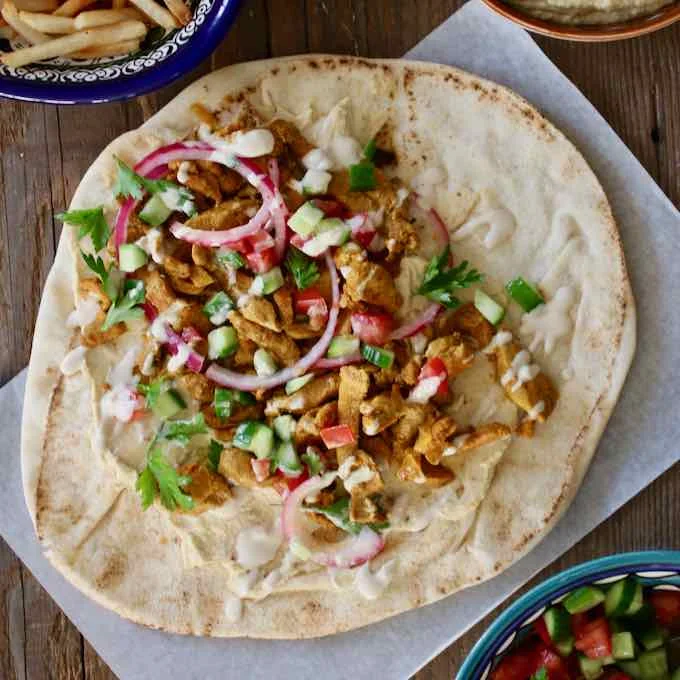
Shawarma is warmly spiced lamb, slow-cooked until tender and sliced for serving. This oven-braised version uses a bright lemon-and-vinegar marinade and onions to flavour the meat and its cooking juices.
Ingredients
- 2 kgleg or shoulder of lamb
- 2spring onions, cut into thick slices
- 250 mlwater
- 1lemon, freshly squeezed
- 8 clovesgarlic, peeled
- 2shallots, peeled and halved
- 105 ml (7 tablespoons)olive oil
- 50 mlred wine vinegar or cider vinegar
- 15 ml (3 teaspoons)ground cumin
- 10 ml (2 teaspoons)ground coriander
- 2.5 ml (½ teaspoon)freshly grated nutmeg
- 15 ml (1 tablespoon)sumac
- 10 ml (2 teaspoons)smoked paprika
- 5 ml (1 teaspoon)turmeric
- 5 ml (1 teaspoon)Aleppo pepper
- 5 ml (1 teaspoon)ground ginger
- 2.5 ml (½ teaspoon)cinnamon
- 2.5 ml (½ teaspoon)ground cardamom
- 30 ml (2 tablespoons)fresh coriander, finely chopped
- 10 ml (2 teaspoons)fine salt
- As listedDutch oven or heavy cast-iron casserole
- As listedfood processor
Instructions
- 1
Blend the marinade
Put all the marinade ingredients in a food processor and blend until they form a paste.
- 2
Prepare the onions
Arrange the thick onion slices across the bottom of a Dutch oven or heavy cast-iron casserole.
- 3
Coat the meat
Pat the meat dry, then spread the blended paste over its entire surface.
- 4
Position the lamb
For lamb, coat the inside where the bone was removed as well. Set it on the onions with the opening facing down and the fat facing up.
- 5
Position the poultry
If using poultry, place it on top of the onion slices.
- 6
Marinate overnight
Cover the casserole and leave the meat to marinate in the refrigerator for 12 hours.
- 7
Bring to room temperature
Take the meat out of the refrigerator 2 hours 30 minutes before cooking and leave it at room temperature.
- 8
Heat the oven
Preheat the fan oven to 160°C.
- 9
Add the water
Pour the water into the casserole around the meat, taking care not to pour it directly over the meat.
- 10
Brush with lemon
Use a pastry brush to coat the meat with half of the lemon juice.
- 11
Begin cooking
Cover and cook for 45 minutes for poultry or 2 hours 30 minutes for lamb.
- 12
Brown the top
Uncover the casserole so the top can brown. Brush the meat with the remaining lemon juice and cook for a further 30 minutes for poultry or 1 hour for lamb.
- 13
Check the casserole
Check the meat and the liquid. If the casserole looks dry, add about 50–100 ml of boiling water around the meat. If the crust looks too dark, loosely cover it with foil.
- 14
Finish the poultry
If cooking poultry, continue cooking for 15 minutes.
- 15
Tenderise the lamb
If cooking lamb, continue until it pulls apart easily with tongs or two forks. This may take up to about 1 hour.
- 16
Check lamb again
If the lamb is still tough, keep cooking until tender, checking every 20 minutes. Make sure the top is not burning and there is still sauce in the bottom; if needed, add a little more boiling water around the meat.
- 17
Remove the meat
Take the casserole out of the oven and transfer the meat to a chopping board.
- 18
Rest and slice
Leave the meat to rest for a few minutes, then cut it into thin strips.
- 19
Add the juices
Pour all the remaining juices from the casserole over the meat and serve.
What is shawarma?
Shawarma is a Middle Eastern dish of seasoned meat, traditionally cooked on a rotating spit and often served in flatbread. Its name and styles are associated with several countries across the region, including Syria, Turkey, Lebanon, Egypt and Israel.
This home-cooked version adapts the slow-roasted approach for a covered casserole. A fragrant spice paste, onion base and lemony cooking juices give the lamb plenty of flavour as it becomes tender.
Nutrition and macros by portion
The nutrition label shows one serving as written: 800 calories, 47g protein, 5g carbs, 63g fat.
| Portion | Adjustment | kcal | Protein | Carbs | Fat |
|---|---|---|---|---|---|
| Lighter | Smaller lamb portion, more salad | 560 kcal | 33g | 4g | 44g |
| This serving | As written | 800 kcal | 47g | 5g | 63g |
| Hungry | Larger lamb portion | 1200 kcal | 71g | 8g | 95g |
Lamb supplies most of the protein and much of the fat, while the olive oil adds further fat; the small amount of water and the spices contribute little carbohydrate. Serve a moderate amount with salad or vegetables and bread or rice to make a balanced plate.
Building the marinade
Spice paste: cumin, coriander, smoked paprika, turmeric, ginger, cinnamon, cardamom, nutmeg, sumac and Aleppo pepper create a layered seasoning. Blending them with garlic, shallots, oil and vinegar helps the mixture coat the meat evenly.
Acid and aromatics: lemon and vinegar sharpen the rich lamb, while fresh coriander adds a green, herbal note. The recipe uses the lemon in two stages, reserving half of its juice for later.
Preparing the lamb
Dry surface: patting the lamb dry before adding the paste helps the marinade cling rather than slide off. Spread it over the outside and, if the bone has been removed, inside the opening too.
Fat side up: positioning the lamb with its fat facing upwards lets the seasoned surface brown during the uncovered part of cooking. The onion slices underneath form a flavourful base for the meat and juices.
Getting the slow cook right
Covered stage: the casserole stays covered for the first part of the roast, which helps the meat cook gently in the moist environment. Keep the added water around the meat rather than pouring it over the crust.
Tenderness check: cooking time varies with the cut and its size, so use the fork test rather than the clock alone for lamb. It is ready when it pulls apart easily; if it still feels tough, continue cooking and check every 20 minutes.
Managing the crust and juices
Uncovered finish: removing the lid allows the top to brown, while the second brushing of lemon adds a fresh edge. Watch the colour as it cooks and loosely cover the top with foil if it is getting too dark.
Liquid level: check the bottom of the casserole as the cooking continues. If it looks dry, add 50–100 ml of boiling water around the meat, or a little more if needed, rather than letting the juices catch.
Serving the shawarma
Resting and slicing: give the meat a few minutes on the board before cutting it into thin strips. Pour the cooking juices over the slices so they stay moist and carry the spice flavour through.
To serve: tuck the lamb into pita bread or flatbread, or serve it alongside rice and a crisp salad. The fresh, sharp accompaniments balance the rich meat and aromatic juices.
Recipe notes & tips
- Blend the marinade until smooth so it spreads evenly over the lamb.
- Use a casserole with a well-fitting lid to retain moisture during the covered cooking stage.
- Add boiling water around the meat, not over the browned surface.
- Check the lamb for tenderness with two forks rather than relying only on the suggested cooking time.
- Rest the meat briefly before slicing so it is easier to handle.
- Spoon every bit of the remaining cooking juice over the sliced meat before serving.
Variations
- Use chicken: follow the poultry cooking times given in the method.
- Choose cider vinegar: substitute it for the red wine vinegar as listed.
- Adjust the heat: use less Aleppo pepper for a milder spice paste.
- Serve in flatbread: add the sliced meat to pita with your preferred fresh accompaniments.
- Serve with rice: spoon the meat and its juices over cooked rice instead of bread.
Common mistakes to avoid
- Pouring water over the meat: add it around the meat so the seasoned surface stays intact.
- Skipping the inside of boned lamb: spread paste into the opening as well as over the outside.
- Letting the casserole dry out: check the juices and add boiling water around the meat when needed.
- Leaving a dark crust uncovered: loosely cover it with foil if it is browning too quickly.
- Stopping while the lamb is tough: continue cooking and test it every 20 minutes until it pulls apart easily.
- Slicing immediately: let the meat rest for a few minutes first.
How to store
Refrigerate leftover meat and cooking juices in a covered container for up to 3 days. Reheat gently with some of the juices in a covered pan or microwave-safe dish until piping hot.
Frequently asked questions
Can I use chicken instead of lamb?
Yes. The recipe includes poultry cooking times: 45 minutes covered, then 30 minutes uncovered and a further 15 minutes. Check that the poultry is cooked through before serving.
How long should I cook the lamb?
The listed cooking stages add up to about 4 hours 15 minutes before any extra time needed for tenderness. Continue cooking if it does not pull apart easily, checking every 20 minutes.
Can I prepare the marinade in advance?
Yes. Blend the marinade and coat the meat ahead of time, then cover and leave it in the refrigerator for the specified 12 hours.
What can I use instead of a Dutch oven?
Use a heavy cast-iron casserole with a lid, as described in the method. It needs to be suitable for oven cooking and large enough to hold the meat.
How do I stop the lamb from drying out?
Check the liquid in the casserole during cooking and add 50–100 ml of boiling water around the meat if it looks dry. Keep the casserole covered for the initial cooking stage.
How should I serve shawarma?
Serve the thinly sliced meat in pita or flatbread, or alongside rice and salad. Spoon the casserole juices over the meat before serving.
Cook it from the original
This recipe comes from 196flavors.com. Their page has the author’s own photos, notes and tips — the best place to cook it from.
Open the recipe on 196flavors.com