
Vegan White Sandwich Bread
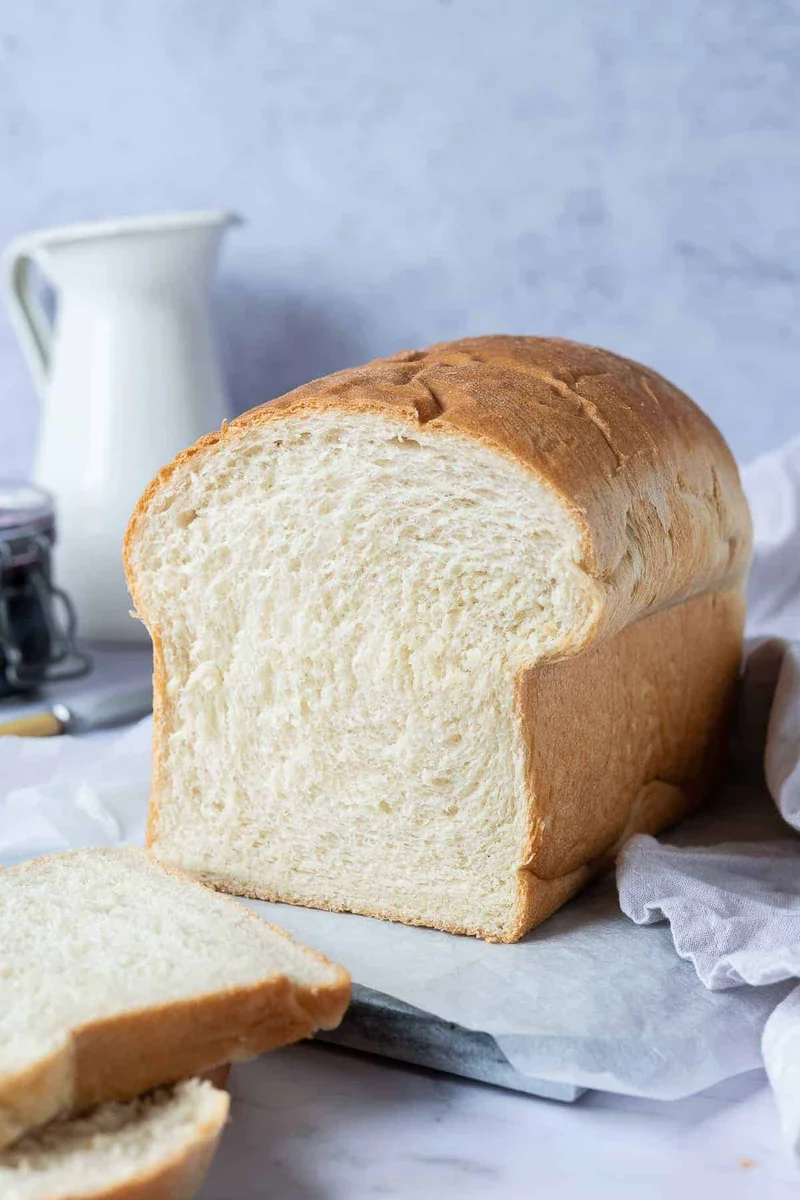
This soft, egg-free and dairy-free white loaf is made for everyday sandwiches, toast and snacks. A simple enriched dough with vegan butter bakes into a tender loaf with a lightly golden crust.
Ingredients
- 450 g (3 + 3/4 cups)white bread flour
- 1 1/2 tspsalt
- 25 g (2 Tbsp)caster or granulated sugar
- 7 g (2 1/4 tsp)fast-action or instant yeast
- 150 ml (1/2 cup + 2 Tbsp)unsweetened non-dairy milk, lukewarm (soy works especially well)
- 150 ml (1/2 cup + 2 Tbsp), plus extra if neededwater, lukewarm
- 60 g (1/4 cup)vegan butter or margarine, softened (block-style works best)
Instructions
- 1
Mix dry ingredients
Put the flour, yeast, sugar and salt in a large bowl or in the bowl of a stand mixer fitted with a dough hook. Mix them together.
- 2
Add the liquids
Stir in the lukewarm non-dairy milk and enough lukewarm water to make a soft, slightly sticky dough. You may not need all the water, or you may need a little more.
- 3
Knead in butter
Knead for about 5 minutes, until smooth. Add the softened vegan butter or margarine and keep kneading until fully incorporated and the dough is smooth and elastic. It should feel stretchy and pull cleanly away from the bowl; if it feels wet rather than slightly sticky, knead in a little more flour as needed.
- 4
First rise
Put the dough in a lightly greased bowl, cover it and leave it in a warm room until at least doubled in size, about 1–2 hours.
- 5
Shape the dough
Once risen, punch the dough down and knead briefly for 30 seconds to release the air. Leave it to rest for 10 minutes, then roll it on a lightly floured surface into a rectangle about 20 x 38 cm (8 x 15 in).
- 6
Roll into a log
Starting at one of the short edges, roll the dough tightly into a log about 20 cm (8 in) long.
- 7
Fill the tin
Grease an 11.5 x 21.5 to 13 x 23 cm (8.5 x 4.5 to 9 x 5 in) loaf tin. Place the dough in it seam-side down.
- 8
Second rise
Cover the tin loosely and leave it in a warm place until the dough rises about 2.5 cm (1 in) above the rim, around 45–60 minutes. A gentle finger press should spring back slowly and may leave a small dent; if it springs back quickly, give it more time.
- 9
Heat the oven
While the dough rises, preheat the oven to 190°C/170°C fan (375°F, gas mark 5).
- 10
Bake the loaf
Bake for about 30–35 minutes, until golden brown and a probe thermometer inserted in the centre reads 94°C (201°F). Without a thermometer, tap the bottom of the loaf: it should sound hollow.
- 11
Cool before slicing
Transfer the loaf to a wire rack and let it cool completely before slicing.
What is vegan white sandwich bread?
White sandwich bread is a mild, soft loaf shaped to make even slices for everyday sandwiches and toast. This version keeps the familiar enriched-dough style while using non-dairy milk and vegan butter instead of dairy and eggs.
The method relies on a well-kneaded dough and two rises. Together, those steps help create a loaf that is tender inside and easy to slice once cool.
Nutrition and macros by portion
The nutrition label shows one serving as written: 1890 calories, 53g protein, 333g carbs, 43g fat.
| Portion | Adjustment | kcal | Protein | Carbs | Fat |
|---|---|---|---|---|---|
| Lighter | Use less vegan butter | 1323 kcal | 37g | 233g | 30g |
| This serving | As written | 1890 kcal | 53g | 333g | 43g |
| Hungry | Serve a larger slice | 2835 kcal | 80g | 500g | 65g |
Most of the loaf’s carbohydrates come from the bread flour, while the vegan butter contributes much of its fat. The flour also supplies most of the protein, with smaller amounts from the non-dairy milk and other ingredients. For a balanced meal, pair a slice or sandwich with a filling rich in vegetables and a source of protein.
Choosing the ingredients
Bread flour: its higher protein content helps the dough develop the structure needed for a springy, sliceable loaf. Measure the flour carefully, since too much can make the bread dense.
Non-dairy milk: unsweetened milk keeps the flavour balanced, and soy milk is the suggested choice. Use it lukewarm, not hot, so it combines comfortably with the yeast.
Vegan butter: softened block-style butter is easiest to knead into the dough. Add it after the initial kneading so the dough can begin to develop before the fat is worked in.
Getting the dough consistency right
Water: add it gradually after the milk rather than pouring in the full amount at once. Flour can absorb liquid differently, so the dough may need slightly less or more than the listed quantity.
Texture: aim for a soft dough that is a little sticky, not wet. If it feels wet, knead in a small amount of flour; avoid adding so much that the dough becomes stiff.
Kneading and incorporating the butter
Initial knead: work the dough for about 5 minutes before adding the vegan butter. This gives it time to become smoother and more cohesive.
After the butter: keep kneading until no visible streaks remain and the dough feels elastic and stretchy. It should pull away cleanly from the sides of the bowl while still feeling slightly tacky.
Shaping for an even loaf
Rectangle: after the dough’s first rise, let it rest for 10 minutes before rolling it to about 20 x 38 cm. This brief pause makes it easier to shape.
Tight roll: roll from a short edge into a snug log and place it seam-side down. This helps the loaf hold its shape in the tin as it rises and bakes.
Judging the rises
First rise: look for dough that has at least doubled, rather than relying on the clock alone. The suggested time is 1–2 hours in a warm room.
Second rise: the dough should sit about 2.5 cm above the tin rim. A gentle press that springs back slowly is a useful cue that it is ready to bake; a quick spring-back means it needs more time.
Baking, cooling and serving
Bake: the crust should be golden after about 30–35 minutes, and the centre should reach 94°C if checked with a probe thermometer. A hollow sound when tapping the bottom is the alternative cue given in the method.
Cool: wait until the loaf is completely cool before slicing, so the soft crumb has time to set. Serve it with sandwich fillings, or toast slices and add your favourite toppings.
Recipe notes & tips
- Use lukewarm rather than hot milk and water.
- Add the water gradually because the dough may not need the full amount.
- Let the dough become elastic before adding the softened vegan butter.
- Use the dough’s size and the finger-press test to judge the rises.
- Cool the loaf fully on a wire rack before cutting it.
Variations
- Seeded crust: sprinkle seeds over the shaped loaf before baking.
- Wholemeal blend: replace part of the white bread flour with wholemeal bread flour and check the dough’s consistency as you add the water.
- Herb loaf: knead dried herbs into the dough for a savoury variation.
- Garlic loaf: add a little garlic powder with the dry ingredients for a gentle garlic flavour.
- Sweet toast loaf: add a small amount of cinnamon with the dry ingredients for a lightly spiced loaf.
Common mistakes to avoid
- Adding all the water at once: hold some back and add it only if the dough needs it.
- Using hot liquids: keep the milk and water lukewarm rather than hot.
- Adding butter too early: knead the dough for about 5 minutes first.
- Adding too much flour: use only a little extra if the dough feels wet, as excess flour can make the loaf firm.
- Under-proofing the shaped loaf: wait for it to rise above the tin and spring back slowly when pressed.
- Slicing while warm: let the loaf cool completely so the crumb can set.
How to store
Once completely cool, store the loaf in an airtight bread bag or container at room temperature and use within a few days. Toast slices to warm them, or reheat slices briefly in the oven; freezing sliced portions is also practical for longer storage.
Frequently asked questions
Can I use a different non-dairy milk?
Yes, use an unsweetened non-dairy milk. Soy is the suggested choice, but the recipe does not require it.
Do I have to use all the water?
No. Add it gradually until the dough is soft and slightly sticky; the amount needed can vary.
How do I know when the first rise is finished?
The dough should have at least doubled in size. This may take about 1–2 hours in a warm room.
How can I tell if the shaped loaf is ready to bake?
It should rise about 2.5 cm above the tin rim. A gentle press should spring back slowly and may leave a small indentation.
Can I tell if the bread is baked without a thermometer?
Yes. The loaf should be golden brown and sound hollow when tapped on the bottom. A thermometer reading of 94°C in the centre is the more precise check.
Why should I wait for the loaf to cool before slicing?
Cooling gives the crumb time to set, making the loaf easier to slice without squashing its soft texture.
Cook it from the original
This recipe comes from domesticgothess.com. Their page has the author’s own photos, notes and tips — the best place to cook it from.
Open the recipe on domesticgothess.com