
Vegan Welsh Cakes
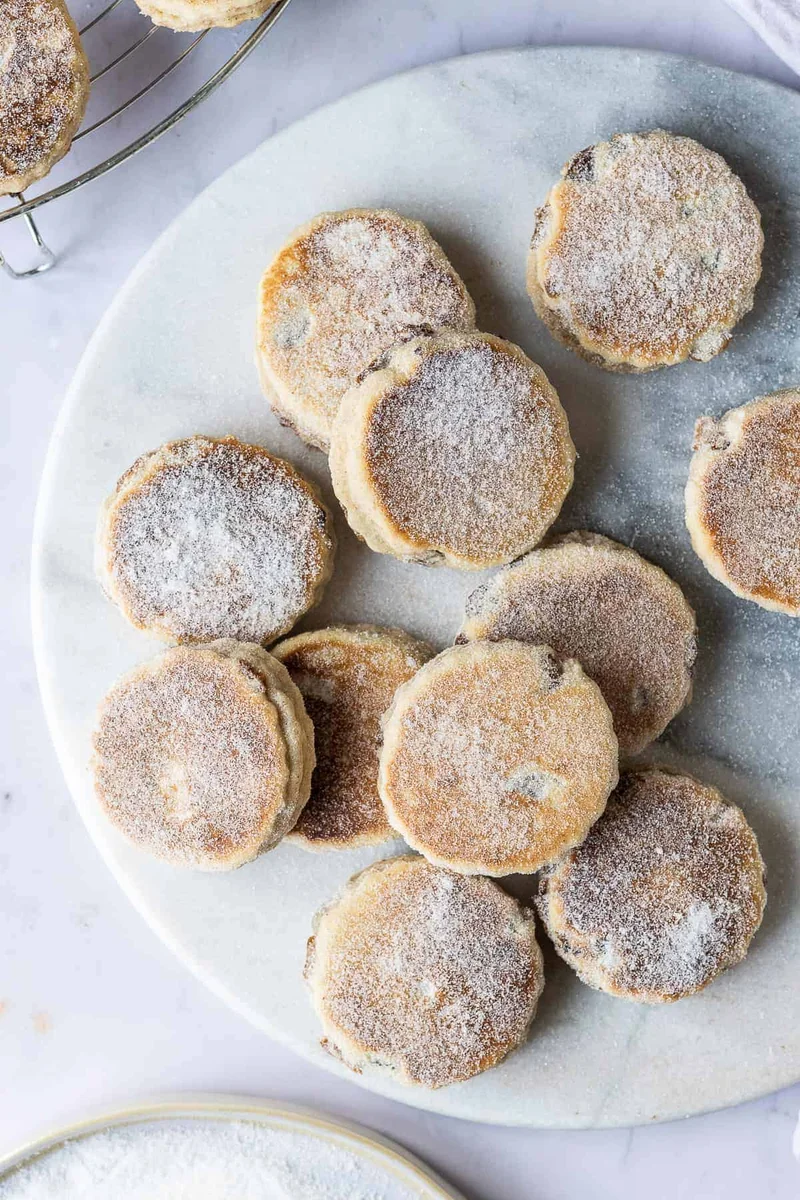
These vegan Welsh cakes are lightly spiced griddle cakes studded with sultanas or currants. They come together quickly and make a tender, sweet snack without eggs or dairy.
Ingredients
- 225 gSelf-raising flour (or plain flour plus 1 tsp baking powder)
- 1/2 tspMixed spice
- 110 gVegan block butter, cold and cubed
- 85 g plus extra for dustingCaster sugar
- 65 gSultanas or currants
- 2–4 tbsp (30–60 ml)Non-dairy milk
Instructions
- 1
Mix dry ingredients
Put the flour and mixed spice in a bowl and stir to combine. If using plain flour, add the baking powder as well.
- 2
Rub in butter
Add the cold, cubed butter. Rub it into the flour with your fingertips until the mixture looks like fine breadcrumbs, with no lumps of fat remaining.
- 3
Add sugar and fruit
Stir the sugar and sultanas or currants into the mixture.
- 4
Bring dough together
Gradually stir in enough milk to form a ball of dough. Keep it soft but not sticky, and take care not to add too much milk.
- 5
Roll and cut
On a lightly floured surface, roll the dough to about 5 mm thick. Cut rounds with a fluted cutter measuring 6.5–7.5 cm.
- 6
Reuse the scraps
Gently bring the scraps together and roll them out again to cut more rounds.
- 7
Prepare the pan
Set a cast-iron griddle or heavy-based frying pan over low-medium heat and brush it with a little butter. Put some caster sugar in a bowl for dusting.
- 8
Cook the cakes
Cook a few cakes at a time for about 3 minutes, until golden. Carefully flip and cook for about 3 minutes more, until golden on both sides and cooked through; they will firm up as they cool. Watch them closely, as they can burn quickly.
- 9
Test the heat
Because pan temperature can be tricky to judge, cook one test cake first and check that the pan is not too hot.
- 10
Dust while hot
As each batch finishes cooking, roll the hot Welsh cakes in caster sugar. Repeat with the remaining cakes.
What are Welsh cakes?
Welsh cakes are traditional Welsh griddle cakes, cooked on a hot plate or pan rather than baked in an oven. They are usually small, lightly sweet and served with a coating of sugar.
This version keeps the familiar spiced, fruit-studded character while using vegan block butter and non-dairy milk. Cold fat rubbed into the flour helps give the cakes their tender, crumbly texture.
Nutrition and macros by portion
The nutrition label shows one serving as written: 179 calories, 2g protein, 26g carbs, 7g fat.
| Portion | Adjustment | kcal | Protein | Carbs | Fat |
|---|---|---|---|---|---|
| Lighter | Skip the sugar dusting | 125 kcal | 2g | 18g | 5g |
| This serving | As written | 179 kcal | 2g | 26g | 7g |
| Hungry | Serve a larger portion | 269 kcal | 3g | 39g | 11g |
Most of the carbohydrates come from the flour, sugar and dried fruit, while the vegan block butter supplies most of the fat. The flour and dried fruit contribute a little protein, but these cakes are mainly a sweet snack; pair a portion with fresh fruit and plant-based yoghurt for a more balanced plate.
Choosing the ingredients
Flour: Self-raising flour gives the cakes their lift; plain flour works with the stated teaspoon of baking powder. Mixed spice provides a gentle warmth without overwhelming the dried fruit.
Butter: Choose a firm vegan block, not a soft spread from a tub, so it can be rubbed evenly into the flour. Sultanas or currants both work; smaller currants distribute particularly evenly through the dough.
Getting the dough right
Cold butter: Rub it in with your fingertips until the mixture resembles fine breadcrumbs and there are no obvious lumps. Working quickly helps keep the fat cool.
Milk: Add it gradually, since the amount needed can vary. Stop as soon as the mixture holds together in a soft ball; sticky dough is harder to roll and cut cleanly.
Rolling and cutting
Thickness: Roll the dough to about 5 mm so the cakes cook through without becoming too dry. A lightly floured work surface helps prevent sticking, but too much extra flour can toughen the dough.
Scraps: Gather the offcuts gently and roll them out again rather than kneading them firmly. This keeps the later cakes as tender as the first ones.
Managing the heat
Test cake: Start with one cake to check the pan temperature before cooking a full batch. The cakes need time to colour while cooking through, so a pan that is too hot can burn their outsides first.
Small batches: Leave room to flip each cake carefully and keep an eye on the undersides. The recipe gives about 3 minutes per side, but visual cues matter because pans and hobs vary.
When they are done
Colour: Look for golden surfaces on both sides and cakes that are cooked through. They may still feel soft as they come off the pan, then firm up as they cool.
Sugar coating: Roll the cakes in caster sugar while they are still hot so it adheres. Have the sugar ready before the first batch is cooked.
Serving ideas
Welsh cakes are enjoyable warm or cooled, on their own as a snack or with a cup of tea. Their sweetness and dried fruit make them substantial enough to serve as a small afternoon treat.
For a more filling plate, pair one or two cakes with fresh fruit and an unsweetened plant-based yoghurt. Dusting sugar is optional if you prefer a less sweet finish.
Recipe notes & tips
- Keep the vegan butter cold until you are ready to rub it into the flour.
- Add the non-dairy milk a little at a time so the dough does not become sticky.
- Use a light dusting of flour on the work surface to help roll the dough without drying it out.
- Cook one test cake first and adjust the heat if it colours too quickly.
- Prepare the dusting sugar before cooking, so the cakes can be coated while hot.
- Watch each batch closely, as the cakes can go from golden to burnt quickly.
Variations
- Use currants: Swap the sultanas for currants for a smaller, evenly distributed fruit.
- Change the spice: Use pumpkin spice in place of mixed spice for a similar warm flavour.
- Skip the dusting: Leave off the final sugar coating for a less sweet finish.
- Use plain flour: Add the stated 1 tsp baking powder if you do not have self-raising flour.
- Choose another milk: Use any non-dairy milk you have, adding it gradually to the dough.
Common mistakes to avoid
- Adding milk too quickly: The dough can turn sticky; add it gradually and stop once it forms a soft ball.
- Using soft spread: It can make the dough difficult to handle; choose cold, firm vegan block butter.
- Rolling too thinly: Thin cakes can dry out; aim for about 5 mm thickness.
- Heating the pan too much: The cakes may burn before cooking through; check the heat with a test cake.
- Crowding the pan: Cakes are harder to flip and monitor; cook just a few at a time.
- Waiting to coat them: Sugar sticks best while the cakes are hot, so roll each batch as it comes off the pan.
How to store
Once completely cool, keep the Welsh cakes in an airtight container at room temperature and eat within 2–3 days. Warm them briefly in a dry pan over low heat or in the microwave; avoid overheating, which can dry them out.
Frequently asked questions
Can I make the dough ahead?
For the best texture, roll, cut and cook the dough soon after mixing. If you need to prepare it ahead, keep it covered in the fridge and let it soften enough to roll.
How do I know when a Welsh cake is cooked through?
It should be golden on both sides after about 3 minutes per side and feel set at the edges. The cakes firm up as they cool.
Can I use plain flour?
Yes. Add 1 tsp baking powder to the plain flour and mixed spice, as indicated in the ingredient list.
Why is my dough sticky?
It may have taken less milk than you added. Add the milk gradually next time, stopping once the dough comes together into a soft, non-sticky ball.
Can I freeze Welsh cakes?
Yes. Freeze them once cool in a suitable airtight container, separating layers if needed. Defrost at room temperature and warm briefly before serving if you like.
Can I leave out the dried fruit?
Yes, though the cakes will lose the fruity bursts of sweetness. You can make them without fruit and keep the rest of the method the same.
Cook it from the original
This recipe comes from domesticgothess.com. Their page has the author’s own photos, notes and tips — the best place to cook it from.
Open the recipe on domesticgothess.com