
Lasagna Roll Ups
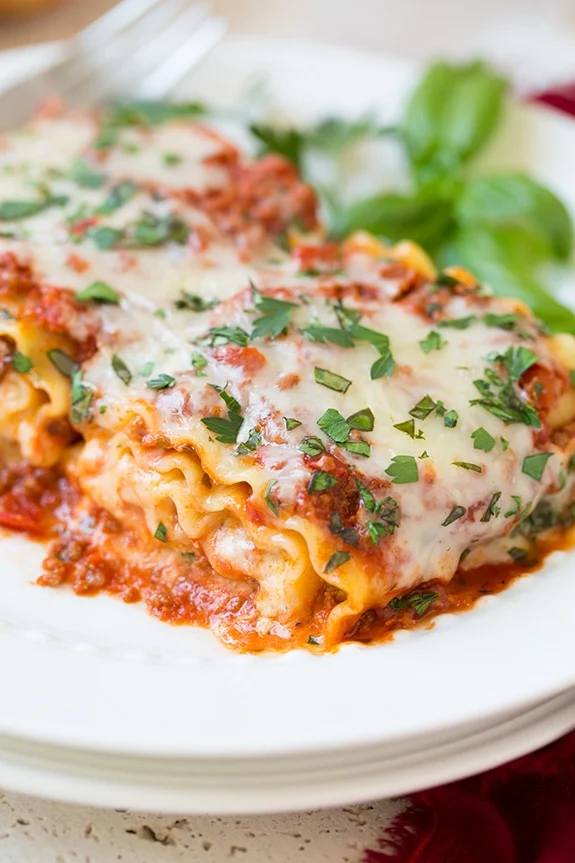
Lasagna roll-ups wrap a savoury ricotta and cheese filling in individual pasta sheets, then bake them in a rich beef and tomato sauce. They bring the familiar comfort of lasagna to the table in neat, easy-to-serve portions.
Ingredients
- 60 ml (4 Tbsp), dividedolive oil
- 227 g (8 oz)lean minced beef
- 40 g (1/4 cup), finely choppedyellow onion
- 794 g (28 oz)tin crushed tomatoes
- 3 cloves, mincedgarlic
- 3 Tbsp fresh or 10 ml (2 tsp) dried, plus more to servefresh basil, chopped, or dried basil
- 1/2 tspdried oregano
- to tastesalt and freshly ground black pepper
- 425 g (15 oz)ricotta cheese
- 1 largeegg
- 3 Tbsp, chopped, plus more to servefresh flat-leaf parsley
- 250 g (2 1/2 cups), freshly grated, dividedmozzarella cheese
- 75 g (3/4 cup), freshly and finely grated, dividedParmesan cheese
- 33 g (1/3 cup), freshly and finely gratedRomano cheese
- 1/4 tspsalt
- 1/4 tsp, freshly groundblack pepper
- 12, uncookedlasagna noodles
Instructions
- 1
Brown the beef
Preheat the oven to 190°C (375°F). Add 15 ml (1 Tbsp) olive oil to a large non-stick frying pan and heat over medium-high heat. Crumble in the beef, add the chopped onion and cook, stirring now and then and breaking up the meat, until browned.
- 2
Process the beef
Drain the fat from the beef mixture. Transfer it to a food processor and pulse for about 5 seconds, until the meat is finely ground.
- 3
Simmer the sauce
Return the beef to the frying pan. Add the crushed tomatoes, garlic, basil, oregano and 15 ml (1 Tbsp) olive oil, then stir. Season with salt and pepper to taste, cover and simmer over low heat while you prepare the pasta and cheese mixture.
- 4
Cook the noodles
Boil the lasagna noodles in a large pot of water with 5 ml (1 tsp) salt and 30 ml (2 Tbsp) olive oil. Cook to al dente following the packet directions.
- 5
Drain the noodles
Drain the cooked noodles and arrange them in a single layer on waxed paper or lightly greased baking trays.
- 6
Mix the ricotta
While the pasta cooks, stir the ricotta, egg, 1/4 tsp salt and 1/4 tsp pepper together with a fork in a large mixing bowl until combined.
- 7
Add the cheeses
Stir in the chopped parsley, 200 g (2 cups) mozzarella, 50 g (1/2 cup) Parmesan and all the Romano. Mix until evenly combined.
- 8
Fill the noodles
Stir the meat sauce and spread 80 ml (1/3 cup) evenly over the base of a 33 × 23 cm (13 × 9 inch) baking dish. Spread 60 ml (1/4 cup) cheese mixture in a thin layer over each noodle, then add a heaped tablespoon of meat sauce along the top of each cheese-covered noodle.
- 9
Roll and top
Roll each noodle up like a Swiss roll and arrange it seam-side down in the baking dish. Cover the rolls with the remaining meat sauce, then sprinkle over the remaining 50 g (1/2 cup) mozzarella and 25 g (1/4 cup) Parmesan.
- 10
Bake the roll-ups
Loosely tent the dish with foil, keeping it from touching the cheese, and bake in the preheated oven for 35 minutes. Serve warm, garnished with chopped fresh basil and parsley.
- 11
Add optional herbs
If desired, add a little rosemary, thyme and crushed fennel seeds along with the basil and oregano.
What are lasagna roll-ups?
Lasagna roll-ups take the familiar Italian-American baked pasta format and turn it into individual filled rolls. Instead of layering pasta, filling and sauce in a dish, each noodle is spread with ricotta and rolled before baking.
This version pairs a beef and tomato sauce with a blend of ricotta, mozzarella, Parmesan and Romano. The sauce goes both beneath and over the rolls, helping keep the pasta moist as the cheese topping melts.
Nutrition and macros by portion
The nutrition label shows one serving as written: 348 calories, 20g protein, 21g carbs, 20g fat.
| Portion | Adjustment | kcal | Protein | Carbs | Fat |
|---|---|---|---|---|---|
| Lighter | Serve with extra vegetables | 244 kcal | 14g | 15g | 14g |
| This serving | As written | 348 kcal | 20g | 21g | 20g |
| Hungry | Add another roll-up | 522 kcal | 30g | 32g | 30g |
The pasta and tomatoes provide most of the carbohydrates, while olive oil and the cheeses contribute much of the fat. Beef, ricotta, egg and cheese provide the protein. Serve a roll-up with salad or vegetables to add freshness and balance the plate.
The beef and tomato sauce
Finely ground beef: briefly pulsing the cooked meat gives the sauce a fine, even texture that is easy to spread over the noodles.
Low simmer: let the tomato sauce cook gently while you prepare the pasta and filling. Keep the heat low so it stays warm without reducing too much.
Getting the pasta ready
Al dente noodles: cook them according to the packet, stopping when they are just firm to the bite. They need to be flexible enough to roll but sturdy enough to hold their filling.
Single layer: lay the drained noodles flat rather than piling them up, which helps prevent them sticking together and makes filling easier.
Filling and rolling
Thin cheese layer: spread the ricotta mixture evenly across each noodle, leaving it thin enough to roll without squeezing out the filling.
Seam-side down: position each roll with its seam against the dish so it stays closed during baking. A little sauce underneath helps keep the rolls from sticking.
Baking and serving
Foil tent: keep the foil loose and lifted away from the cheese to avoid it sticking to the topping. The 35-minute bake gives the rolls time to heat through and the cheese to melt.
Fresh herbs: basil and parsley added at serving bring a fresh contrast to the rich cheese and tomato sauce. Serve the rolls warm with a green salad or cooked vegetables.
Choosing the cheeses
Ricotta filling: ricotta makes a soft, mild base, while the egg helps bind the mixture as it bakes.
Grated cheeses: mozzarella melts over the top and within the filling, while Parmesan and Romano contribute a firmer, savoury flavour. Grate them finely so they mix and melt evenly.
Recipe notes & tips
- Use a wide pot so the noodles have room to cook without sticking together.
- Set out the cooked noodles in one layer as soon as they are drained.
- Prepare the cheese mixture while the noodles boil to save time.
- Keep the sauce simmering gently rather than letting it boil hard.
- Use a loose foil tent that does not touch the cheese topping.
Variations
- Add herbs: Stir a little rosemary, thyme or crushed fennel seeds into the sauce.
- Use dried basil: Replace the fresh basil with 2 tsp dried basil as specified in the recipe.
- Make it meat-free: Leave out the beef and use the tomato sauce as the filling accompaniment.
- Change the cheese: Use extra mozzarella in place of some of the Romano or Parmesan.
Common mistakes to avoid
- Overcooking the noodles: they can tear when rolled; cook them only to al dente.
- Stacking the pasta: the noodles may stick together; arrange them in a single layer after draining.
- Using too much filling: it can squeeze out as you roll; spread the cheese in a thin, even layer.
- Rolling seam-side up: the rolls can loosen; place each one seam-side down in the dish.
- Foil touching the cheese: the topping may stick to it; tent the foil loosely above the rolls.
How to store
Refrigerate leftovers in a covered container for up to 3 days. Reheat in a covered ovenproof dish at 180°C until hot throughout, or microwave individual portions until heated through.
Frequently asked questions
Can I assemble the roll-ups ahead of time?
Yes. Assemble them in the baking dish, cover and refrigerate, then bake until hot throughout. The recipe specifies a 35-minute bake from the preheated oven, so allow extra time if baking straight from cold.
How do I stop the noodles tearing?
Cook them only to al dente and drain them carefully. Lay them flat in a single layer so they do not stick together.
Can I use dried basil?
Yes. The recipe gives 2 tsp dried basil as an alternative to 3 Tbsp fresh basil.
What does al dente mean here?
The noodles should be cooked through but still slightly firm when bitten. They need enough structure to hold the filling while being pliable enough to roll.
Can I freeze the roll-ups?
They can be frozen in a covered, freezer-safe dish. Thaw in the refrigerator before reheating, and ensure the centre is piping hot before serving.
Cook it from the original
This recipe comes from cookingclassy.com. Their page has the author’s own photos, notes and tips — the best place to cook it from.
Open the recipe on cookingclassy.com