
Pasta Primavera
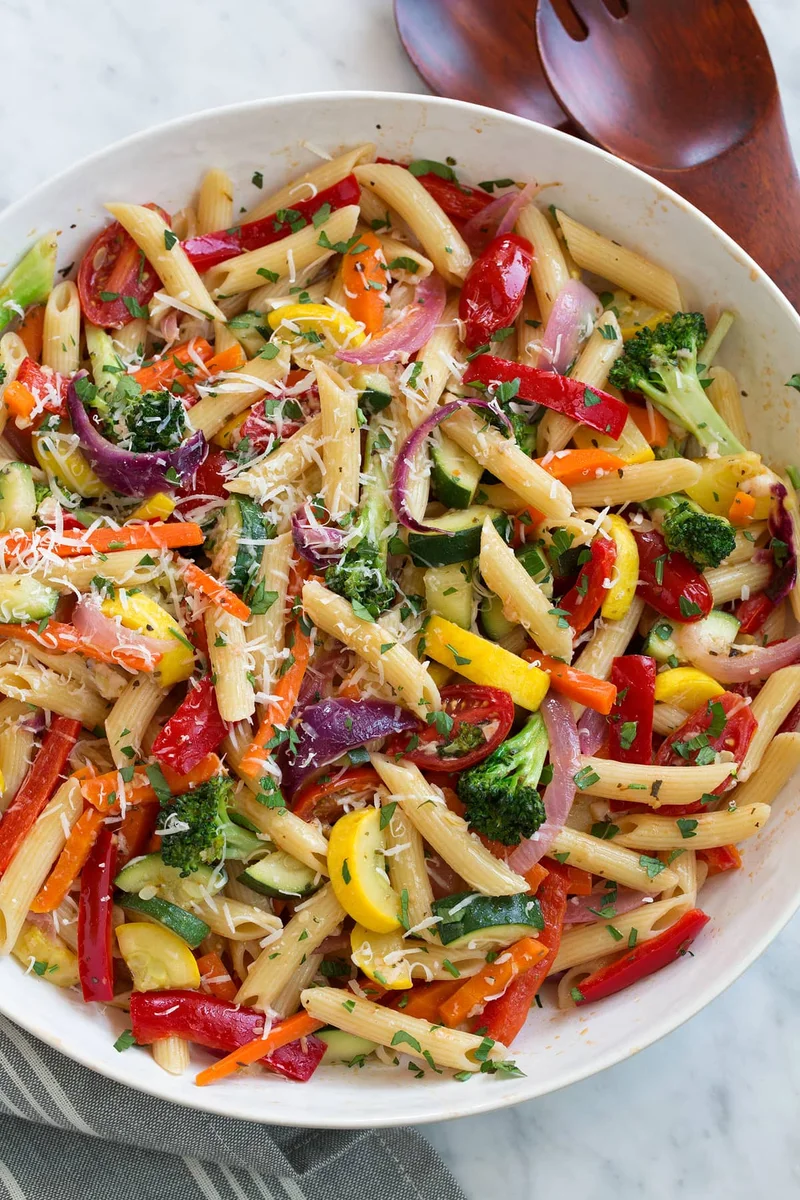
Pasta primavera is a colourful American-style pasta dish tossed with a medley of lightly sautéed vegetables, lemon and Parmesan. It comes together in about 30 minutes and is an easy way to turn assorted vegetables into a satisfying meal.
Ingredients
- 283 g (10 oz)dry penne pasta
- to tastesalt
- 60 ml (¼ cup)olive oil
- ½ mediumred onion, sliced
- 1 largecarrot, peeled and sliced into matchsticks
- 180 g (2 cups)broccoli florets, cut into matchsticks
- 1 mediumred pepper, sliced into matchsticks
- 1 mediumyellow squash, sliced into quarters
- 1 mediumcourgette, sliced into quarters
- 3–4 clovesgarlic, minced
- 170 g (1 heaped cup)grape tomatoes, halved lengthways
- 2 tspdried Italian seasoning
- 120 ml (½ cup)pasta water
- 30 ml (2 tbsp)fresh lemon juice
- 50 g (½ cup), dividedshredded Parmesan
- 2 tbspfresh parsley, chopped
Instructions
- 1
Cook the pasta
Bring a large pan of water to the boil. Salt the water and cook the penne according to the packet directions. Before draining, reserve 120 ml (½ cup) of the pasta water.
- 2
Heat the oil
Meanwhile, warm the olive oil in a deep 30 cm (12-inch) frying pan over a medium-high heat.
- 3
Start the vegetables
Add the red onion and carrot, then sauté for 2 minutes.
- 4
Add broccoli
Stir in the broccoli and red pepper and sauté for 2 minutes.
- 5
Soften the squash
Add the yellow squash and courgette. Sauté for 2–3 minutes, or until the vegetables are nearly tender.
- 6
Add aromatics
Add the garlic, tomatoes and Italian seasoning, then sauté for a further 2 minutes.
- 7
Toss with pasta
Transfer the vegetables to the now-empty pasta pan or a serving bowl. Add the drained pasta, drizzle over the lemon juice and add a little more salt if needed. Toss, adding pasta water as needed to loosen the mixture.
- 8
Finish and serve
Toss in ¼ cup of the Parmesan and the parsley. Serve with the remaining Parmesan scattered over the top.
What is pasta primavera?
Pasta primavera is an American pasta dish built around vegetables, rather than a single fixed seasonal recipe. Its name means “spring pasta”, but this version uses a mix of vegetables that makes it suitable to cook throughout the year.
The method keeps each vegetable’s colour and character while bringing everything together with lemon, pasta water and Parmesan. Penne’s ridges and hollow centres also help catch the light sauce.
Nutrition and macros by portion
The nutrition label shows one serving as written: 415 calories, 10g protein, 57g carbs, 14g fat.
| Portion | Adjustment | kcal | Protein | Carbs | Fat |
|---|---|---|---|---|---|
| Lighter | Use less oil and Parmesan | 291 kcal | 7g | 40g | 10g |
| This serving | As written | 415 kcal | 10g | 57g | 14g |
| Hungry | Add extra penne | 623 kcal | 15g | 86g | 21g |
The penne provides most of the carbohydrates, while the olive oil and Parmesan contribute much of the fat. Parmesan also supplies some protein, alongside smaller amounts from the pasta and vegetables. Serve with a green salad or extra vegetables to round out the plate.
Choosing and preparing the vegetables
Matchsticks: Cutting the carrot, broccoli and red pepper into similar-sized pieces helps them cook quickly and evenly. Keep the squash and courgette pieces similar in thickness so they soften at roughly the same pace.
Tomatoes: Halving the grape tomatoes lengthways lets them warm through and release some juice without needing a long cooking time. Add them at the end of the vegetable sauté so they retain some shape.
Why the vegetables go in stages
Firm vegetables: The onion and carrot get a two-minute head start, followed by the broccoli and pepper. This order gives the firmer pieces more time in the pan.
Quick-cooking vegetables: The squash and courgette go in later and cook only until nearly tender. Garlic, tomatoes and dried seasoning follow for the final two minutes, so the garlic has less time to scorch.
Getting the pasta texture right
Pasta water: Reserve the water before draining the penne; its starch helps the lemon juice, oil and cheese coat the pasta. Add it gradually while tossing rather than pouring it all in at once.
Doneness: Cook the pasta according to its packet directions and check that the vegetables are nearly tender but still hold their shape. The pasta and vegetables will be mixed together after the vegetables have been sautéed.
Finishing with lemon and Parmesan
Lemon: Add the fresh lemon juice when the pasta and vegetables are combined. Tossing it through at this stage spreads its bright flavour across the dish.
Cheese: Mixing in half the Parmesan gives the pasta a savoury finish, while the rest is kept for serving. Parsley adds a fresh note just before the dish reaches the table.
Serving pasta primavera
Serve it straight after tossing, while the pasta is warm and the vegetables still have some bite. A simple green salad or crusty bread makes an easy accompaniment.
For a more substantial meal, serve alongside grilled chicken or white beans. Keep extra Parmesan and lemon wedges on the table for anyone who wants a stronger finish.
Recipe notes & tips
- Prepare and cut all the vegetables before heating the oil, as the sautéing stages move quickly.
- Use a deep frying pan large enough to toss the vegetables without crowding them.
- Reserve the pasta water before draining so it is ready when you combine the ingredients.
- Add pasta water a little at a time until the pasta is lightly coated rather than soupy.
- Taste for salt after tossing, since the Parmesan adds savouriness.
- Serve the remaining Parmesan separately so each person can add as much as they like.
Variations
- Use seasonal vegetables: Swap in vegetables you have on hand, cutting them to cook in a similar amount of time.
- Add peas: Stir in peas near the end of the vegetable cooking so they warm through without becoming soft.
- Make it spicy: Add chilli flakes with the garlic for a gentle heat.
- Try another pasta shape: Use another short pasta, following its packet cooking time.
- Add protein: Serve with grilled chicken or fold in drained white beans before serving.
Common mistakes to avoid
- Skipping the reserved water: Keep back 120 ml before draining so you can loosen and coat the pasta at the end.
- Adding all the vegetables together: Follow the staged order so firmer pieces get more cooking time than the squash and courgette.
- Overcooking the courgette: Sauté it only until nearly tender so it does not lose its shape.
- Burning the garlic: Add it with the tomatoes and seasoning near the end, and cook for just 2 minutes.
- Adding all the pasta water at once: Pour it in gradually while tossing, stopping when the pasta is lightly coated.
How to store
Refrigerate leftovers in an airtight container for up to 3 days. Reheat gently in a pan or microwave with a small splash of water to loosen the pasta; the vegetables will be softer after reheating.
Frequently asked questions
Can I prepare the vegetables ahead?
Yes. Cut the vegetables in advance and keep them covered in the fridge. For the best texture, cook and toss the pasta shortly before serving.
Can I use a different pasta shape?
Yes. Choose another short pasta and cook it according to its packet directions. Reserve some of its cooking water before draining.
What can I use instead of yellow squash?
Use another medium courgette or a similar quick-cooking vegetable. Cut it into pieces of a similar size so it cooks evenly.
How do I keep the vegetables from going mushy?
Add them in the order given and sauté only until nearly tender. Keep the cooking times short, especially for the squash and courgette.
Can I make this without Parmesan?
Yes. Leave it out if you prefer, though the dish will lose some of its savoury, cheesy finish. You can also serve Parmesan separately so diners can choose.
Can I make pasta primavera ahead?
It is best freshly tossed, when the vegetables are still bright and firm. Leftovers can be refrigerated and reheated, though their texture will be softer.
Cook it from the original
This recipe comes from cookingclassy.com. Their page has the author’s own photos, notes and tips — the best place to cook it from.
Open the recipe on cookingclassy.com