
Cannoli
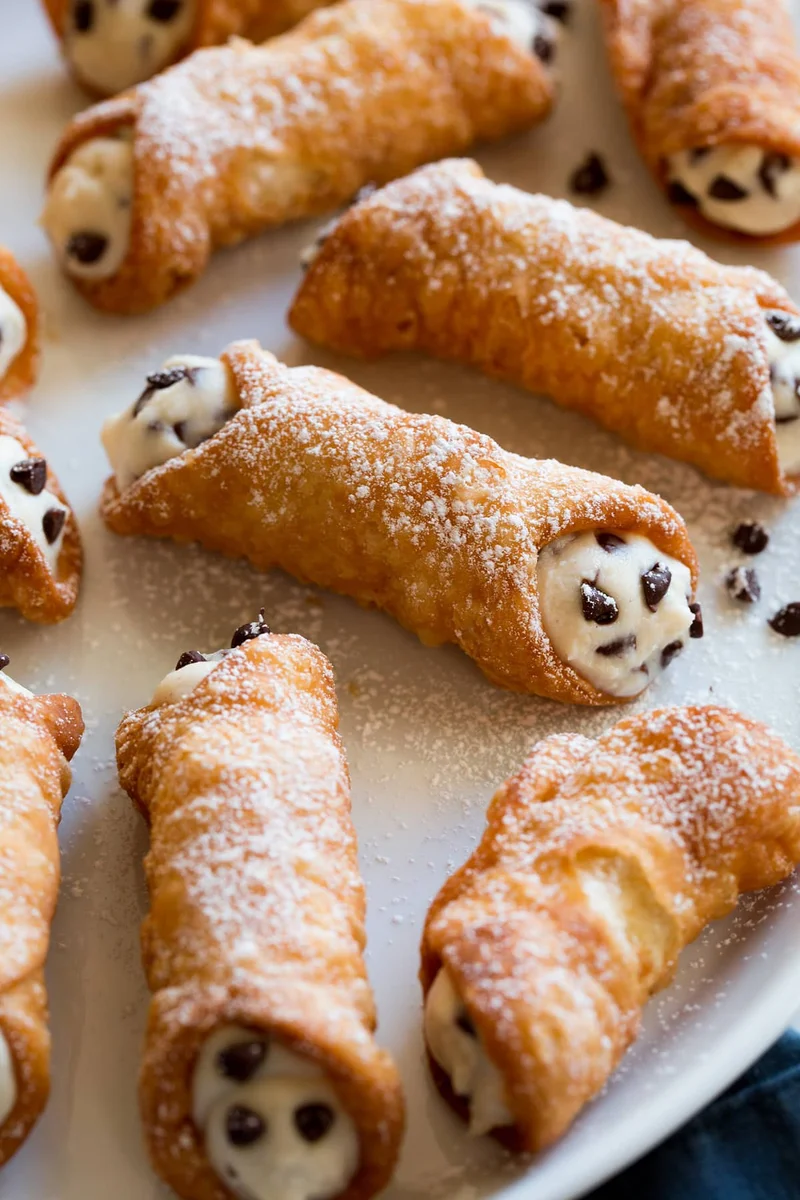
Cannoli are crisp, fried Italian pastry shells filled with sweetened ricotta and chocolate chips. This version pairs a delicate Marsala-scented shell with a creamy filling, making a rewarding dessert for sharing.
Ingredients
- 250 gunbleached plain flour, scooped and levelled
- 18 ggranulated sugar
- ¼ tspsalt
- 43 gunsalted butter, diced into small pieces
- ⅓ cup (about 80 ml), plus more as neededMarsala wine
- 1 largeegg
- 1egg white
- About 1.9 litres (about 8 cups)vegetable oil or shortening, for frying
- 907 g (32 oz)whole-milk ricotta, strained
- 180 gicing sugar
- 126 gmini chocolate chips
- ¼ tspground cinnamon
- To taste, optionalchopped unsalted pistachios
Instructions
- 1
Mix dry ingredients
Add the flour, granulated sugar and salt to a food processor. Pulse in short bursts about 10 times, then add the butter and pulse just until no clumps of butter remain.
- 2
Bring dough together
Add the Marsala and whole egg, then pulse to combine. Add extra wine as needed until the dough forms a soft, shaggy mass; you should not need more than a few tablespoons extra.
- 3
Rest the dough
Shape the dough into a round and transfer it to an oiled bowl. Cover and leave at room temperature for at least 30 minutes and up to 2 hours.
- 4
Roll and cut
Heat 3.8 cm (1½ inches) of vegetable oil in a large pot to 174–179°C (345–355°F). Work with half the dough at a time, keeping the rest covered, and roll it very thinly on a well-floured surface, nearly 1.5 mm (1/16 inch) thick. Cut out rounds with a 9–10 cm (3½–4 inch) cutter.
- 5
Shape the shells
Coat the cannoli forms with cooking spray. Wrap a dough round around each form, lightly brushing about 2 cm (¾ inch) of one end with egg white, then press the edge onto the opposite side.
- 6
Fry until crisp
With metal tongs, carefully lower the shells into the hot oil and fry until golden and crisp, about 1–2 minutes. Watch the oil temperature to prevent the shells from burning; you can fry up to 6 at a time.
- 7
Drain and unmould
Lift each shell with metal tongs, letting oil inside the form drain back into the pot, then set it on paper towels. Hold the form with tongs or folded paper towels and carefully slide the shell off using a paper towel around it.
- 8
Reuse dough scraps
Let the forms cool before repeating with the remaining dough rounds. Shake excess flour from the scraps, press them together, cover and let them relax for at least 10 minutes before reusing.
- 9
Cool the shells
Transfer the shells to a wire rack and let them cool. Once cool, fill them and decorate as desired with melted chocolate, chopped pistachios, mini chocolate chips or a dusting of icing sugar.
- 10
Make the filling
Fold and stir together the strained ricotta, icing sugar, chocolate chips and cinnamon in a mixing bowl. Transfer the mixture to a piping bag fitted with a large round tip, then pipe it into the cooled shells.
What are cannoli?
Cannoli are a Sicilian pastry: crisp, tube-shaped shells are filled with sweetened ricotta, often with chocolate or other additions. Their contrasting textures are central to the appeal: the shell should crackle while the centre stays soft and creamy.
This version uses Marsala in the dough and mini chocolate chips in the filling. Frying the shells separately and piping in the ricotta after they cool helps keep the pastry crisp.
Nutrition and macros by portion
The nutrition label shows one serving as written: 182 calories, 5g protein, 18g carbs, 10g fat.
| Portion | Adjustment | kcal | Protein | Carbs | Fat |
|---|---|---|---|---|---|
| Lighter | Smaller cannoli | 127 kcal | 4g | 13g | 7g |
| This serving | As written | 182 kcal | 5g | 18g | 10g |
| Hungry | Larger portion | 273 kcal | 8g | 27g | 15g |
The flour and sugar supply most of the carbohydrates, while the butter and frying fat contribute much of the fat. Ricotta provides most of the protein, with some additional fat, and the chocolate chips add both sugar and fat. For a more balanced dessert plate, serve one cannolo after a meal with fresh fruit alongside.
The dough and Marsala
Flour and butter: pulsing the butter into the flour leaves small pieces throughout the dough, helping the shells bake up flaky in the hot oil.
Marsala: add it gradually with the egg, using only enough extra wine to bring the mixture into a soft, shaggy mass. The dough rests before rolling, which makes it easier to handle.
Strain the ricotta well
Ricotta: the recipe calls for strained whole-milk ricotta, which gives the filling a thicker consistency. If it looks wet, give it more time to drain before mixing so the filling is less likely to run.
Sugar and spice: icing sugar blends smoothly into the cheese, while cinnamon adds warmth without overpowering the chocolate chips.
Wrap and seal the shells
Thin rounds: roll the dough nearly 1.5 mm thick and cut rounds 9–10 cm across. Keeping the remaining dough covered helps prevent it drying as you work.
Egg-white seal: brush a little egg white on one edge before pressing it against the other side around the form. A secure join helps the shell stay wrapped while frying.
Watch the oil and colour
Temperature: aim for 174–179°C and check it as you fry batches. Oil that gets too hot can darken the shells before they have time to crisp evenly.
Doneness: the shells should be golden and crisp after about 1–2 minutes. Frying up to 6 at a time is suggested, but avoid adding so many that it becomes difficult to handle them safely.
Fill and serve
Cool first: let the shells cool on a wire rack before piping in the ricotta mixture. Filling them while warm can soften the pastry.
Finishing: melted chocolate, chopped pistachios, extra chocolate chips or icing sugar are suggested decorations. Serve soon after filling for the clearest contrast between crisp shell and creamy centre.
A make-ahead approach
Shells: fry and cool the empty shells ahead of time, then keep them airtight until you are ready to fill them. Handle them gently, as crisp pastry can break.
Filling: mix the ricotta mixture separately and pipe it into the shells close to serving time. This keeps the filling from making the pastry soggy too soon.
Recipe notes & tips
- Strain the ricotta thoroughly so the filling holds its shape when piped.
- Keep the unused half of the dough covered while you roll and fry the first half.
- Use a thermometer to keep the frying oil within the stated temperature range.
- Drain the oil from inside each form before setting the shell on paper towels.
- Let the cannoli forms cool before wrapping them with the next dough rounds.
- Fill the shells only after they are completely cool.
Variations
- Pistachio finish: sprinkle chopped unsalted pistachios over the filling or dip the ends in them.
- Chocolate-dipped ends: coat the shell edges with melted chocolate and let it set before filling.
- Extra chocolate: use mini chocolate chips as a topping as well as in the ricotta mixture.
- Icing sugar finish: dust the filled shells just before serving.
- Cinnamon accent: add a little extra cinnamon to the filling for a warmer flavour.
Common mistakes to avoid
- Wet ricotta: strain it well before mixing so the filling is thick enough to pipe.
- Dough drying out: keep the portion you are not rolling covered in the bowl.
- Loose seam: brush the edge with egg white and press it firmly against the opposite side.
- Oil too hot: monitor the temperature and bring it back to 174–179°C before frying more shells.
- Removing shells too roughly: use tongs or folded paper towels to hold the form and slide the shell off carefully.
- Filling warm shells: wait until they have cooled on a wire rack to help preserve their crispness.
How to store
Keep unfilled, cooled shells in an airtight container and store the ricotta filling separately in the fridge; fill the shells close to serving time. Once filled, refrigerate leftovers and eat them as soon as possible, as the pastry gradually softens. Reheating filled cannoli is not recommended.
Frequently asked questions
Can I make the shells ahead?
Yes. Fry and cool the shells, then store them airtight and unfilled. Keep the filling separate and pipe it in near serving time.
Why does the ricotta need straining?
Straining removes excess liquid so the filling is thicker and easier to pipe. Very wet ricotta can make the filling runny and soften the shells.
How thin should I roll the dough?
The method specifies nearly 1.5 mm (1/16 inch) thick. Roll it on a well-floured surface and keep the unused dough covered.
How do I know when the shells are done?
Fry them for about 1–2 minutes, watching for a golden colour and crisp texture. Keep an eye on the oil temperature so the shells do not burn.
Can I fry more than one shell at a time?
Yes, the method allows up to 6 at a time. Work carefully with the tongs and maintain the oil temperature between 174–179°C.
What can I use to decorate cannoli?
The recipe suggests melted chocolate, chopped pistachios, mini chocolate chips or a dusting of icing sugar. Pistachios are optional.
Cook it from the original
This recipe comes from cookingclassy.com. Their page has the author’s own photos, notes and tips — the best place to cook it from.
Open the recipe on cookingclassy.com