
Vegan Scones
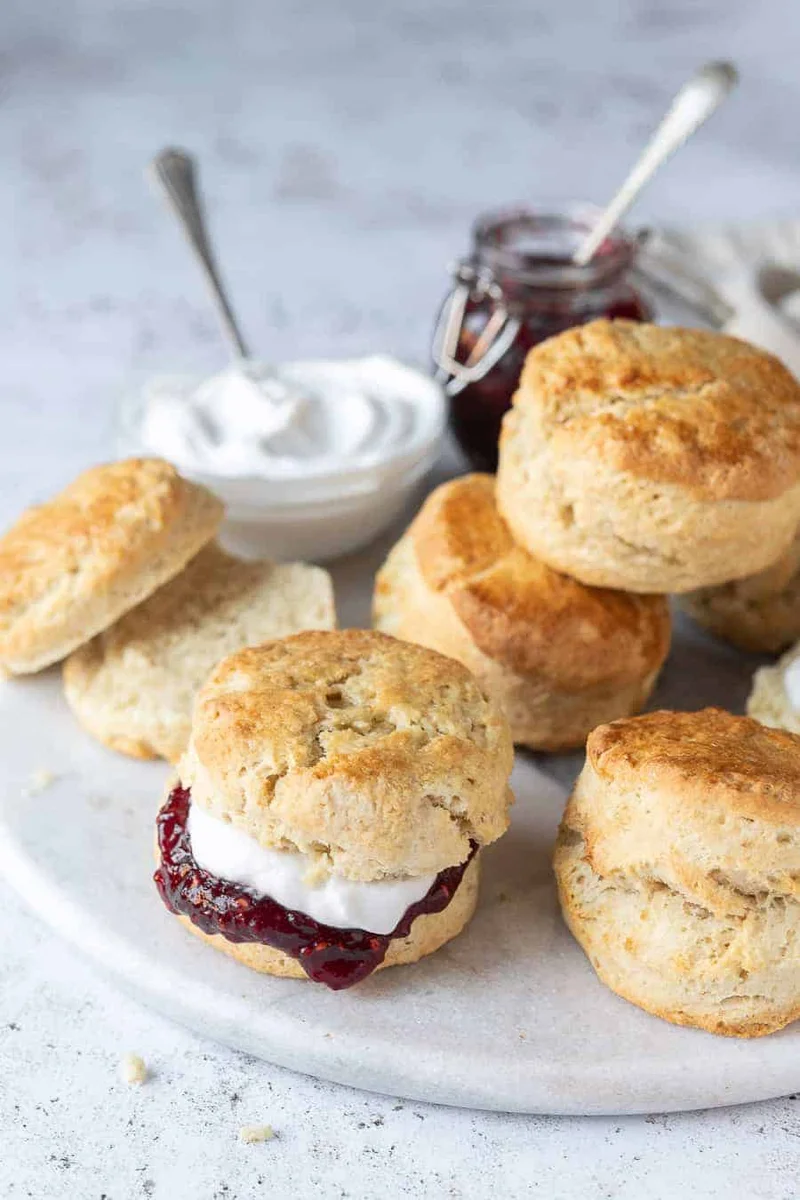
These British-style vegan scones are tender, lightly sweet and made without eggs or dairy. They come together quickly and are lovely served warm with jam and vegan cream, or split and toasted.
Ingredients
- 350 gself-raising flour
- 1 tspbaking powder
- 50 gvegan block butter, cold and diced
- 50 gsolid refined coconut oil
- 40 gcaster sugar
- 160–180 mlunsweetened soy milk, or another non-dairy milk
- 1 tbspsoy milk
- ½ tbspmaple syrup
- to tastejam and vegan cream or thick coconut yoghurt
Instructions
- 1
Prepare the oven
Heat the oven to 220°C (200°C fan) and line a baking tray with baking parchment.
- 2
Combine dry ingredients
In a large bowl, mix the self-raising flour and baking powder until evenly combined.
- 3
Rub in the fats
Add the cold, diced vegan butter and solid coconut oil. Rub them into the flour with your fingertips until no lumps remain and the mixture looks like breadcrumbs. Take care to work in the coconut oil thoroughly; alternatively, use a food processor for this step only.
- 4
Add the sugar
Stir the caster sugar into the flour mixture.
- 5
Make the dough
Gradually stir in 160–180 ml soy milk with the back of a knife until a soft, nearly sticky dough forms. If dry flour remains at the bottom of the bowl, add a little more milk; you may not need all the stated amount.
- 6
Shape the dough
Gather the dough into a soft, slightly sticky ball and turn it onto a lightly floured surface. Do not knead it; gently bring it together with your hands, then pat it into a round about 4 cm thick.
- 7
Cut the scones
Use a floured 6 cm round cutter, plain or fluted, to cut out four scones. Press straight down without twisting, then place them slightly apart on the prepared tray.
- 8
Use the scraps
Gently bring the leftover dough together, pat it into a round again and cut out two or three more scones.
- 9
Mix the glaze
In a small bowl, stir together 1 tbsp soy milk and ½ tbsp maple syrup.
- 10
Brush the tops
Brush the glaze over the tops of the scones, keeping it off the sides so it does not hinder their rise.
- 11
Bake until golden
Bake for 15–18 minutes, until golden. Tap the underside of a scone: it should sound hollow, like bread. Transfer to a wire rack to cool slightly before serving.
What are vegan scones?
Scones are a familiar part of British baking, often served at tea time with jam and cream. This version keeps the classic round shape and crumbly, soft texture while replacing dairy butter with vegan block butter and coconut oil.
Cold fats rubbed into the flour help give the scones their tender crumb, while self-raising flour and baking powder provide lift. A light soy-and-maple glaze adds colour without using egg.
Nutrition and macros by portion
The nutrition label shows one serving as written: 384 calories, 6g protein, 45g carbs, 18g fat.
| Portion | Adjustment | kcal | Protein | Carbs | Fat |
|---|---|---|---|---|---|
| Lighter | Use less rich topping | 269 kcal | 4g | 31g | 13g |
| This serving | As written | 384 kcal | 6g | 45g | 18g |
| Hungry | Serve two scones | 576 kcal | 9g | 68g | 27g |
Most of the carbohydrates come from the flour and sugar, while the vegan butter and coconut oil provide most of the fat. The flour contributes some protein, with soy milk adding a little more; the exact nutrition will vary with the brands and any toppings. For a more balanced plate, serve a scone with fruit and a modest portion of vegan cream or yoghurt.
Choosing the fats
Vegan block butter: use it cold and dice it before adding, so it can be rubbed evenly through the flour.
Coconut oil: it needs to be solid, not melted. Take time to work out any lumps, since pockets of fat can affect the scones’ texture.
Bringing the dough together
Add the milk gradually and use the back of a knife to mix it in. The dough should be soft and slightly sticky, with no dry, floury patches at the bottom of the bowl.
Milk amount: the recipe gives a range because flour and conditions can vary. Add just enough to bring the dough together rather than pouring in all the milk automatically.
Cutting for a good rise
Pat the dough to about 4 cm thick and press the floured cutter straight down. Twisting the cutter can compress the edges, which may keep the scones from rising evenly.
Scraps: gather them gently and pat them out again rather than kneading. Overworking the dough can make the finished scones less tender.
Glazing and checking doneness
Brush the soy milk and maple glaze only over the tops. If it runs down the sides, it can interfere with the dough’s rise at the edges.
Look for golden tops after 15–18 minutes, then tap the underside; a hollow sound is the recipe’s cue that they are baked through. Let them cool briefly on a rack before splitting.
Serving ideas
Serve the scones warm or just slightly cooled with jam and vegan cream, or use thick coconut yoghurt as an alternative. Split them carefully so the crumb stays intact.
For a simpler snack, split and toast a scone, then spread it with vegan butter. Tea is a natural partner, while fresh fruit can add a refreshing contrast.
Recipe notes & tips
- Keep the vegan butter cold and the coconut oil solid when you start.
- Rub the fats in thoroughly so no coconut-oil lumps remain.
- Add the milk gradually and stop once the dough is soft and cohesive.
- Flour the cutter and press straight down without twisting.
- Brush glaze over the tops only, avoiding the cut sides.
- Cool the scones briefly on a wire rack before serving.
Variations
- Use another milk: Replace the soy milk with a non-dairy milk you prefer.
- Try coconut yoghurt: Serve the scones with thick coconut yoghurt instead of vegan cream.
- Add dried fruit: Fold a little dried fruit into the flour mixture before adding the milk.
- Serve toasted: Split leftover scones and toast them before spreading with vegan butter.
- Change the topping: Pair the scones with your preferred jam and a dairy-free cream alternative.
Common mistakes to avoid
- Lumpy coconut oil: Take time to rub it into the flour until no lumps remain.
- Too much milk at once: Add it gradually so the dough does not become overly wet.
- Kneading the dough: Bring it together gently and pat it out to keep the scones tender.
- Twisting the cutter: Press it straight through the dough to avoid compressing the edges.
- Glaze on the sides: Brush only the tops so the scones can rise freely.
- Skipping the doneness check: Look for golden tops and a hollow sound when tapped underneath.
How to store
Once cool, store the scones in an airtight container at room temperature and eat within 1–2 days for the best texture. Refresh them briefly in a warm oven or split and toast before serving.
Frequently asked questions
Can I use a different non-dairy milk?
Yes. The recipe allows another non-dairy milk in place of soy milk. Add it gradually, since the amount needed can vary.
How do I know when the dough has enough milk?
It should be soft and slightly sticky, with no dry flour left in the bowl. You may not need all the stated milk, or you may need a little extra.
Why shouldn’t I twist the cutter?
Twisting can compress the dough around the edges and hinder an even rise. Press the cutter straight down and lift it cleanly.
Can I make the dough in a food processor?
The method suggests using a food processor for rubbing the fats into the flour, if you want to save time. Use it for that step only.
What can I serve with vegan scones?
Serve them with jam and vegan cream, or thick coconut yoghurt. They can also be split, toasted and buttered.
Can I freeze the baked scones?
They can be frozen once completely cool in a well-sealed freezer-safe container. Thaw before warming or toasting; their texture is best when freshly baked.
Cook it from the original
This recipe comes from domesticgothess.com. Their page has the author’s own photos, notes and tips — the best place to cook it from.
Open the recipe on domesticgothess.com