
Creamy Dijon Mustard Chicken
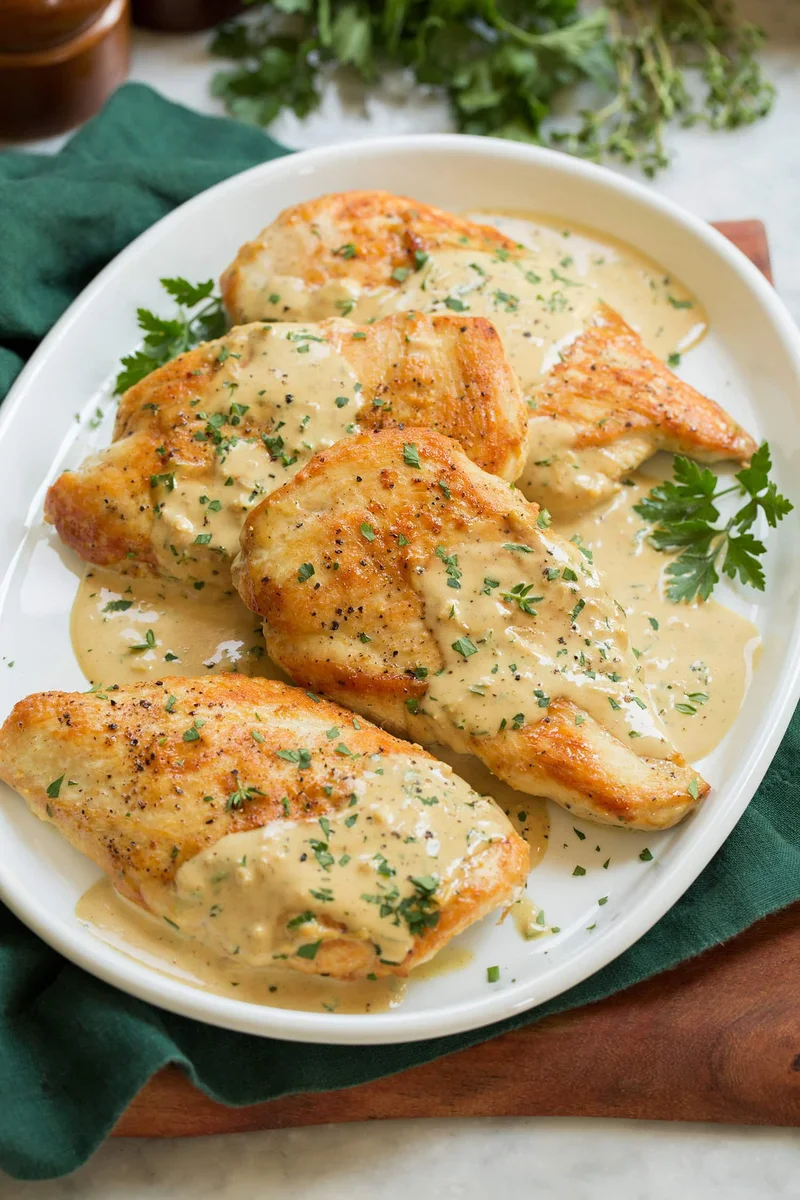
Pan-seared chicken breasts are served with a smooth Dijon mustard cream sauce flavoured with garlic, thyme and sage. It is a quick, comforting dinner that comes together in one skillet in about 25 minutes.
Ingredients
- 4 (170 g each)boneless, skinless chicken breasts
- to tastesalt and freshly ground black pepper
- 30 ml, dividedolive oil
- 10 ml (2 cloves)minced garlic
- 120 mllow-sodium chicken broth
- 120 mldouble cream
- 30 mlDijon mustard
- 7.5 mlchopped fresh thyme
- 2.5 mldried sage
- 5 mlhoney
- to tasteminced fresh parsley, for garnish (optional)
Instructions
- 1
Flatten the chicken
Use a meat mallet to flatten the chicken breasts evenly to about 1.3 cm thick.
- 2
Season the chicken
Heat 15 ml of olive oil in a large frying pan over medium-high heat. Pat the chicken dry with kitchen paper, then season both sides with salt and pepper.
- 3
Cook the chicken
Add the chicken to the hot oil and cook for 5–6 minutes per side, until cooked through and the thickest part reaches 74°C on an instant-read thermometer. Transfer to a plate and cover with foil to keep warm.
- 4
Build the sauce
Reduce the heat to medium-low. Add the remaining 15 ml of olive oil and the garlic; sauté for about 10 seconds, until fragrant and just beginning to deepen in colour. Pour in the chicken broth, thyme and sage, then reduce the liquid by half, about 1 minute.
- 5
Finish the sauce
Stir in the cream and mustard. Simmer, stirring frequently, for about 1 minute longer, until slightly thickened. Stir in the honey and season with salt if needed and pepper to taste.
- 6
Serve with parsley
Spoon the sauce over the chicken and garnish with parsley if desired.
What is creamy Dijon mustard chicken?
This American-style skillet dinner pairs pan-seared chicken with a creamy sauce sharpened with Dijon mustard. Dijon comes from the French city of Dijon, but here it flavours a straightforward weeknight chicken dish.
Evenly flattened chicken cooks quickly, while broth, cream, herbs and mustard make a sauce in the same pan. A little honey softens the mustard's sharp edge.
Nutrition and macros by portion
The nutrition label shows one serving as written: 373 calories, 37g protein, 3g carbs, 23g fat.
| Portion | Adjustment | kcal | Protein | Carbs | Fat |
|---|---|---|---|---|---|
| Lighter | Use less cream | 261 kcal | 26g | 2g | 16g |
| This serving | As written | 373 kcal | 37g | 3g | 23g |
| Hungry | Add potatoes or rice | 560 kcal | 56g | 5g | 35g |
The chicken supplies most of the protein, while the cream and olive oil contribute most of the fat. The small amount of honey and the chicken itself account for much of the carbohydrates. Add green vegetables and a modest serving of potatoes or rice to round out the plate.
Why flatten the chicken?
Even thickness: flattening the breasts helps them cook at a more consistent rate, rather than leaving a thick centre underdone while thinner edges dry out.
Dry surface: patting the chicken dry before seasoning helps it sear in the hot oil instead of releasing excess moisture into the pan.
Building the mustard sauce
Garlic first: briefly sauté it in the remaining oil, just until fragrant and lightly coloured. It cooks very quickly, so add the broth promptly to keep it from browning too far.
Reduce, then enrich: simmer the broth with thyme and sage until it has reduced by half before adding the cream and mustard. This gives the sauce time to concentrate before it is finished.
How to judge doneness
Chicken: cook each side for 5–6 minutes, then check the thickest part with an instant-read thermometer; the recipe's target is 74°C. The flattened pieces should cook evenly, but thickness and pan heat can affect timing.
Sauce: after the cream and mustard go in, simmer for about 1 minute, stirring often. It should thicken slightly while remaining easy to spoon over the chicken.
Getting the balance right
Mustard: the 30 ml of Dijon gives the sauce its distinctive tang. Stir it in with the cream and taste before adding more, since different mustards can vary in sharpness.
Honey: add the 5 ml after the sauce has thickened. It rounds out the flavour without making the mustard sauce taste overtly sweet.
What to serve alongside
For a fuller plate, serve the chicken and sauce with potatoes, rice or crusty bread to catch the creamy sauce. These additions also make the meal more substantial.
A simple green salad or steamed green vegetables provide a fresh contrast to the rich sauce. Spoon the sauce over the chicken just before serving.
Recipe notes & tips
- Flatten the chicken to an even thickness so it cooks at a similar rate throughout.
- Pat the chicken dry before seasoning for a better sear.
- Keep a close eye on the garlic; it needs only about 10 seconds in the pan.
- Reduce the broth by half before adding the cream and mustard.
- Stir the sauce frequently as it simmers so it thickens evenly.
- Taste the finished sauce before adding extra salt, as the broth and mustard may already season it.
Variations
- More mustard: stir in a little extra Dijon to give the sauce a sharper flavour.
- Milder sauce: use less Dijon and taste before adding more.
- Herb swap: use another pinch of fresh thyme in place of the dried sage.
- No honey: leave it out for a more pronounced mustard tang.
- Parsley finish: add the optional minced parsley just before serving for a fresh garnish.
Common mistakes to avoid
- Uneven chicken: flatten the breasts to about 1.3 cm so thinner edges do not finish far ahead of the centre.
- Wet chicken: pat it dry before it goes into the pan to avoid excess moisture.
- Overcooked garlic: sauté it for about 10 seconds, then add the broth as soon as it is fragrant.
- Skipping the reduction: simmer the broth until it is reduced by half before stirring in the cream.
- Boiling the finished sauce: keep it at a simmer and stir frequently so it thickens gently.
- Guessing doneness: check the thickest part with an instant-read thermometer and look for 74°C.
How to store
Refrigerate leftover chicken and sauce in a covered container for up to 3–4 days. Reheat gently in a pan over low heat, stirring the sauce; add a small splash of broth if it has thickened too much.
Frequently asked questions
Can I use chicken thighs instead of breasts?
Yes, boneless, skinless thighs can be used, but their shape and thickness differ, so the cooking time may change. Check that the thickest part reaches 74°C.
Can I make the sauce less tangy?
Start with less Dijon, then taste and add more as needed. The honey also softens the sharpness slightly.
How can I tell when the sauce is thick enough?
After about 1 minute of simmering, it should be slightly thickened but still pourable. Stir frequently as it cooks.
Can I prepare this ahead?
It is best served freshly cooked so the chicken stays tender and the sauce is smooth. Leftovers can be refrigerated and reheated gently.
What can I serve with it?
Potatoes, rice or bread work well for soaking up the sauce. Green vegetables or a salad make a fresh side.
Cook it from the original
This recipe comes from cookingclassy.com. Their page has the author’s own photos, notes and tips — the best place to cook it from.
Open the recipe on cookingclassy.com