
Garlic Dinner Rolls
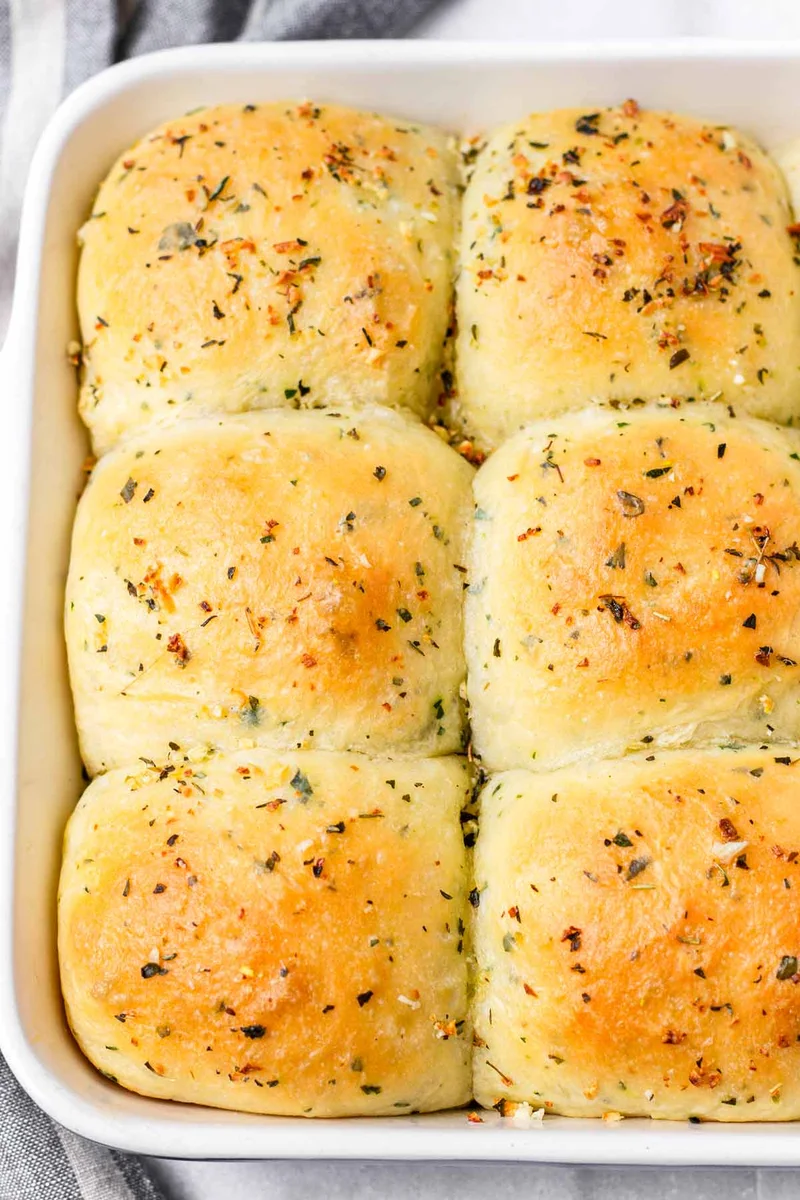
Soft, tall dinner rolls get their savoury flavour from garlic, rosemary, parsley and oregano, with a buttery finish. Make them for a holiday meal or whenever you want warm, freshly baked bread on the table.
Ingredients
- 240 ml (1 cup), warmed to 43–46°C (110–115°F)whole milk
- 7 g (2¼ teaspoons; equivalent to a 7 g/0.25 oz packet)active dry yeast
- 25 g (2 tablespoons), plus 4 g (1 teaspoon)granulated sugar
- 2 large, lightly beateneggs
- 57 g (¼ cup), melted and cooledunsalted butter
- 3 g (1 teaspoon)garlic powder
- 9 g (1½ teaspoons)salt
- 420–480 g (3½–4 cups), plus more as neededbread flour
- About 2 g (¾ tablespoon)fresh rosemary, chopped
- About 8 g (2 tablespoons), finely chopped and thoroughly patted dryfresh parsley
- 1 g (1 teaspoon)dried oregano
- 85 g (6 tablespoons), meltedunsalted butter
- About 2 g (½ tablespoon)Italian seasoning
- 3 cloves, mincedgarlic
Instructions
- 1
Activate the yeast
Pour the warm milk, at 43–46°C (110–115°F), into the bowl of a stand mixer. Stir in 4 g (1 teaspoon) of the sugar and the yeast, then leave for 10–15 minutes until frothy. If it does not foam, start again with fresh yeast.
- 2
Mix the dough
Fit the mixer with a dough hook. At medium speed, mix in the remaining 25 g (2 tablespoons) sugar, eggs, cooled melted butter, garlic powder and salt along with the yeast mixture.
- 3
Add the flour
With the mixer on medium-low, add 360 g (3 cups) flour, one cup at a time, scraping down the bowl as needed. Add more flour in 30 g (¼ cup) increments until the dough is manageable; about 420 g (3½ cups) was used for this recipe.
- 4
Knead and season
Increase the mixer speed to high and knead until the dough forms and pulls away from the bowl, about 3 minutes in a mixer or 8–10 minutes by hand. It should be smooth, stretchy, moist and slightly sticky. Mix in the rosemary, parsley and oregano on low speed until evenly distributed, then turn the dough onto a lightly floured surface and knead by hand for 3–4 minutes, adding flour if it is still too sticky. It should spring back slowly when poked; do not over-knead.
- 5
Let it rise
Shape the dough into a ball and place it in a lightly oiled bowl, turning it to coat with oil. Cover tightly with plastic wrap and leave in a warm place for about 1 hour, until doubled in size.
- 6
Shape the rolls
Press down the risen dough to release excess air. Move it to a clean, unfloured surface, cut it in half, then divide each half into 6 equal pieces. Shape the pieces into balls, pinching the bottoms closed, and arrange them in a lightly greased 23 × 33 cm (9 × 13-inch) baking pan.
- 7
Proof the rolls
Cover the pan with plastic wrap and leave the rolls in a warm place for 1–1½ hours, or until doubled in size.
- 8
Brush and bake
Meanwhile, heat the oven to 175°C (350°F). Combine the melted butter, Italian seasoning and minced garlic, then brush the mixture over the risen rolls. Bake for 18–20 minutes, until tall and golden brown. Brush with more melted butter after baking, then cool slightly and serve warm.
What are garlic dinner rolls?
Dinner rolls are small, soft yeast breads often served alongside a main meal in American cooking. This version builds herbs and garlic into the dough, then adds a savoury garlic-butter coating before baking.
The enriched dough uses milk, eggs and butter for a tender crumb, while bread flour helps the rolls hold their shape. A second brush of butter gives the baked tops a glossy finish.
Nutrition and macros by portion
The nutrition label shows one serving as written: 256 calories, 7g protein, 31g carbs, 12g fat.
| Portion | Adjustment | kcal | Protein | Carbs | Fat |
|---|---|---|---|---|---|
| Lighter | Smaller roll portion | 179 kcal | 5g | 22g | 8g |
| This serving | As written | 256 kcal | 7g | 31g | 12g |
| Hungry | Add another roll | 384 kcal | 11g | 47g | 18g |
The bread flour and sugar provide most of the carbohydrates, while the milk and eggs contribute some protein. Butter and eggs supply much of the fat; serve a roll with a protein-rich main and vegetables for a more balanced plate.
Choosing the flour
Bread flour: begin with 420 g (3½ cups), then add more only if the dough needs it. The recipe allows up to 480 g (4 cups), but the precise amount can vary.
Getting the dough right
Texture: after kneading, the dough should feel moist and stretchy, with a slight tackiness rather than being dry. Add flour sparingly so the rolls stay soft.
Kneading: the dough is ready when it is smooth and springs back slowly after a gentle poke. Stop once it reaches that stage; too much extra flour or kneading can make the rolls firm.
Why there are two rises
First rise: leave the covered dough in a warm place for about 1 hour, checking that it has doubled rather than relying on the clock alone. The dough needs room to expand in the oiled bowl.
Second rise: shaped rolls need another 1–1½ hours under cover. They should look visibly puffed and doubled before they go into the oven.
Shaping even rolls
Divide: cutting the dough in half and then each half into 6 pieces makes 12 rolls. Try to keep the pieces similar in size so they bake at a similar pace.
Seal: shape each piece into a ball and pinch its underside closed. Set the balls in the greased pan with space to rise and bake together.
The garlic-herb finish
Herbs: rosemary, parsley and oregano season the dough itself, so their flavour is spread through each roll. Pat the parsley dry before mixing it in.
Butter: combine the melted butter with the Italian seasoning and minced garlic, then brush it over the risen rolls. A further brush of melted butter after baking is part of the method and gives them a shiny top.
When the rolls are done
Bake at 175°C (350°F) for 18–20 minutes, watching for tall rolls with golden-brown tops. If the tops are still pale at the shorter time, continue baking until they reach that colour.
Let the rolls cool just slightly before serving. They are especially suited to a holiday table, and pair well with soups, roasted vegetables or a main course that benefits from bread for the plate.
Recipe notes & tips
- Check the milk temperature before adding the yeast so it is warm but not too hot.
- Give the yeast the full 10–15 minutes to become frothy before mixing the dough.
- Add flour gradually and stop when the dough is manageable rather than automatically using the full amount.
- Pat the chopped parsley thoroughly dry before adding it to the dough.
- Use the doubled size of the dough and rolls as the rising cue, as well as the stated timing.
- Brush the garlic butter over the rolls after the second rise, just before baking.
Variations
- Extra rosemary: increase the rosemary slightly for a more pronounced herbal note.
- Herb swap: use another chopped soft herb in place of the parsley.
- Cheesy topping: scatter grated cheese over the rolls before baking.
- Milder garlic: reduce the minced garlic in the butter mixture to suit your taste.
- Dried herbs: replace the fresh rosemary and parsley with dried herbs, using smaller amounts.
Common mistakes to avoid
- Milk too hot: it can keep the yeast from foaming; check the temperature and use fresh yeast if it fails to activate.
- Adding all the flour: the dough may turn dry; add it gradually and stop when the dough is manageable.
- Over-flouring: it can make the rolls firm; use only a light dusting while kneading.
- Rushing the rise: the rolls may be dense; wait until the dough and shaped rolls have doubled.
- Skipping the seal: an open seam can make a roll lose its shape; pinch the bottom closed when shaping.
- Baking by time alone: colour can vary; look for tall rolls with golden-brown tops within the 18–20-minute range.
How to store
Keep cooled rolls in an airtight container at room temperature for up to 2 days. Warm them briefly in a low oven before serving; avoid overheating, which can dry them out.
Frequently asked questions
How can I tell whether the yeast is active?
After 10–15 minutes in the warm milk and sugar, it should look frothy. If it does not, start again with fresh yeast.
How much flour should I use?
Start with 360 g (3 cups), then add flour in 30 g (¼ cup) increments. The recipe used about 420 g (3½ cups), but allows up to 480 g (4 cups) as needed.
Can I knead the dough by hand?
Yes. The method gives 8–10 minutes of kneading by hand to form the dough, followed by 3–4 minutes on a lightly floured surface.
How long should the rolls rise?
The dough rises for about 1 hour, until doubled. Once shaped, the rolls rise for another 1–1½ hours, again until doubled.
Can I prepare the rolls ahead?
The supplied method does not include an overnight rise or make-ahead instructions. For best results, follow the two rises and bake them before serving.
Can I freeze the baked rolls?
Yes. Freeze them once cooled in a sealed freezer-safe container. Thaw and warm gently before serving.
Cook it from the original
This recipe comes from cookingformysoul.com. Their page has the author’s own photos, notes and tips — the best place to cook it from.
Open the recipe on cookingformysoul.com