
Quiche Recipe
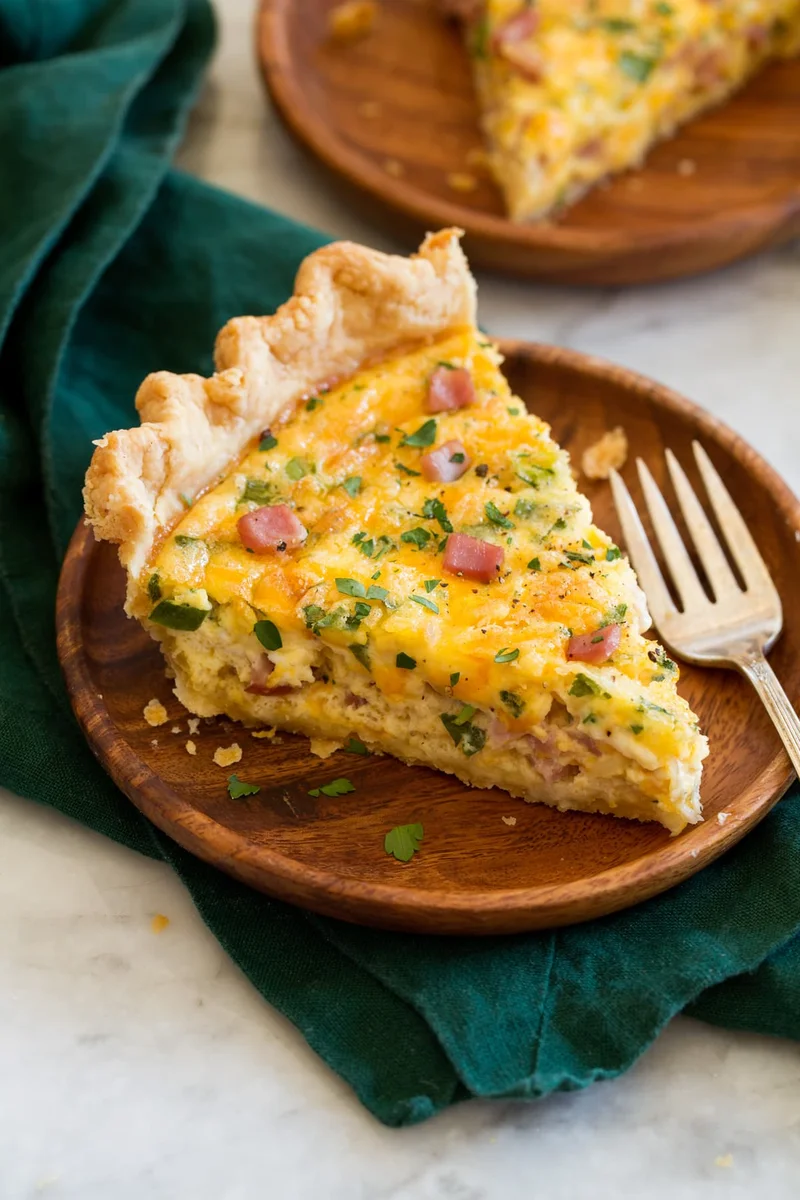
This French-inspired quiche has a crisp, buttery pastry shell filled with eggs, cream, ham, cheese and herbs. It makes a generous centrepiece for a weekend brunch or holiday meal.
Ingredients
- 177 g (1¼ cups)plain flour, unbleached, spooned and levelled
- 2.5 ml (½ tsp)granulated sugar
- 2.5 ml, scant (½ tsp)salt
- 141 g (10 tbsp)unsalted butter, very cold and cut into small cubes
- 30–60 ml (2–4 tbsp)ice water
- 5 largeeggs
- 300 ml (1¼ cups)double cream or half-and-half
- About 190 g (1¼ cups)chopped ham
- About 100 g (1 cup)grated cheese, such as Cheddar, Swiss or Gruyère
- About 50 g (⅓ cup)chopped spring onions
- About 8 g (2 tbsp)chopped parsley
- To tastesalt and freshly ground black pepper
Instructions
- 1
Mix dry ingredients
Whisk the flour, sugar and salt together in a medium mixing bowl.
- 2
Cut in butter
Add the butter and cut it into the flour with a pastry cutter until the mixture looks like coarse crumbs, with a few larger pieces of butter remaining.
- 3
Add ice water
Drizzle in the water 1 tablespoon at a time, tossing the mixture between additions. Use only enough for the dough to look lightly moistened and hold together when pressed.
- 4
Shape the dough
Tip the mixture onto a clean work surface and press it into a round. Flatten it into a roughly 15 cm (6-inch) disc and wrap it in cling film or place it in a container.
- 5
Chill the dough
Refrigerate the wrapped dough for 1 hour.
- 6
Roll out pastry
On a floured surface, roll the chilled dough into a roughly 33 cm (13-inch) round. Wind it around the rolling pin and transfer it to a deep 23–24 cm (9–9½-inch) pie dish.
- 7
Line the dish
Unroll and shape the pastry into the dish. Trim uneven edges, leaving about 2.5 cm (1 inch) of overhang; fold the overhang underneath and crimp or decorate the edge as desired.
- 8
Chill and preheat
Freeze the pastry for 20 minutes or refrigerate it for 1 hour. Meanwhile, place an oven rack one level below the centre and preheat the oven to 175°C (350°F).
- 9
Prepare for baking
Cover the pastry with foil, pressing it against the base and sides and leaving enough overhang to cover the rim. Fill with dry beans, sugar or pie weights.
- 10
Bake with weights
Set the pie dish on a baking sheet and bake in the preheated oven for 25 minutes.
- 11
Finish the crust
Remove the foil and weights. Prick the base and sides all over with a fork, then bake for about 10 minutes more, until the pastry looks dry.
- 12
Whisk the eggs
While the crust bakes, whisk the eggs with a fork in a mixing bowl until blended, ready to add to the warm crust.
- 13
Mix the filling
Add the cream, ham, cheese, spring onions and parsley. Season with salt and pepper to taste, then stir until combined.
- 14
Fill and bake
Pour the filling into the pastry case. Bake at 175°C (350°F), with the rack one level below the centre, for about 45–55 minutes, until the centre is just barely set. If the crust edges are browning too much, cover them with a pie shield or foil ring during the final 15 minutes.
- 15
Rest and serve
Leave the quiche to rest for a few minutes before slicing. Serve warm.
What is quiche?
Quiche is a savoury French tart made with an egg-and-cream custard baked in pastry. This version pairs that classic filling with ham, cheese, spring onions and parsley.
A crisp, pre-baked shell supports the rich filling, while the ham and cheese make it substantial enough for brunch or a light meal.
Nutrition and macros by portion
The nutrition label shows one serving as written: 489 calories, 16g protein, 19g carbs, 40g fat.
| Portion | Adjustment | kcal | Protein | Carbs | Fat |
|---|---|---|---|---|---|
| Lighter | Use half-and-half | 342 kcal | 11g | 13g | 28g |
| This serving | As written | 489 kcal | 16g | 19g | 40g |
| Hungry | Serve a larger slice | 734 kcal | 24g | 29g | 60g |
The pastry and cream contribute much of the fat, while the flour supplies carbohydrates. Eggs, ham and cheese provide most of the protein, with some additional fat from the cheese and eggs. Balance a slice with a generous salad or vegetables on the side.
A flaky pastry shell
Cold butter: keeping it in small, chilled pieces helps create a crumbly pastry with distinct flakes. Work it into the flour until there are both fine crumbs and a few larger buttery clumps.
Ice water: add it gradually, stopping as soon as the dough holds when pressed. Too much water can make the pastry tough.
Why the crust is baked first
Blind baking: lining the pastry with foil and weights helps it hold its shape before the filling goes in. Pricking the base after removing the weights lets steam escape as the crust finishes baking.
Warm shell: the filling is mixed while the pastry bakes, then poured into the still-warm crust. This keeps the assembly moving without leaving the shell to cool.
Getting the custard right
Gentle mixing: whisk the eggs until blended, then stir in the cream and other filling ingredients. Avoid beating in more air than necessary.
Doneness: the centre should be just barely set after baking. It will continue to firm slightly as the quiche rests, so avoid waiting for the whole surface to become very firm.
Keeping the edges from browning
The pastry edges bake for longer than the filling, so check their colour during the final part of baking. If they are getting too dark, shield them with foil or a pie shield for the final 15 minutes.
The exact time within the 45–55-minute range depends on the oven and dish. Use the set-but-still-gently-wobbly centre as your cue.
Serving ideas
Resting: give the quiche a few minutes before cutting so the filling has time to settle. Serve it warm for the softest texture.
A crisp green salad or simply dressed vegetables offer a fresh contrast to the buttery pastry and creamy filling. It also works well as part of a brunch spread.
Recipe notes & tips
- Keep the butter and water cold while making the pastry.
- Add the ice water a tablespoon at a time and stop when the dough holds together when pressed.
- Chill the lined pastry before baking to help it keep its shape.
- Use a baking sheet under the pie dish to make it easier to move in and out of the oven.
- Shield the pastry rim if it browns too quickly during the final 15 minutes.
- Let the quiche rest for a few minutes before slicing.
Variations
- Change the cheese: use Cheddar, Swiss or Gruyère as suggested, choosing one or combining them.
- Use half-and-half: replace the double cream with the same amount for a less rich filling.
- Swap the ham: use cooked bacon pieces in its place for a different savoury filling.
- Add vegetables: include cooked, well-drained vegetables alongside the ham so they do not add excess moisture.
- Change the herbs: replace some or all of the parsley with another soft herb that suits the filling.
Common mistakes to avoid
- Adding too much water: the pastry can turn tough; add it gradually and stop once the dough holds when pressed.
- Using warm butter: it blends too readily into the flour; start with very cold butter cut into small cubes.
- Skipping the chill: warm pastry is more difficult to handle; chill the dough and then chill or freeze the lined shell as directed.
- Overfilling the crust: leave room for the custard to settle inside the pastry case rather than pouring beyond its rim.
- Overbaking the filling: the texture can become firm and dry; take it out when the centre is just barely set.
- Leaving the rim exposed: it may brown too much; cover the edges with a shield or foil ring during the final 15 minutes if needed.
How to store
Refrigerate leftover quiche in a covered container and eat within 3–4 days. Reheat slices in the oven until warmed through; a microwave also works, though it can soften the pastry.
Frequently asked questions
Can I make the pastry ahead?
Yes. The dough can be chilled for the required hour before rolling and lining the dish. You can also line the dish and refrigerate it for 1 hour before blind baking.
Can I use half-and-half instead of cream?
Yes. The ingredient list gives half-and-half as an alternative to double cream; use the same amount.
How do I know when the quiche is done?
The centre should be just barely set after 45–55 minutes at 175°C (350°F). It will firm a little as it rests.
Why does the recipe use baking weights?
The weights hold the pastry in place during the first part of blind baking. Remove them and the foil before pricking and baking the shell for about 10 minutes more.
Can I use a different cheese?
Yes. Cheddar, Swiss and Gruyère are all suggested options. Use one or combine them, keeping the amount at about 100 g.
Can I freeze leftover quiche?
The recipe does not specify freezing. For the best pastry texture, refrigerate leftovers and reheat them in the oven.
Cook it from the original
This recipe comes from cookingclassy.com. Their page has the author’s own photos, notes and tips — the best place to cook it from.
Open the recipe on cookingclassy.com