
Coconut Cake
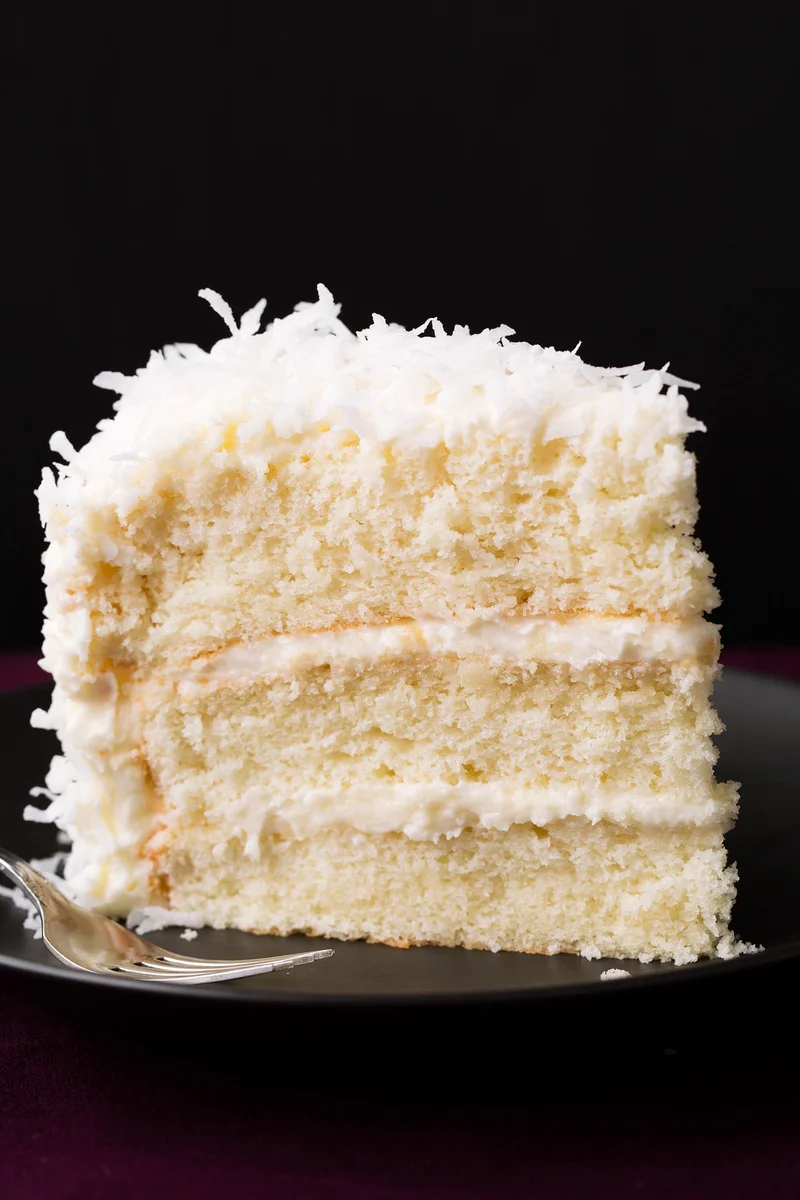
This American-style coconut cake has three light, tender layers flavoured with coconut and covered in cream cheese frosting and shredded coconut. It makes a celebratory centrepiece, with a soft crumb balanced by a rich, tangy finish.
Ingredients
- 360 gcake flour
- 1 tbsp (15 ml)baking powder
- 1/2 tsp (2.5 ml)salt
- 400 ggranulated sugar
- 170 g (3/4 cup)unsalted butter, at room temperature
- 60 ml (1/4 cup)vegetable oil or canola oil
- 320 ml (1 1/3 cups)unsweetened canned coconut milk, well shaken and at room temperature
- 2 largeegg yolks, at room temperature
- 1 tsp (5 ml)coconut extract
- 1/2 tsp (2.5 ml)vanilla extract
- 6 largeegg whites, at room temperature
- 1/8 tsp (about 0.6 ml)cream of tartar
- 340 g (12 oz)cream cheese, nearly at room temperature
- 170 g (3/4 cup)unsalted butter, at room temperature
- 1 tsp (5 ml)coconut extract
- 590 gpowdered sugar
- 135 g (1 1/2 cups)shredded coconut
Instructions
- 1
Prepare the pans
Heat the oven to 175°C (350°F). Butter three 23 cm (9-inch) round cake tins, line each base with a round of baking parchment, butter the parchment and set the tins aside.
- 2
Mix dry ingredients
Sift the cake flour into a large bowl, then whisk in the baking powder and salt. In a stand mixer fitted with the paddle attachment, beat the granulated sugar, butter and oil on medium speed until combined. Scrape down the bowl.
- 3
Add the yolks
Beat in the egg yolks one at a time, mixing after each addition. Mix in the coconut and vanilla extracts, then scrape down the bowl.
- 4
Combine the batter
Mix in one-third of the flour mixture just until combined, followed by half the coconut milk. Add another third of the flour mixture, then the remaining coconut milk, and finish with the last third of the flour mixture.
- 5
Whip the whites
In a separate bowl, use an electric hand mixer to whip the egg whites and cream of tartar on medium-high speed until stiff peaks form, but the whites are not dry.
- 6
Fold in whites
Gently fold the egg whites into the batter in three additions, folding only until each addition is combined. Avoid mixing so much that the whites lose their volume.
- 7
Bake the layers
Divide the batter evenly between the prepared tins and spread it into level layers. Bake in the preheated oven for about 19–22 minutes, until a toothpick inserted into the centre comes out clean.
- 8
Cool the cakes
Leave the cakes in their tins for 5–10 minutes. Run a knife around the edges, turn them out onto a wire rack and let them cool completely. Level the tops with a knife if needed.
- 9
Make the frosting
In a stand mixer fitted with the paddle attachment, beat the butter and cream cheese until smooth and fluffy. Mix in the coconut extract, then add the powdered sugar and beat on medium speed until smooth and fluffy.
- 10
Layer and finish
Spread frosting over the top of one cake layer, add the second layer and frost it, then place the last layer on top. Frost the top and sides. Set the cake stand over a rimmed baking sheet and sprinkle the cake evenly with shredded coconut, gently pressing it onto the sides to help it stick.
- 11
Chill the cake
If the frosting seems runny, chill it as needed; it can be slightly soft, as the coconut will help it stay in place. Store the cake in an airtight container in the refrigerator, and let it sit at room temperature until it is no longer cold before serving.
What is coconut cake?
Coconut cake is a familiar American celebration cake, often made in layers and finished with coconut over a creamy frosting. This version gets coconut flavour from coconut milk and extract in the sponge, as well as from the coating.
Separated eggs help give the layers a light texture, while cream cheese frosting adds a rich, gently tangy contrast. Shredded coconut completes the finish and brings a little texture to each slice.
Nutrition and macros by portion
The nutrition label shows one serving as written: 681 calories, 6g protein, 85g carbs, 36g fat.
| Portion | Adjustment | kcal | Protein | Carbs | Fat |
|---|---|---|---|---|---|
| Lighter | Smaller cake slice | 477 kcal | 4g | 59g | 25g |
| This serving | As written | 681 kcal | 6g | 85g | 36g |
| Hungry | Larger cake slice | 1022 kcal | 9g | 128g | 54g |
The cake's carbohydrates mainly come from the flour, granulated sugar and powdered sugar, while butter, oil and cream cheese contribute much of the fat. Eggs and cream cheese provide some protein. Pair a slice with fresh fruit, or serve it after a meal with a lighter main course.
Build a light batter
Room-temperature ingredients: Butter, coconut milk and eggs blend more evenly when they are not cold. Shake the coconut milk well before measuring so its contents are evenly mixed.
Egg whites: Whip them to stiff peaks that still look glossy, then fold them in gently in three batches. The aim is to incorporate them without losing the air that helps lighten the cake.
Get the layers right
Flour additions: Alternate the flour mixture and coconut milk as directed, mixing only until each addition disappears. Excess mixing can make the sponge less tender.
Even portions: Divide the batter as evenly as possible between the three prepared tins and level it before baking. This helps the layers finish at a similar height.
Check for doneness
The recipe gives a baking window of 19–22 minutes, but the toothpick test is the clearest cue: it should come out clean when inserted in the centre. Avoid opening the oven repeatedly while the layers are setting.
Cool the cakes completely before frosting. Warm sponge can soften the cream cheese frosting and make the layers harder to stack neatly.
Frost and finish
Smooth frosting: Beat the butter and cream cheese until fluffy before adding the coconut extract and powdered sugar. If the finished frosting seems too soft to spread, chill it briefly.
Coconut coating: Sprinkle the shredded coconut over a rimmed baking sheet so any loose pieces are easy to collect. Press it gently against the sides to help it adhere.
Serving and timing
Allow around 3 hours in total, including cooling and assembly, so the cake layers have time to cool before frosting. The hands-on steps can be done while planning for that cooling time.
Serve the cake at room temperature rather than straight from the fridge, as the recipe directs. It pairs well with fresh berries or a simple fruit salad to add a fresh contrast.
Recipe notes & tips
- Bring the cold ingredients to room temperature before mixing so they combine more smoothly.
- Sift the cake flour before measuring it into the bowl.
- Use a clean bowl for whipping the egg whites so they can reach stiff peaks.
- Fold the whites in gently and stop as soon as they are incorporated.
- Let the layers cool completely before stacking and frosting them.
- Use the rimmed baking sheet beneath the cake stand to catch loose coconut.
Variations
- Toasted coconut: Toast some of the shredded coconut lightly before using it for a nuttier finish.
- Berry side: Serve slices with fresh berries for a bright, fruity contrast.
- Coconut emphasis: Use a little extra shredded coconut on the top if you prefer a more textured finish.
- Simple decoration: Keep the coconut coating to the top of the cake for a cleaner-sided look.
Common mistakes to avoid
- Cold ingredients: They can be harder to blend evenly; bring the butter, eggs and coconut milk to room temperature as directed.
- Overbeating the batter: Too much mixing can compromise the tender crumb; mix each flour and milk addition only until combined.
- Deflating the whites: Vigorous stirring removes their air; fold them in gently in three additions.
- Frosting warm layers: The frosting can soften and slide; wait until the cakes are completely cool.
- Uneven layers: Different batter amounts can bake to different heights; divide the batter evenly between the tins.
- Skipping the parchment: The cakes may stick to the tin bases; line each base and butter the parchment.
How to store
Keep the cake in an airtight container in the refrigerator. Before serving, let it stand at room temperature until it is no longer cold. The recipe does not specify a storage duration.
Frequently asked questions
Can I make the cake layers ahead?
Yes. Bake the layers and let them cool completely before storing them covered until you are ready to assemble the cake.
How do I know when the cake layers are baked?
Insert a toothpick into the centre of a layer; it should come out clean. The suggested baking time is about 19–22 minutes.
What if the frosting seems runny?
Chill it briefly if it is too soft to spread. The recipe notes that slightly runny frosting is fine, as the shredded coconut helps it stay in place.
Can I serve the cake straight from the fridge?
It is best to let it sit at room temperature until it is no longer cold, as directed in the recipe.
Do I have to level the cake layers?
Only if needed. Once the layers are completely cool, trim their tops with a knife to make them more even for stacking.
Cook it from the original
This recipe comes from cookingclassy.com. Their page has the author’s own photos, notes and tips — the best place to cook it from.
Open the recipe on cookingclassy.com