
Chicken in White Wine Sauce
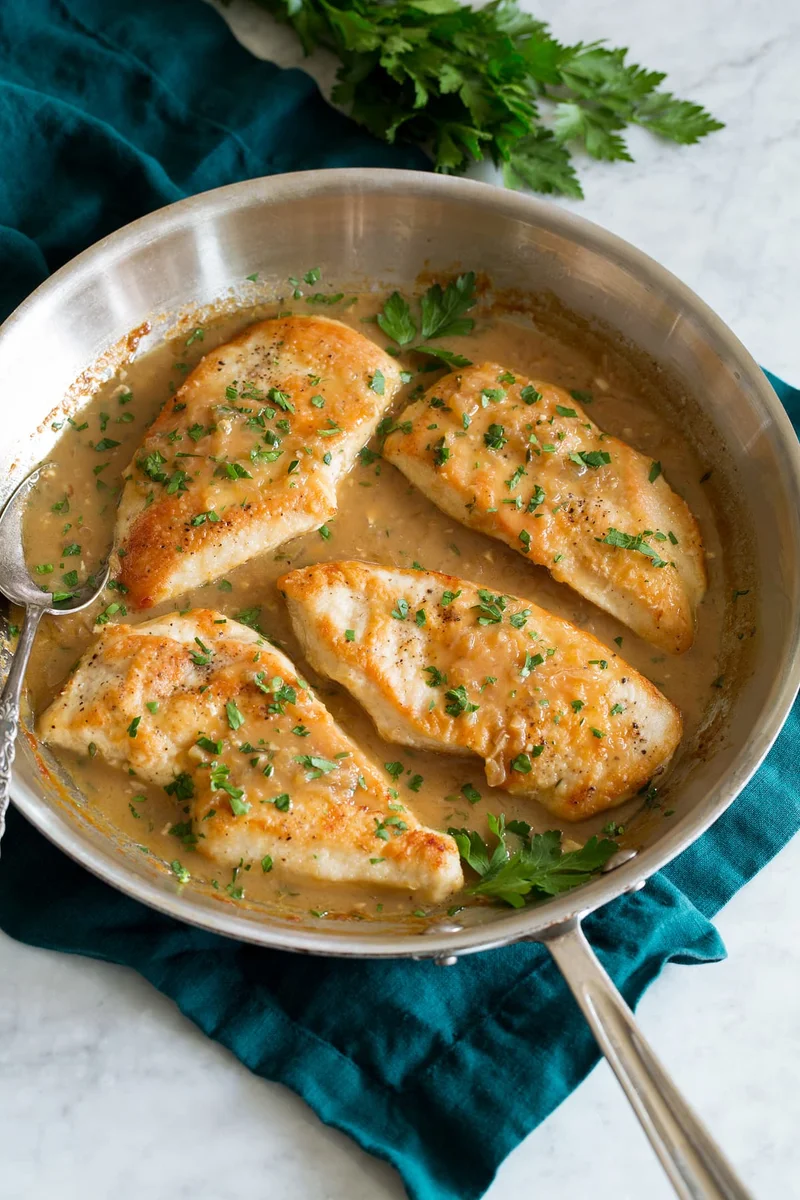
Chicken in white wine sauce pairs browned, tender chicken breasts with a savoury pan sauce of wine, broth, onion and thyme. It makes a comforting one-pan dinner, with enough sauce to spoon over the chicken or a simple side.
Ingredients
- 2 (340 g each)boneless, skinless chicken breasts
- To tastesalt and freshly ground black pepper
- 40 g (⅓ cup)plain flour
- 15 ml (1 Tbsp)olive oil
- 57 g (4 Tbsp), cut into 1 Tbsp pieces and dividedDanish Creamery European Style Unsalted Butter
- 150 g (1 cup)finely chopped yellow onion (1 small)
- 10 ml (2 tsp)minced garlic (2 cloves)
- 375 ml (1½ cups) + 15 ml (1 Tbsp), dividedlow-sodium chicken broth
- 240 ml (1 cup)dry white wine, such as Sauvignon Blanc
- 10 ml (2 tsp)thyme leaves
- 7.5 ml (1½ tsp)cornflour
- 15 ml (1 Tbsp)minced fresh parsley
Instructions
- 1
Prepare the chicken
Slice each chicken breast horizontally through its thickness to make four portions. Cover with cling film and pound with a meat mallet until the pieces are an even thickness.
- 2
Heat the pan
Warm the olive oil in a 30 cm (12-inch) frying pan over a medium-high heat.
- 3
Coat the chicken
Put the flour in a shallow dish. Season both sides of the chicken with salt and pepper, then coat each side in flour and shake off the excess.
- 4
Cook the chicken
Arrange the chicken in the pan with space between the pieces. Cook for about 4–5 minutes on each side, until browned and cooked through; the centre of the thickest part should reach 74°C (165°F). If the pan looks dry when you turn the chicken, drizzle in an extra ½ Tbsp olive oil.
- 5
Keep it warm
Move the chicken to a plate and cover it with foil to keep warm.
- 6
Melt the butter
Return the pan to a medium heat. Add 2 Tbsp butter and stir until melted.
- 7
Cook the aromatics
Add the onion and sauté for about 5 minutes, until tender and golden. Stir in the garlic and cook for another 30 seconds.
- 8
Deglaze the pan
Slowly pour in 1½ cups chicken broth and the white wine, scraping the browned bits from the bottom of the pan. Stir in the thyme leaves.
- 9
Reduce the sauce
Bring the mixture to a simmer, then lower the heat to medium-low. Simmer for 12–15 minutes, until the alcohol flavour has cooked off and the sauce has reduced to about one-third of its original volume.
- 10
Thicken the sauce
In a small bowl, whisk the remaining 1 Tbsp chicken broth with the cornflour until smooth. Once the sauce has reduced, stir in the mixture and whisk as it cooks for about 1 minute, until thickened.
- 11
Finish the sauce
Melt the remaining 2 Tbsp butter into the sauce. Taste and add salt if needed, then season with pepper to taste.
- 12
Serve the chicken
Return the chicken to the pan and spoon sauce over it. Sprinkle with parsley and serve.
What is chicken in white wine sauce?
This American-style skillet dinner centres on chicken breasts served with a sauce made in the same pan. White wine, broth, onion and thyme pick up the browned flavours left behind by the chicken.
This version works because the chicken is pounded to an even thickness, while a little flour helps it brown and gives the sauce body. Butter stirred in at the end adds a smooth finish.
Nutrition and macros by portion
The nutrition label shows one serving as written: 423 calories, 38g protein, 12g carbs, 19g fat.
| Portion | Adjustment | kcal | Protein | Carbs | Fat |
|---|---|---|---|---|---|
| Lighter | Less butter, more greens | 296 kcal | 27g | 8g | 13g |
| This serving | As written | 423 kcal | 38g | 12g | 19g |
| Hungry | Add potatoes or rice | 635 kcal | 57g | 18g | 29g |
The chicken supplies most of the protein, while the flour and onion contribute some of the carbohydrates. Butter and olive oil are the main sources of fat, with the wine and broth forming the sauce. Serve with vegetables alongside, or choose a moderate portion of potatoes or rice to balance the plate.
Why pound the chicken?
Even pieces: slicing each breast through its thickness and gently pounding the portions helps them cook at a similar rate. It also makes it easier to check the thickest part for doneness.
Flour coating: shake off excess flour before the chicken goes into the pan. A light coating helps form a golden surface without leaving a heavy layer in the sauce.
Build flavour in the pan
Browned bits: after cooking the chicken, scrape the base of the pan as you add the broth and wine. Those browned pieces help give the sauce a deeper savoury flavour.
Aromatics: let the onion turn tender and golden before adding the garlic. The garlic needs only 30 seconds so it flavours the pan without becoming bitter.
Get the sauce texture right
Reduction: simmer the wine and broth until the liquid is about one-third of its starting volume. The sauce should look more concentrated before you add the cornflour mixture.
Thickening: whisk the cornflour smoothly into the reserved broth first, then stir it into the pan. Finish with the butter for a glossy sauce that clings to the chicken.
Check timing and doneness
Chicken: the stated 4–5 minutes per side is a guide; thicker pieces or a cooler pan can take longer. Check that the centre of the thickest piece reaches 74°C (165°F).
Sauce: allow 12–15 minutes for reduction, checking its volume and flavour as it simmers. Keep the heat gentle enough for a steady simmer rather than a rapid boil.
What to serve alongside
For a meal that catches the sauce, serve the chicken with mashed potatoes, rice or crusty bread. Spoon the onion and wine sauce over the side as well as the chicken.
For a lighter-feeling plate, add green beans, broccoli or a crisp salad. Their freshness balances the buttery sauce.
Recipe notes & tips
- Pound the chicken between sheets of cling film to keep the work surface tidy.
- Leave space between the chicken portions so they brown rather than steam.
- Use a dry white wine that you would also enjoy drinking.
- Scrape the pan well when adding the wine and broth to lift the browned flavour into the sauce.
- Whisk the cornflour into cold or room-temperature broth until smooth before adding it to the hot pan.
- Taste the sauce before adding salt, as the broth can already be seasoned.
Variations
- Add mushrooms: sauté sliced mushrooms with the onion until tender.
- Use tarragon: swap the thyme for fresh tarragon for a different herbal note.
- Add lemon: finish with a little lemon juice for a brighter sauce.
- Include mustard: stir a small spoonful of Dijon mustard into the reduced sauce.
- Use chicken thighs: choose boneless thighs and cook until thoroughly done, allowing extra time if needed.
Common mistakes to avoid
- Uneven chicken pieces: pound them to a similar thickness so they cook more evenly.
- Crowded pan: cook in batches if the portions do not fit with space between them.
- Burnt garlic: add it after the onion and cook for only 30 seconds.
- Rushed reduction: simmer until the sauce is substantially reduced before thickening it.
- Lumpy cornflour: whisk it into the reserved broth until smooth before pouring it into the pan.
- Overcooked chicken: check the thickest piece with a thermometer and remove the chicken once it reaches 74°C (165°F).
How to store
Refrigerate leftovers in an airtight container for up to 3 days. Reheat gently in a covered pan over a low heat, adding a splash of broth if the sauce has thickened too much; ensure the chicken is piping hot throughout.
Frequently asked questions
Can I make this without wine?
Yes. Replace the wine with additional chicken broth, though the sauce will have a different flavour. Add a small squeeze of lemon at the end if you want a little brightness.
How do I know the chicken is cooked?
Check the thickest part with a food thermometer; it should reach 74°C (165°F). The cooking time can vary with the thickness of the portions and the heat of the pan.
Can I use dried thyme?
Yes, dried thyme can be used in place of the thyme leaves. Add it with the broth and wine so it has time to flavour the sauce.
Why is my sauce too thin?
It may need more time to reduce before you add the cornflour mixture. If it is already thickened but still thin, whisk a little more cornflour with cold broth and add it gradually.
Can I prepare the sauce ahead?
The sauce can be made ahead and refrigerated, then gently reheated. Cook the chicken close to serving time for the best texture, or reheat cooked chicken gently in the sauce.
What can I use instead of chicken breasts?
Boneless chicken thighs can work, but they may need a longer cooking time. Check doneness in the thickest part rather than relying only on the timing.
Cook it from the original
This recipe comes from cookingclassy.com. Their page has the author’s own photos, notes and tips — the best place to cook it from.
Open the recipe on cookingclassy.com