
Rigatoni Bolognese
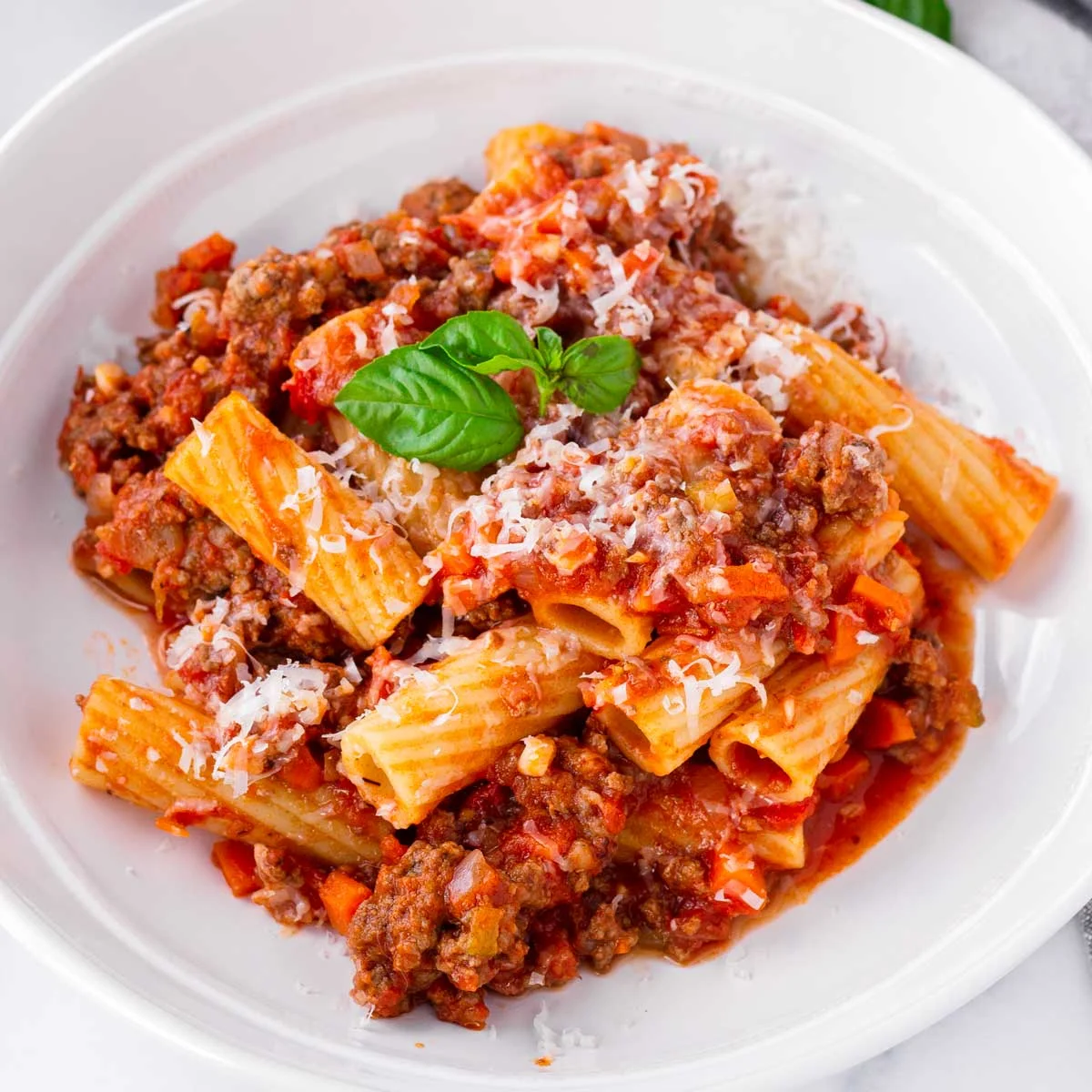
Rigatoni Bolognese pairs ridged pasta with a rich sauce of beef, Italian sausage, pancetta, tomatoes and wine. It is a cosy, generous meal for a family dinner or a table of friends.
Ingredients
- 454 g (1 pound)ground beef
- 227 g (1/2 pound), casings removedItalian sausage
- as neededolive oil
- 1 mediumyellow onion, finely diced
- 1 largecarrot, peeled and finely diced
- 1 large stalkcelery, finely diced
- 5 clovesgarlic, minced
- 57 g (2 ounces)pancetta, diced small (or thick-cut bacon)
- 3 teaspoons (or 1 teaspoon dried Italian seasoning)fresh thyme leaves
- 240 ml (1 cup), plus more as neededred wine
- 3 (14-ounce) cans, about 1.19 kg totalcrushed tomatoes
- 3dried bay leaves
- to tastesalt and pepper
- 120 ml (1/2 cup), plus more to tastewhole milk
- 340 g (0.75 pound)rigatoni pasta
- to garnishgrated Parmesan cheese
Instructions
- 1
Brown the meat
In a large 5.7-litre (6-quart) pot or Dutch oven, brown the beef and Italian sausage over medium-high heat for about 6 minutes, breaking the meat into pieces as it cooks. Transfer it to a plate. If the pot is too small, brown the meat in batches; if it releases excess moisture, blot some up with kitchen paper.
- 2
Soften the vegetables
Add a few drizzles of olive oil to the same pot without cleaning it. Cook the onion, carrot and celery over medium heat for about 6–8 minutes, scraping up the browned bits with a wooden spoon. If those bits are browning too quickly, add a splash of wine to loosen them.
- 3
Add wine and aromatics
Stir in the garlic, pancetta and thyme and cook for about 2 minutes, until fragrant. Pour in 240 ml (1 cup) red wine, scraping the bottom of the pot, then simmer until the wine has reduced by about half.
- 4
Simmer the sauce
Add the crushed tomatoes and bay leaves, then return the browned meat to the pot and stir. Season with salt and pepper to taste. Bring the sauce to a boil, then lower the heat and simmer for 30–35 minutes with the lid partially covering the pot.
- 5
Cook the pasta
Meanwhile, cook the rigatoni in generously salted water according to the packet instructions. Reserve some pasta water, then drain the pasta and set it aside.
- 6
Finish the sauce
When the sauce is ready, stir in 120 ml (1/2 cup) whole milk, or adjust to taste. Toss the cooked rigatoni with the sauce until evenly coated. If the sauce is too thick, loosen it with a splash of the reserved pasta water.
- 7
Serve with Parmesan
Serve the pasta topped with freshly grated Parmesan cheese.
What is rigatoni Bolognese?
Bolognese is an Italian-style meat sauce, traditionally associated with Bologna, that is cooked with aromatics and served with pasta. This version combines beef and sausage with pancetta, tomatoes, wine and milk for a hearty sauce.
Rigatoni's wide tubes and ridged exterior help the sauce cling to the pasta. A long, gentle simmer brings the meat and tomato flavours together.
Nutrition and macros by portion
The nutrition label shows one serving as written: 501 calories, 21g protein, 36g carbs, 28g fat.
| Portion | Adjustment | kcal | Protein | Carbs | Fat |
|---|---|---|---|---|---|
| Lighter | Use less sausage | 351 kcal | 15g | 25g | 20g |
| This serving | As written | 501 kcal | 21g | 36g | 28g |
| Hungry | Serve a larger portion | 752 kcal | 32g | 54g | 42g |
The rigatoni and tomatoes provide most of the carbohydrates, while the beef, sausage and Parmesan contribute protein. Fat comes mainly from the beef, sausage, pancetta, olive oil and whole milk. Pair a serving with green vegetables or salad for a more balanced plate.
The meat and vegetable base
Browned meat: Give the beef and sausage room in the pot so they brown rather than steam. If needed, work in batches, as the method suggests.
Finely diced vegetables: Small, even pieces of onion, carrot and celery soften into the sauce. Scrape the pot as they cook to lift the savoury browned bits.
Build flavour with wine
Pancetta and thyme: Cook these with the garlic until fragrant, taking care not to let the garlic burn.
Red wine: Scrape the bottom of the pot as the wine goes in, then let it reduce by about half before adding the tomatoes. This gives the sauce time to cook down the wine's sharper edge.
Simmer until ready
Low heat: After bringing the sauce to a boil, reduce it to a low simmer for 30–35 minutes with the lid partly covering the pot. Stir if needed to stop the sauce catching on the bottom.
Doneness cue: The vegetables should be tender and the sauce should look cohesive and thickened. Remove the bay leaves before serving if you spot them.
Cook and coat the rigatoni
Pasta water: Save some before draining the rigatoni. Its starchy water can loosen the sauce if it has thickened too much.
Final toss: Combine the drained pasta and sauce while both are hot, tossing until the rigatoni is evenly coated. Add pasta water a little at a time rather than making the sauce too loose.
What to serve alongside
A simple green salad or cooked green vegetables make a fresh contrast to the rich sauce. Serve with grated Parmesan at the table so everyone can add it to taste.
Because the dish already includes pasta and a substantial meat sauce, a light vegetable side is an easy way to round out the meal.
Recipe notes & tips
- Finely dice the onion, carrot and celery so they soften evenly during cooking.
- Brown the meat in batches if the pot is crowded.
- Keep an eye on the browned bits while the vegetables cook and loosen them with a splash of wine if they are darkening too quickly.
- Reserve pasta water before draining the rigatoni.
- Add the milk after the sauce has simmered, then adjust the amount to taste.
- Grate the Parmesan just before serving for a fresh finish.
Variations
- Use bacon: Swap in thick-cut bacon for the pancetta as suggested in the ingredient list.
- Choose dried herbs: Use 1 teaspoon dried Italian seasoning instead of the fresh thyme.
- Adjust the milk: Add more than 120 ml if you prefer a milder, creamier sauce.
- Change the pasta: Use another pasta shape that can hold a thick meat sauce.
- Add extra Parmesan: Offer more grated cheese at the table for a savourier finish.
Common mistakes to avoid
- Crowding the pot: The meat may release moisture instead of browning; cook it in batches if needed.
- Leaving browned bits to burn: Scrape them up as the vegetables cook and use a splash of wine if they darken too fast.
- Skipping the wine reduction: Simmer it until it has reduced by about half before adding the tomatoes.
- Boiling the sauce throughout: Reduce the heat after it boils and keep it at a low simmer for 30–35 minutes.
- Draining all the pasta water: Reserve some before draining so you can loosen the sauce if necessary.
- Adding too much pasta water at once: Use a small splash at a time and stop when the sauce coats the pasta.
How to store
Refrigerate leftovers in an airtight container for up to 3 days. Reheat gently in a pan or microwave, adding a splash of water if the sauce has thickened; store extra grated Parmesan separately.
Frequently asked questions
Can I make the sauce ahead?
Yes. Cook the sauce through the simmering step, cool it and refrigerate it in an airtight container. Reheat it gently and cook the rigatoni when you are ready to serve.
Can I use dried Italian seasoning instead of thyme?
Yes. The ingredient list gives 1 teaspoon of dried Italian seasoning as the alternative to 3 teaspoons of fresh thyme leaves.
Do I need to remove the sausage casings?
Yes. Remove the casings before cooking so the sausage can be broken up and browned with the beef.
Why should I reserve pasta water?
A splash can loosen the sauce if it becomes too thick when tossed with the rigatoni. Add it gradually so the sauce still coats the pasta.
Can I use bacon instead of pancetta?
Yes. Thick-cut bacon is listed as an alternative; dice it small and add it with the garlic and thyme.
How do I know when the sauce is ready?
After 30–35 minutes at a low simmer, the vegetables should be tender and the sauce should have thickened. Stir it occasionally so it does not catch on the pot.
Cook it from the original
This recipe comes from cookingformysoul.com. Their page has the author’s own photos, notes and tips — the best place to cook it from.
Open the recipe on cookingformysoul.com