
Fish with Ginger, Lemon Grass and Spring Onion En Papillote
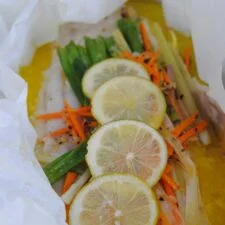
White fish is baked in a sealed parchment parcel with spring onions, carrot, lemon grass, ginger, lemon, white wine and butter. The parcel traps steam and keeps the fish moist while the aromatics flavour the cooking juices.
Ingredients
- 8spring onions, sliced lengthways
- 1carrot, cut into julienne
- 1 stalklemon grass, cut into strips
- 1 thumb-sized piecefresh ginger, grated
- 45 ml (3 tbsp)good-quality olive oil
- to tasteMaldon salt
- to tastefreshly milled black pepper
- 1.5 kgwhole white-fleshed fish, filleted
- 1lemon, thinly sliced
- 60 gsalted butter
- 60 ml (¼ cup)good-quality white wine
Instructions
- 1
Prepare the oven
Heat the oven to 180 °C. Line a roasting dish with parchment paper, leaving enough overhang to fold over and seal the fish.
- 2
Mix the vegetables
Combine the spring onions, carrot, lemon grass and ginger in a bowl. Toss with the olive oil, season with salt and pepper, then set aside.
- 3
Assemble the fish
Set the fish on the parchment in the roasting dish and season to taste. Spoon the ginger and vegetable mixture over it, add a few thin lemon slices, then place blobs of butter along the fish.
- 4
Seal and bake
Fold the parchment edges up and pour the wine over the fish. Fold the paper tightly closed to hold in the steam, then bake for 15–20 minutes, depending on the thickness of the fish.
- 5
Open and serve
Cut open the parcel and serve the fish on its parchment-lined dish, keeping the cooking juices with it.
What is fish en papillote?
En papillote is a French method of cooking food inside a folded paper parcel. The enclosed space holds steam around the ingredients, so the fish cooks gently in its own moisture and the liquid added to the parcel.
This version pairs mild white fish with ginger, lemon grass, spring onion and lemon. Butter and white wine enrich the juices, which are worth serving alongside the fish.
Nutrition and macros by portion
The nutrition label shows one serving as written: 735 calories, 87g protein, 9g carbs, 39g fat.
| Portion | Adjustment | kcal | Protein | Carbs | Fat |
|---|---|---|---|---|---|
| Lighter | Less butter, extra vegetables | 515 kcal | 61g | 6g | 27g |
| This serving | As written | 735 kcal | 87g | 9g | 39g |
| Hungry | Add rice or potatoes | 1103 kcal | 131g | 14g | 59g |
The fish supplies most of the protein, while the olive oil and butter account for much of the fat. The carrot, spring onions and wine contribute a smaller amount of carbohydrate; serving the dish with rice or potatoes will add more. Balance the plate with green vegetables and choose a modest portion of a starchy side if you want to keep the meal lighter.
Choosing the aromatics
Spring onions: slicing them lengthways helps them sit neatly over the fish and soften as they cook. Cut the carrot into fine, even strips so it has time to become tender.
Lemon grass and ginger: strips of lemon grass and grated ginger spread their flavour through the parcel. Grate the ginger finely so it mixes easily with the vegetables.
Making a secure parcel
Parchment: leave a generous overhang around the roasting dish so there is enough paper to fold over the fish. Seal the edges firmly after adding the wine; the parcel needs to hold the steam and juices.
Wine: pour it over the assembled fish just before closing the parcel. Keep the liquid inside rather than letting it run onto the dish.
Checking when the fish is done
Thickness: the recipe gives a baking time of 15–20 minutes because a thicker fillet takes longer than a thin one. Start checking at 15 minutes, taking care when opening the hot parcel.
Doneness: the flesh should look opaque and separate into flakes when gently tested with a fork. If it is not ready, reseal the parcel and return it to the oven briefly.
Keeping the fish moist
The sealed paper traps steam, while the olive oil and butter add richness to the fish and vegetables. A tight fold matters: a loose parcel lets steam and cooking liquid escape.
Open the parcel carefully, as hot steam will rise out. Serve the juices with the fish rather than leaving them behind in the paper.
Serving the dish
The cooking juices bring together the citrus, ginger, wine and butter, so spoon them over the fish at the table. A simple side of steamed rice or boiled potatoes can soak them up.
For a lighter plate, serve the fish with extra vegetables or a crisp green salad. Keep accompaniments simply seasoned so they do not overwhelm the delicate fish.
Recipe notes & tips
- Cut the carrot into fine strips so it softens within the fish's cooking time.
- Use a large sheet of parchment with enough overhang to fold the parcel closed.
- Keep the spring onion and ginger mixture evenly spread over the fish.
- Seal the parcel firmly after pouring in the wine to retain the steam.
- Open the parcel away from your face to avoid the hot steam.
- Spoon the cooking juices over the fish when serving.
Variations
- Add garlic: Mix a finely chopped clove into the spring onion and ginger mixture.
- Use lime: Replace the lemon slices with thin slices of lime for a sharper citrus note.
- Add chilli: Scatter a little sliced fresh chilli over the fish before sealing the parcel.
- Change the fish: Use another firm white-fleshed fish and adjust the baking time for its thickness.
- Include greens: Add a handful of thinly sliced pak choi beneath the fish.
- Skip the wine: Use a splash of water or fish stock in place of the white wine.
Common mistakes to avoid
- Loose parcel: Steam escapes and the fish can dry out; fold the parchment edges tightly together.
- Thick carrot strips: They may stay firm; cut the carrot into fine julienne.
- Too much liquid outside: The wine can spill before sealing; pour it carefully over the fish inside the paper.
- Overbaking: The fish can become dry; begin checking at 15 minutes, especially for thinner fillets.
- Opening carelessly: Hot steam can burn; cut the parcel open away from your face.
- Discarding the juices: They carry the flavour of the aromatics; serve them with the fish.
How to store
Refrigerate leftover fish and its juices in an airtight container within 2 hours and use within 2 days. Reheat gently, covered, in a low oven or microwave until hot throughout; avoid prolonged heating, which can dry out the fish.
Frequently asked questions
Can I prepare the parcel ahead of time?
You can assemble the fish and vegetables in the parchment shortly before cooking and keep it refrigerated. Add the wine and seal the parcel just before it goes into the oven.
How do I know when the fish is cooked?
The flesh should be opaque and flake gently when tested with a fork. If it is still translucent or resists flaking, reseal the parcel and cook it a little longer.
Can I use fish fillets instead of a whole fish?
Yes. Arrange the fillets in the parcel and use the same toppings, but allow for their thickness when judging the 15–20 minute cooking time.
What can I use instead of parchment paper?
Use oven-safe baking parchment designed for cooking. Do not use waxed paper, which is not intended for the oven.
What should I serve with the fish?
Steamed rice or boiled potatoes work well with the aromatic juices. Green vegetables or a crisp salad make a fresh accompaniment.
Can I leave out the white wine?
Yes. Replace it with a small splash of water or fish stock so there is still a little liquid inside the parcel.
Cook it from the original
This recipe comes from crushmag-online.com. Their page has the author’s own photos, notes and tips — the best place to cook it from.
Open the recipe on crushmag-online.com