
Autumn Minestrone Soup (Vegan)
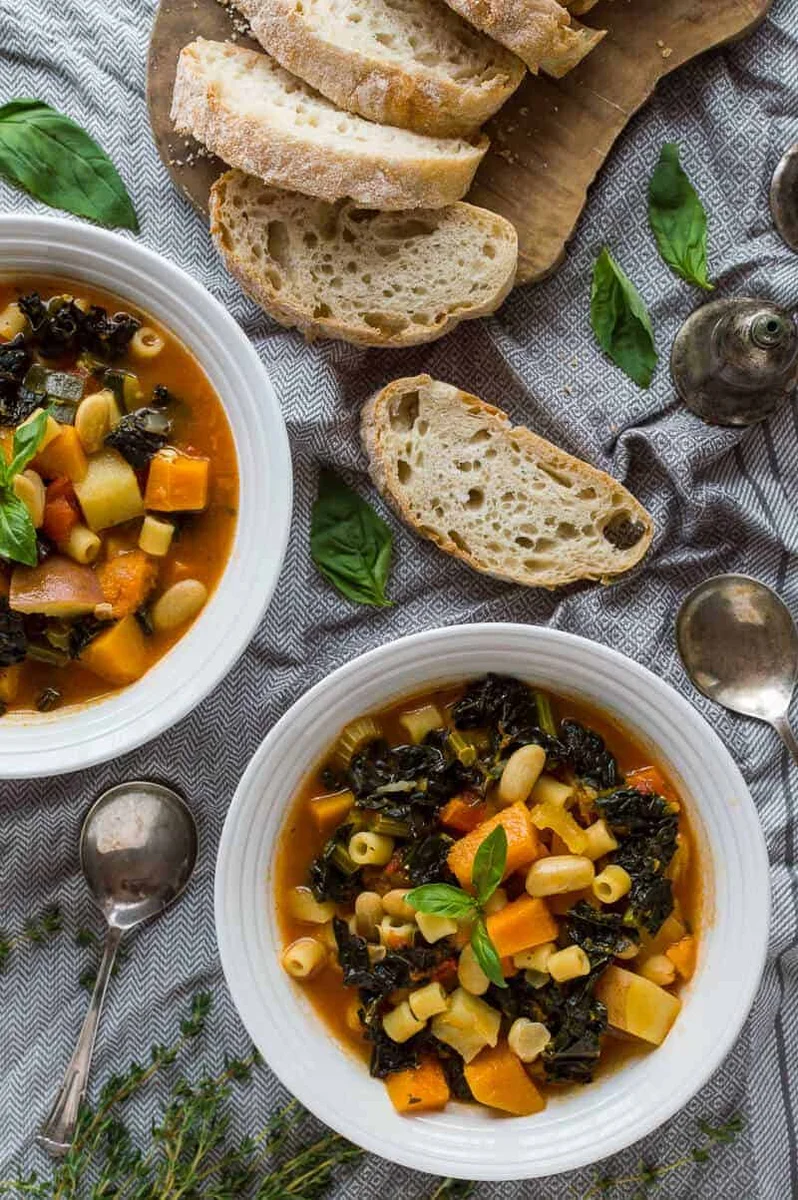
This vegan autumn minestrone brings together squash, courgette, potato, beans, greens and pasta in a herby tomato and vegetable stock. It makes a generous, one-pot meal from seasonal produce, with basil or pesto to finish.
Ingredients
- 1 largebrown onion
- 1 largecarrot
- 2celery sticks
- 3 clovesgarlic
- 30 ml (2 tbsp)olive oil
- 1courgette
- 1 smallbutternut squash
- 1 largepotato
- 200 g (7 oz/a large handful)cavolo nero or kale
- A few sprigsfresh thyme
- 2 sprigsfresh rosemary
- 1 tin (400 g/14 oz)chopped tomatoes
- 1 tin (400 g/14 oz), drainedcannellini beans
- 1.5 litres (6 cups)vegetable stock
- 100 g (2/3 cup)uncooked ditalini pasta
- To tastesalt and pepper
- To servefresh basil or pesto
Instructions
- 1
Prepare the aromatics
Peel and finely dice the onion and carrot. Thinly slice the celery, then peel and crush the garlic.
- 2
Soften the vegetables
Warm the olive oil in a large pan over a low heat. Add the onion, carrot and celery and cook gently for about 10 minutes, until softened and lightly coloured. Stir in the garlic and cook for another minute.
- 3
Prepare the produce
Dice the courgette, peel, deseed and dice the butternut squash, and dice the potato. Finely shred the cavolo nero or kale. Strip the thyme and rosemary leaves from their stalks and chop them finely; discard the stalks.
- 4
Add soup ingredients
Put all the prepared vegetables, herbs, chopped tomatoes, drained cannellini beans, vegetable stock and pasta into the pan.
- 5
Simmer until tender
Bring the soup to a simmer, then cook gently for 20–30 minutes, until the vegetables and pasta are tender. Season to taste with salt and pepper. Stir in finely chopped fresh basil, or serve each bowl with a spoonful of pesto.
What is autumn minestrone?
Minestrone is an Italian vegetable soup with many regional and seasonal versions rather than one fixed ingredient list. This one uses autumn vegetables, beans and pasta to make a substantial bowl.
The softened onion, carrot and celery build a savoury base, while tomatoes, stock and fresh herbs bring the ingredients together. Cannellini beans add substance, and basil or pesto gives the soup a fresh finish.
Nutrition and macros by portion
The nutrition label shows one serving as written: 283 calories, 0g protein, 0g carbs, 0g fat.
| Portion | Adjustment | kcal | Protein | Carbs | Fat |
|---|---|---|---|---|---|
| Lighter | Less pasta, more greens | 198 kcal | 0g | 0g | 0g |
| This serving | As written | 283 kcal | 0g | 0g | 0g |
| Hungry | Larger portion | 425 kcal | 0g | 0g | 0g |
The pasta, potato, squash and beans provide most of the carbohydrates, while olive oil contributes much of the fat. The beans add some plant protein, though the recipe’s supplied nutrition figures list protein as 0 g. For a balanced plate, serve a bowl with extra greens or a side salad.
Build a flavourful base
Aromatics: Dice the onion and carrot finely and slice the celery thinly so they soften evenly. Cook them slowly in the olive oil before adding the garlic; the gentle heat helps them soften without rushing the base.
Garlic: Add it after the other aromatics have had time to cook, and give it just a minute in the pan. This seasons the base without leaving the garlic to cook for the full simmer.
Prepare the autumn vegetables
Squash and potato: Peel and dice both into pieces of a similar size, so they cook at a comparable pace. Remove the squash seeds before cutting it up.
Greens: Shred the cavolo nero or kale finely, which makes it easier to eat alongside the pasta and smaller vegetable pieces. Strip the leaves from the thyme and rosemary stalks before chopping.
Get the simmer right
Gentle heat: Bring the ingredients up to a simmer, then keep the soup bubbling quietly for 20–30 minutes. A hard boil can break up the softer vegetables before the pasta is ready.
Doneness: Check that the pasta and the largest pieces of squash and potato are tender before seasoning. The precise time depends on the size of the cuts and the pasta shape.
Pasta and broth texture
Pasta: Ditalini makes small, spoonable bites that sit comfortably among the vegetables and beans. Keep an eye on it towards the end of cooking so it does not become too soft.
Broth: The pasta absorbs some of the stock as it cooks, giving the soup a fuller texture. If serving is delayed, expect the broth to thicken as the pasta continues to take up liquid.
Finish and serve
Fresh basil: Stir finely chopped basil into the soup just before serving for a fresh herbal note. Alternatively, add a spoonful of pesto to each bowl.
On the side: Serve the soup as a complete meal, or pair it with crusty bread and a simple green salad. Keep any bread alongside rather than in the pan if you want the broth to stay clear.
Recipe notes & tips
- Cut the squash, potato and courgette into similar-sized pieces for more even cooking.
- Keep the heat low while the onion, carrot and celery soften so they do not brown too quickly.
- Use cavolo nero or kale, whichever is available, and shred it finely.
- Check the pasta and vegetables near the start of the stated 20–30-minute simmering range.
- Add basil at the end, or put pesto straight into the bowls for a more distinct finish.
- Serve promptly if you want the broth to remain looser, as the pasta will keep absorbing it.
Variations
- Choose the greens: Use cavolo nero or kale according to what you have available.
- Switch the herbs: Use the listed fresh thyme and rosemary, adjusting their balance to suit your preference.
- Finish with pesto: Spoon pesto into each bowl instead of stirring basil through the pot.
- Change the pasta shape: Use another small pasta shape if ditalini is unavailable.
- Serve with bread: Add crusty bread at the table for a heartier meal.
Common mistakes to avoid
- High heat for the base: The aromatics can brown before they soften; cook them gently over low heat.
- Large uneven vegetable pieces: Some may stay firm while others turn soft; dice them to similar sizes.
- Hard boiling: The vegetables can break up; keep the soup at a gentle simmer.
- Overcooked pasta: It can become too soft during the simmer; check it towards the end of cooking.
- Adding basil too early: Its fresh flavour can fade during cooking; stir it in at the end or serve pesto in the bowls.
How to store
Cool leftovers and refrigerate in a covered container for up to 3 days. Reheat gently in a pan until hot throughout; the pasta will absorb more broth as it sits, so loosen the soup with a little stock or water if needed.
Frequently asked questions
Can I use kale instead of cavolo nero?
Yes. The recipe allows either; shred the greens finely before adding them to the pan.
How do I know when the soup is ready?
The pasta and the largest pieces of potato and squash should be tender. Start checking towards the end of the 20–30-minute simmer.
Can I make the soup ahead?
Yes, but the pasta will absorb broth as the soup stands. Add a little stock or water when reheating if you prefer a looser consistency.
Can I use dried herbs?
The method calls for fresh thyme and rosemary. If substituting dried herbs, use a modest amount and adjust the seasoning to taste.
What can I serve with autumn minestrone?
Crusty bread or a simple green salad makes an easy accompaniment. Basil or a spoonful of pesto finishes the soup.
Cook it from the original
This recipe comes from domesticgothess.com. Their page has the author’s own photos, notes and tips — the best place to cook it from.
Open the recipe on domesticgothess.com