
Easy Vegan Spring Rolls
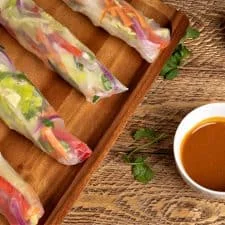
These no-cook vegan spring rolls wrap crisp vegetables and fresh herbs in soft rice paper, with a creamy peanut dipping sauce. They make a colourful meal or appetiser when you want something fresh without turning on the hob.
Ingredients
- 8rice paper wrappers
- 150 g (1 cup)carrots, julienned
- 150 g (1 cup)English cucumber, julienned
- 150 g (1 cup)red bell pepper, julienned
- 150 g (1 cup)red onion, cut into strips
- 50 g (1 cup)romaine lettuce, shredded
- 70 g (1 cup)Savoy cabbage, shredded
- 1 small handfulfresh coriander
- 3–4fresh basil leaves
- 60 g (¼ cup)natural peanut butter, sodium-free
- 45 ml (3 tbsp)coconut aminos (or low-sodium soy sauce)
- 15 ml (1 tbsp)rice vinegar
- 15 ml (1 tbsp)maple syrup, optional if the sauce is not sweet enough
- 10 ml (2 tsp)sriracha, optional
- 2.5 ml (½ tsp)garlic powder
- 1.25 ml (¼ tsp)ground ginger
Instructions
- 1
Mix the sauce
Whisk the peanut butter, coconut aminos, rice vinegar, maple syrup, sriracha, garlic powder and ginger together in a small bowl. Set the sauce aside.
- 2
Prepare vegetables
Finely chop, shred or julienne all the vegetables into small strips.
- 3
Dampen the towel
Lay a damp tea towel on your work surface.
- 4
Prepare the water
Fill a large bowl or pan, wider than the rice paper wrappers, with about 2.5 cm (1 inch) of water.
- 5
Soften the wrapper
Submerge one rice paper wrapper in the water for 10 seconds, then lay it on the damp tea towel.
- 6
Add the filling
Arrange a generous amount of vegetables on the lower third of the wrapper, leaving a 2.5–5 cm (1–2 inch) gap at each side.
- 7
Roll it up
Roll the wrapper carefully, tucking in the sides as you go.
- 8
Keep rolls separate
Put each finished roll on another damp towel or a paper towel while you assemble the rest.
- 9
Avoid touching
Keep the spring rolls from touching one another, as the wrappers are very sticky.
- 10
Serve with sauce
Serve the spring rolls with the peanut dipping sauce.
What are spring rolls?
Spring rolls are found in several Asian food traditions, with wrappers, fillings and cooking methods that vary by region. This version uses rice paper and fresh vegetables, so the rolls are assembled without cooking.
The mix of crunchy vegetables and soft wrapper works well with a rich, tangy peanut dip. Fresh coriander and basil add a fragrant note to the filling.
Nutrition and macros by portion
The nutrition label shows one serving as written: 110 calories, 4g protein, 17g carbs, 4g fat.
| Portion | Adjustment | kcal | Protein | Carbs | Fat |
|---|---|---|---|---|---|
| Lighter | Use less peanut sauce | 77 kcal | 2g | 12g | 3g |
| This serving | As written | 110 kcal | 4g | 17g | 4g |
| Hungry | Add extra spring rolls | 165 kcal | 5g | 26g | 6g |
The rice paper and vegetables provide most of the carbohydrates, while peanut butter supplies most of the fat and some protein. Pair a serving with a source of additional protein, such as tofu or edamame, if you want a more filling plate.
Why these vegetables work
Crunchy vegetables: Carrot, cucumber, pepper and red onion bring varied colours and crisp textures. Cutting them into fine strips makes the rolls easier to fill and bite into.
Leafy greens: Romaine and Savoy cabbage add volume and a softer crunch. Shredding them helps the filling sit neatly inside the wrapper.
Getting the rice paper right
Brief soak: Dip each wrapper for 10 seconds, as directed, then move it to the damp towel. It will continue to soften there, so it need not feel fully pliable while submerged.
Gentle handling: Rice paper can tear if pulled or overfilled. Leave the stated gap at the sides so the wrapper can fold over the filling.
Rolling without tearing
Neat filling: Keep the vegetables on the lower third rather than spreading them across the wrapper. This gives you room to fold in the sides and roll the spring roll closed.
Separate rolls: The damp towel helps keep the wrappers workable while you assemble. Keep the finished rolls apart because their surfaces can stick together.
Balancing the peanut sauce
Creamy base: Natural peanut butter gives the dip its thick, nutty body. Whisk it with the coconut aminos and rice vinegar until evenly combined.
Adjustable flavour: Maple syrup is optional, and the sriracha can be left out or included for heat. Taste the sauce and use the syrup if you want it sweeter.
When to serve them
Freshly assembled: These rolls are best served soon after wrapping, while the vegetables are crisp and the rice paper is soft. Put the peanut sauce alongside for dipping.
A simple pairing: Serve them as a light lunch or starter, or alongside a warm soup or rice dish for a more substantial meal.
Recipe notes & tips
- Cut the vegetables into similarly fine strips so they are easier to arrange.
- Use a bowl or pan wider than the rice paper wrappers for easier soaking.
- Keep a damp towel beneath the wrappers while assembling.
- Start with a modest amount of filling to make folding easier.
- Leave space between finished rolls to stop the wrappers sticking together.
Variations
- More herbs: Add extra coriander or basil for a stronger fresh flavour.
- Extra heat: Add more sriracha to the dipping sauce to make it spicier.
- Soy sauce swap: Use low-sodium soy sauce in place of coconut aminos as suggested.
- Sweeter dip: Add the optional maple syrup if you prefer a sweeter sauce.
- Different crunch: Swap in another crisp vegetable, keeping the filling cut into thin strips.
Common mistakes to avoid
- Over-soaking the wrapper: It can become difficult to handle; stick to the stated 10 seconds.
- Overfilling: Too much filling makes the wrapper harder to close; use a manageable amount on the lower third.
- Skipping the side gap: The roll will be harder to seal; leave 2.5–5 cm (1–2 inches) at each side.
- Letting rolls touch: The rice paper can stick to itself; place each roll separately on a towel.
- Cutting vegetables too thick: Bulky pieces make rolling awkward; slice them into fine strips.
How to store
For the best texture, serve the rolls soon after assembly. If needed, store them in a single layer with space between them, covered, in the fridge and eat within a day; keep the sauce separate and stir it before serving.
Frequently asked questions
Do I need to cook the vegetables?
No. This is a no-cook recipe, and the vegetables are served raw after being chopped, shredded or julienned.
How long should I soak each rice paper wrapper?
Dip it in water for 10 seconds, then transfer it to the damp tea towel to soften further.
Can I use soy sauce instead of coconut aminos?
Yes. The recipe suggests low-sodium soy sauce as a substitute.
Is the maple syrup essential?
No, it is optional. Add it if you taste the sauce and would like it sweeter.
Can I make the spring rolls ahead?
They are best shortly after assembly, but you can refrigerate them briefly in a single layer with space between each roll. Keep the sauce separate.
Why are my spring rolls sticking together?
Rice paper is very sticky once softened. Keep the finished rolls from touching and place them on a damp towel or paper towel.
Cook it from the original
This recipe comes from brandnewvegan.com. Their page has the author’s own photos, notes and tips — the best place to cook it from.
Open the recipe on brandnewvegan.com