
Gajar Matar Sabzi
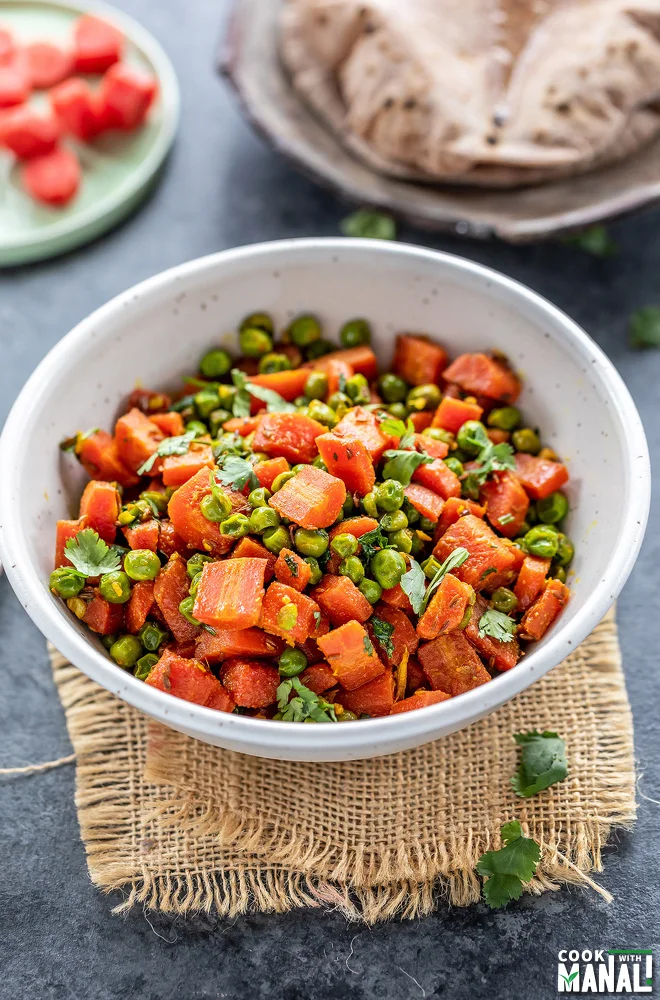
Gajar matar sabzi is a quick North Indian dish of carrots and green peas cooked with warming spices. It makes a colourful winter side to serve with hot rotis.
Ingredients
- 15 mlmustard oil (or another oil of choice)
- ½ tspcumin seeds
- ¼ tsphing (asafoetida)
- 1green chilli, chopped, or to taste
- 2garlic cloves, finely chopped
- ½ inchginger, finely chopped
- 7–8 medium (430 g)carrots, diced into pieces no larger than 1.3 cm; red carrots if possible
- 135 ggreen peas, soaked in warm water for 10 minutes if frozen, then drained
- ¼ tspturmeric powder
- ½ tspground coriander
- ½ tspsalt, or to taste
- 2 tbspwater, or as needed
- 1–2 tbspfresh coriander, chopped
Instructions
- 1
Heat the oil
Heat the mustard oil in a pan over medium-high heat until very hot to remove its raw smell. Lower the heat, add the cumin seeds and hing, and let the seeds sizzle. Add the chilli, garlic and ginger, then cook for 1 minute.
- 2
Add the vegetables
Add the diced carrots and drained peas, then stir to combine.
- 3
Season the sabzi
Add the turmeric, ground coriander, salt and 2 tablespoons of water. Mix well.
- 4
Cover and cook
Cover the pan and cook over medium heat until the vegetables are cooked through. This took 6–7 minutes with very fresh carrots; less fresh or different varieties may take longer. Add more water if needed as they cook, then stir in the fresh coriander. Serve with warm roti; garam masala can also be sprinkled over the top.
What is gajar matar sabzi?
Gajar matar sabzi is a North Indian vegetable dish made with gajar (carrots) and matar (peas). It is especially associated with winter, when fresh carrots are in season, and is commonly served as part of a meal with roti.
This version keeps the vegetables in the foreground, with cumin, hing, chilli, garlic and ginger adding a savoury, aromatic base. A short covered cook helps the carrots soften while the peas stay distinct.
Nutrition and macros by portion
The nutrition label shows one serving as written: 112 calories, 3g protein, 17g carbs, 4g fat.
| Portion | Adjustment | kcal | Protein | Carbs | Fat |
|---|---|---|---|---|---|
| Lighter | Use less mustard oil | 78 kcal | 2g | 12g | 3g |
| This serving | As written | 112 kcal | 3g | 17g | 4g |
| Hungry | Serve with extra roti | 168 kcal | 5g | 26g | 6g |
The carrots and peas provide most of the carbohydrates, while the peas contribute some protein. Mustard oil supplies most of the fat. Pair a portion with dal or another protein-rich dish and roti for a more balanced plate.
Choosing the carrots and peas
Carrots: Red winter carrots are suggested where available, but ordinary carrots work too. Cut them into evenly sized pieces no larger than 1.3 cm so they cook at a similar pace.
Peas: Frozen peas are convenient here; soak them in warm water for 10 minutes and drain before adding. Fresh peas can be used in their place.
Building the aromatic base
Mustard oil: Heat it until very hot before lowering the heat, as the method calls for this to remove its raw smell. Take care when adding the spices to the hot pan.
Spices and aromatics: Let the cumin seeds sizzle, then add hing, chilli, garlic and ginger. Keep the heat lower for the brief one-minute cook so the chopped aromatics do not burn.
Getting the texture right
Water: The two tablespoons provide a little moisture for cooking under the lid. Add more only as needed if the pan becomes dry before the carrots are tender.
Doneness: The carrots should be cooked through but still hold their shape, with the peas intact. Check after 6–7 minutes, bearing in mind that carrot variety and freshness affect the timing.
Timing and pan control
Even pieces: Keeping the carrot dice small and consistent helps the vegetables cook within the stated short simmer. Larger pieces may need additional time.
Covered cooking: Keep the lid on while the vegetables soften, and check towards the end rather than stirring constantly. If they are not ready, cover again and continue cooking, adding a little water if necessary.
Serving the sabzi
Roti: Serve the sabzi warm with hot roti, as suggested, so the vegetables can be scooped up with the flatbread.
A fuller plate: Pair it with dal or another protein-rich dish if you want a more substantial meal. Finish with the chopped coriander; a little garam masala is an optional final sprinkle.
Recipe notes & tips
- Dice the carrots into evenly sized pieces no larger than 1.3 cm for more even cooking.
- Drain the peas well after soaking so they do not add excess water to the pan.
- Heat the mustard oil thoroughly before adding the spices, then reduce the heat.
- Keep extra water nearby and add it a little at a time if the pan dries out.
- Check the carrots after 6 minutes, as fresh, tender carrots may cook quickly.
Variations
- Use another oil: Swap the mustard oil for an oil of your choice.
- Adjust the chilli: Use less for a milder dish or add more to taste.
- Add garam masala: Sprinkle it over the cooked sabzi before serving.
- Choose fresh peas: Use fresh peas instead of soaked and drained frozen peas.
- Use orange carrots: Make the dish with standard carrots if red winter carrots are unavailable.
Common mistakes to avoid
- Oil not heated enough: Heat the mustard oil until very hot before lowering the heat and adding the spices.
- Uneven carrot pieces: Cut the carrots to a consistent size so they cook at roughly the same rate.
- Burning the aromatics: Lower the heat before adding the chilli, garlic and ginger, and cook them for just 1 minute.
- Adding too much water: Start with 2 tablespoons and add more only if the vegetables need moisture.
- Cooking by the clock alone: Check that the carrots are cooked through, since their variety and freshness affect the timing.
How to store
Cool leftovers and refrigerate them in a covered container for up to 3 days. Reheat in a pan over a low heat, adding a small splash of water if needed, until hot throughout.
Frequently asked questions
Can I use frozen peas?
Yes. Soak them in warm water for 10 minutes, then drain before adding them to the pan, as described in the recipe.
Do I need red carrots?
No. Red winter carrots are suggested if available, but other carrots can be used. Cut them into evenly sized pieces and check their tenderness as they cook.
How do I know when the carrots are cooked?
They should be tender and cooked through while still holding their shape. Start checking after 6–7 minutes; they may need longer depending on their freshness and variety.
Can I make this less spicy?
Yes. Reduce the green chilli or leave it out, then adjust the seasoning to taste.
What should I serve with gajar matar sabzi?
Serve it warm with roti. Dal or another protein-rich dish can make the meal more substantial.
Can I use a different oil?
Yes. The recipe allows another oil of your choice. If using mustard oil, heat it until very hot before adding the spices.
Cook it from the original
This recipe comes from cookwithmanali.com. Their page has the author’s own photos, notes and tips — the best place to cook it from.
Open the recipe on cookwithmanali.com