
Navratan Korma
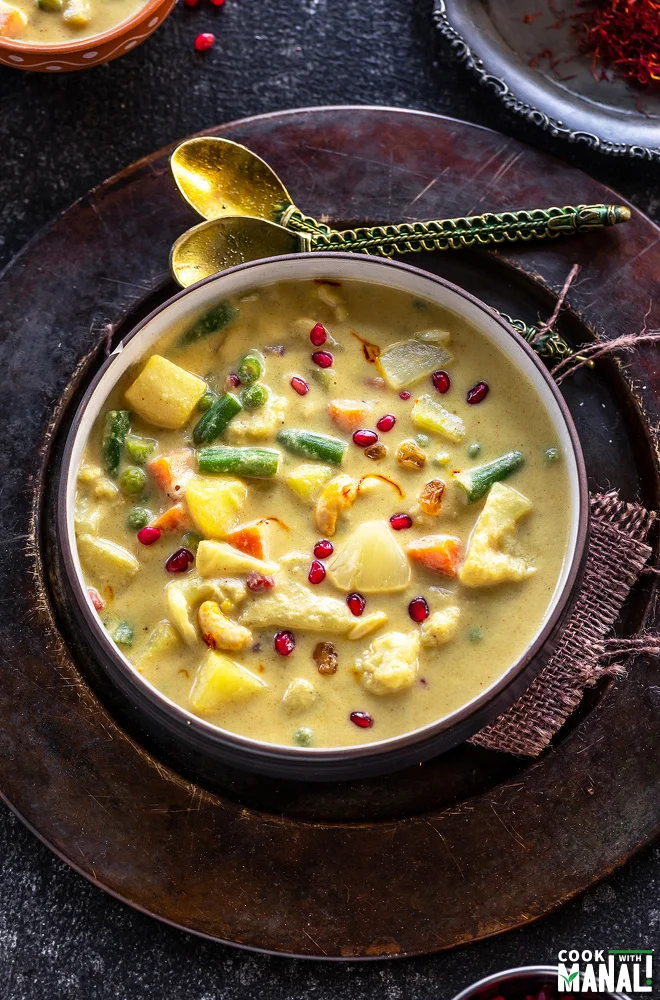
Navratan korma is a creamy Indian curry combining vegetables with fruit, nuts and warming spices. This version is a good choice when you want a gently spiced, celebratory dish to serve with naan or tandoori roti.
Ingredients
- 2 medium (or 1 large)yellow onions
- 2.5 cmginger, chopped
- 4 large clovesgarlic, chopped
- 1green chilli
- 15–20cashews
- 15 mlpoppy seeds
- 710 ml (3 cups; 24 oz)water
- 1 medium, diced into 1.3 cm piecespotato
- 240 ml (1 cup)cauliflower florets, cut small
- 1 large, diced smallcarrot
- 12–14, cut into 2.5 cm piecesgreen beans
- 80 ml (⅓ cup)frozen green peas
- 15 mloil
- 15 ml + 2.5 ml, dividedghee
- 1bay leaf
- 2cloves
- 2–3whole green cardamom pods
- 5 mlground coriander
- 2.5 mlground cumin
- 1.25 ml, or to tastered chilli powder
- 180 ml (¾ cup)water
- 5 ml, or to tastesalt
- 3.75 mlsugar
- 60 ml (¼ cup)cream
- 10 mlgolden raisins
- 5–6whole cashews
- 1 pinch, soaked in 15 ml warm milksaffron strands
- 15 mlpomegranate arils
- 1 pinchground cardamom
- 1 pinchgaram masala
- 30 mlpineapple pieces
Instructions
- 1
Boil the aromatics
Put the chopped onion, ginger, garlic and green chilli in a large kadai or pan with 15–20 cashews, the poppy seeds and 710 ml water. Bring to the boil and cook over medium heat for 15–20 minutes.
- 2
Prepare the vegetables
Chop the vegetables into small pieces. Cut the potato into pieces about 1.3 cm across and the cauliflower into small florets so they cook quickly.
- 3
Parboil the vegetables
Bring a pan of water to the boil, then add the potato, cauliflower, carrot, green beans and peas. Boil over medium heat for 10 minutes, until fork-tender but not mushy. Drain in a colander and set aside.
- 4
Blend the paste
When the onion, cashews, ginger and garlic have boiled for 15–20 minutes, turn off the heat. Leave the mixture to cool slightly, then transfer it all to a blender and blend until smooth. Set aside.
- 5
Cook the spices
Heat 15 ml oil and 15 ml ghee in a kadai or wok over medium heat. Add the bay leaf, cloves and cardamom and let them sizzle, then add the blended onion and cashew paste. Cook over low-medium heat for 5 minutes.
- 6
Season the paste
Add the ground coriander, cumin and red chilli powder to the paste.
- 7
Add the liquid
Stir and cook for 3 minutes. Add the salt, sugar and 180 ml water, then cook over low heat for another 3 minutes.
- 8
Finish the curry
Stir in the vegetables and cook for 1 minute. Add the cream, mix well and cook over low heat for 3–4 minutes.
- 9
Fry the garnish
Meanwhile, heat 2.5 ml ghee in a small pan. Add the golden raisins and 5–6 cashews and fry until the raisins plump up. Set aside.
- 10
Prepare the saffron
Heat 15 ml milk, add a pinch of crushed saffron strands, then remove the pan from the heat and set aside.
- 11
Add the garnishes
Add the pomegranate, fried cashews and raisins to the curry and mix. Stir in the prepared saffron milk.
- 12
Finish cooking
Mix everything together and cook for 2 more minutes. Sprinkle over the ground cardamom and garam masala, then turn off the heat.
- 13
Add the pineapple
Leave the curry to cool slightly for 6–7 minutes, then add the pineapple pieces. Serve warm with naan or tandoori roti.
What is navratan korma?
Navratan korma is an Indian curry whose name means “nine-gem korma”, referring to its assortment of colourful ingredients. Recipes vary, but vegetables, fruit and nuts are often brought together in a mildly spiced, creamy sauce.
Here, boiled onion, cashews and poppy seeds form the smooth base, while vegetables, raisins, pineapple and pomegranate add contrasting textures and flavours.
Nutrition and macros by portion
The nutrition label shows one serving as written: 198 calories, 4g protein, 17g carbs, 14g fat.
| Portion | Adjustment | kcal | Protein | Carbs | Fat |
|---|---|---|---|---|---|
| Lighter | Less cream and ghee | 139 kcal | 3g | 12g | 10g |
| This serving | As written | 198 kcal | 4g | 17g | 14g |
| Hungry | Add naan or rice | 297 kcal | 6g | 26g | 21g |
The potato, peas and other vegetables provide most of the carbohydrate, while the oil, ghee, cream and cashews contribute much of the fat. Cashews and cream also add some protein, though the dish is not especially protein-rich. Serve it with a generous portion of vegetables or a protein-rich side, and choose a modest portion of naan or roti to balance the plate.
Building the sauce
Aromatics: Boiling the onion, ginger, garlic, chilli, cashews and poppy seeds softens them before blending. Blend the mixture thoroughly for a smooth sauce.
Whole spices: Sizzling the bay leaf, cloves and cardamom in oil and ghee releases their fragrance before the paste goes into the pan. Keep the heat moderate so the spices do not scorch.
Getting the vegetables right
Even pieces: Cut the potato and other vegetables small so they cook at a similar pace. Small cauliflower florets also make the finished curry easier to eat.
Tenderness: Boil the vegetables for 10 minutes, then check with a fork. They should be tender but still hold their shape, as they will cook a little longer in the sauce.
Keeping the sauce smooth
Gentle heat: Cook the blended paste over low-medium heat, stirring as needed, so it cooks through without catching on the bottom of the pan. Add the powdered spices only after the paste has had its first 5 minutes.
Cream: Once the vegetables are coated in the sauce, stir in the cream and cook for 3–4 minutes over low heat. Avoid a vigorous boil at this stage.
Balancing the finishing flavours
Sweet and tangy: Raisins and pineapple bring sweetness, while pomegranate adds a tart note and a juicy bite. Adding the pineapple after the curry cools for 6–7 minutes helps keep the pieces distinct.
Saffron: Warm the milk before adding the crushed saffron, then stir it into the curry with the other garnishes. A final pinch of cardamom and garam masala gives the sauce a fragrant finish.
What to serve with it
Bread: Naan or tandoori roti is suggested for scooping up the creamy sauce. Warm the bread while the curry finishes cooking.
A lighter side: Serve with a simple salad or steamed vegetables if you want a fresh contrast to the rich sauce. Rice is another option if you would rather serve the curry in a bowl.
Recipe notes & tips
- Cut the vegetables into small, similar-sized pieces for more even cooking.
- Drain the boiled vegetables well so they do not thin the curry.
- Blend the onion and cashew mixture until smooth before adding it to the spices.
- Keep the heat low after adding the cream to maintain a smooth sauce.
- Fry the raisins only until they plump up, then take them off the heat.
- Add the pineapple after the short cooling period to preserve its texture.
Variations
- Use mixed nuts: Replace some of the cashews with almonds for a different nutty flavour.
- Adjust the chilli: Use less green chilli or chilli powder for a milder curry.
- Change the vegetables: Swap in other quick-cooking vegetables, cut to a similar size.
- Make it fruitier: Add extra pineapple at the end for a sweeter finish.
- Serve with rice: Pair the curry with plain rice instead of naan or tandoori roti.
Common mistakes to avoid
- Large vegetable pieces: They may take longer to cook; cut them small and evenly.
- Overcooked vegetables: They can turn mushy in the sauce; drain them when just fork-tender.
- Lumpy sauce: The paste will not be as smooth; blend it thoroughly before cooking.
- Scorched spices: They can taste bitter; use medium heat and add the paste once they sizzle.
- Boiling hard after adding cream: The sauce may lose its smooth texture; keep the heat low.
- Adding pineapple too early: It may soften in the hot curry; wait until it has cooled for 6–7 minutes.
How to store
Cool leftovers promptly, then store them in an airtight container in the fridge and eat within 3 days. Reheat gently in a pan over low heat, stirring until hot throughout; add a splash of water if the sauce has thickened.
Frequently asked questions
Can I make navratan korma ahead?
You can prepare the blended sauce and parboil the vegetables ahead, then refrigerate them separately. Combine and finish the curry closer to serving, adding the pineapple after it has cooled slightly.
How do I know when the vegetables are cooked?
After 10 minutes of boiling, a fork should pierce them easily while the pieces still hold their shape. They will cook for a few more minutes in the sauce.
Can I use a different mix of vegetables?
Yes. Choose vegetables that cook in a similar amount of time and cut them into small pieces. The listed vegetables give this version its particular mix of colour and texture.
What can I use instead of poppy seeds?
You can leave them out if needed, though they are part of the sauce in this recipe. The blended cashews still help give the curry a creamy texture.
What should I serve with navratan korma?
Serve it warm with naan or tandoori roti, as suggested in the recipe. Plain rice is another suitable accompaniment.
When should I add the pineapple?
Wait until the curry has cooled for 6–7 minutes, then stir in the pineapple pieces. This keeps them from cooking down in the hot sauce.
Cook it from the original
This recipe comes from cookwithmanali.com. Their page has the author’s own photos, notes and tips — the best place to cook it from.
Open the recipe on cookwithmanali.com