
Gajar Halwa
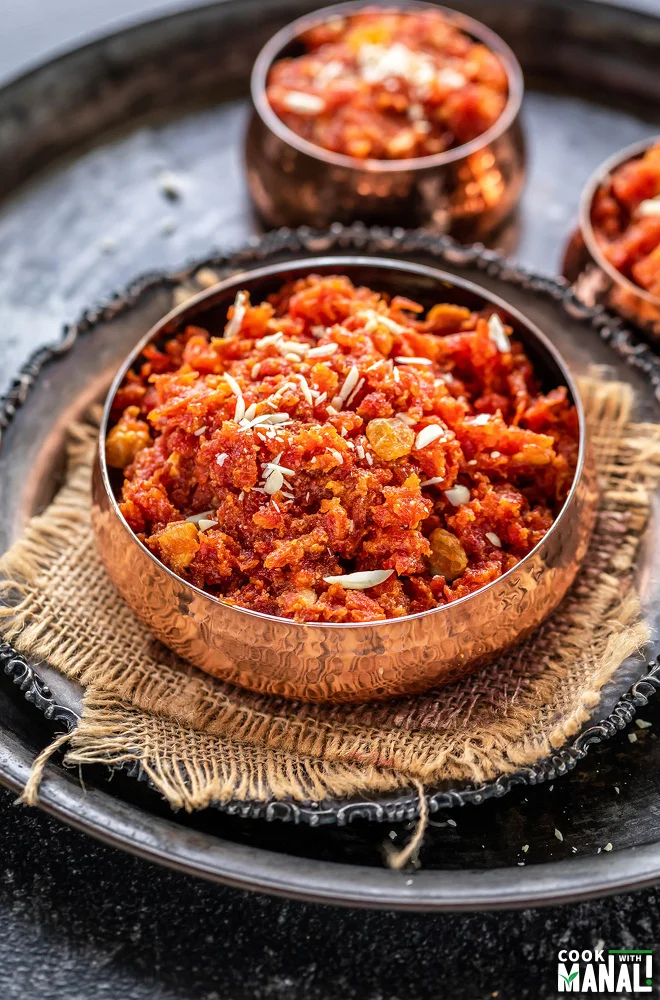
Gajar halwa is a rich Indian carrot dessert cooked slowly with milk, sugar, ghee and cardamom. This version builds its creamy texture by reducing the milk before adding the carrots, then finishes with toasted cashews.
Ingredients
- 1 kilogramred carrots, peeled and grated
- 1.25 litreswhole milk
- 3 tablespoons (45 ml), dividedghee
- 1–1.5 cups (200–300 g), to tastegranulated white sugar
- ¾ teaspoonground cardamom
- 2 tablespoonsraw cashews, chopped
Instructions
- 1
Dry-roast carrots
Peel and grate the carrots using the coarse side of a hand grater. Put them in a pan over medium-high heat and stir often for about 10 minutes, until their moisture has evaporated and their colour changes from red to orange. Use no ghee at this stage; take the pan off the heat and set the carrots aside.
- 2
Reduce the milk
Pour the milk into a heavy-based pan and bring it to the boil over medium-high heat, stirring often. Lower the heat to medium and continue simmering until the milk has reduced to half or a little less, stirring frequently to prevent it catching. With 1–1.25 litres of milk, this takes about 30–35 minutes; 1.5 litres will take a little longer.
- 3
Fry the cashews
Meanwhile, fry the cashews in 1 tablespoon of the ghee until golden brown. Set them aside.
- 4
Add the carrots
Stir the grated carrots into the reduced milk. Scrape the thickened milk from the sides of the pan and mix it into the halwa.
- 5
Cook until thick
Keep the pan over medium heat and stir often, without leaving the halwa unattended. Cook for 10–20 minutes, until the milk has been absorbed and small milk solids are visible.
- 6
Stir in sugar
Add the sugar to taste: use 200 g for a less sweet result, 300 g for a sweeter one, or an amount in between. Stir as it melts; the halwa will become liquid again.
- 7
Finish the halwa
Stir constantly until the sugary liquid has been absorbed, about 15 minutes. Avoid cooking it until very dry, as it will thicken as it cools. Add the cardamom and remaining 2 tablespoons of ghee, or more if desired, and roast for 3–4 minutes.
- 8
Add cashews
Stir in the fried cashews and serve the gajar halwa warm.
What is gajar halwa?
Gajar halwa is a traditional Indian sweet made by cooking grated carrots with milk and sugar until rich and spoonable. The name refers to carrot halwa, a style of South Asian dessert in which ingredients are cooked down into a dense, soft pudding.
This version relies on reducing the milk before adding the carrots, then cooking off the liquid released by the sugar. Ghee, cardamom and cashews give it a buttery, fragrant finish.
Nutrition and macros by portion
The nutrition label shows one serving as written: 409 calories, 9g protein, 60g carbs, 16g fat.
| Portion | Adjustment | kcal | Protein | Carbs | Fat |
|---|---|---|---|---|---|
| Lighter | Use less sugar and ghee | 286 kcal | 6g | 42g | 11g |
| This serving | As written | 409 kcal | 9g | 60g | 16g |
| Hungry | Serve a larger bowl | 614 kcal | 14g | 90g | 24g |
The carrots and sugar provide most of the carbohydrates, while whole milk contributes protein and some fat; ghee adds much of the remaining fat. For a more balanced plate, serve a modest portion after a meal that includes vegetables and a protein-rich main.
Why reduce the milk first?
Milk reduction: simmering the milk before adding the carrots concentrates it and gives the finished dessert its creamy, milky flavour. A heavy-based pan helps distribute the heat and reduces the risk of scorching.
Frequent stirring: milk can catch on the bottom as it boils down, so stir often and scrape the sides when the carrots go in. The thickened milk clinging to the pan is part of the flavour, so fold it back into the mixture.
Choosing and preparing the carrots
Carrots: red carrots are traditional when available, but the important step is to grate them on the coarse side of a hand grater. This gives the halwa visible strands that soften as they cook without disappearing into a purée.
Dry-roasting: cook the grated carrots in the pan without fat for about 10 minutes, stirring until their moisture dries out. Their colour may shift from red to orange; that is expected.
Watch the texture as it cooks
Before the sugar: after the carrots are mixed into the reduced milk, keep cooking until most of the liquid is absorbed and small milk solids appear. This stage takes around 10–20 minutes and needs regular stirring.
After the sugar: melted sugar makes the halwa loose again, so keep stirring until that liquid is absorbed. Stop while it is still soft and moist; it will firm up as it cools.
Balancing the sweetness
Sugar amount: use 200 g for a less sweet halwa or 300 g for a sweeter one, with 250 g as a middle option. Add it only after the milk has reduced and the carrots have cooked into it.
Cardamom: stir in the ground cardamom near the end, along with the remaining ghee. This short final cook helps distribute the fragrance without adding it at the start of the long simmer.
Serving and timing
Serving: gajar halwa is served warm, with the fried cashews stirred through for a little contrast. It can be served on its own as a dessert or alongside a larger Indian meal.
Timing: the milk takes about 30–35 minutes to reduce, followed by further cooking with the carrots and sugar. Stay nearby during the final stages, when the mixture thickens and needs frequent or constant stirring.
Recipe notes & tips
- Use a heavy-based pan for the milk so it is less likely to scorch during the long reduction.
- Keep stirring the milk regularly, especially as it reduces and thickens.
- Grate the carrots coarsely so their texture remains noticeable in the finished halwa.
- Fry the cashews in the first tablespoon of ghee and set them aside before cooking the halwa further.
- Choose the sugar amount to suit your taste, bearing in mind that the recipe allows 200–300 g.
- Take the halwa off the heat while it is still moist because it thickens as it cools.
Variations
- Adjust the sweetness: use 200 g sugar for a less sweet result or 300 g for a sweeter halwa.
- Change the nuts: replace the cashews with another chopped nut, frying it in the ghee until golden.
- Use a different carrot: make the halwa with orange carrots if red carrots are unavailable.
- Increase the richness: add extra ghee at the finishing stage, as desired.
- Serve chilled: cool the cooked halwa and refrigerate it for a firmer, cold dessert.
Common mistakes to avoid
- Using a thin-based pan: milk can catch and burn; choose a heavy-based pan and stir often.
- Leaving the milk unattended: it may stick to the bottom; check and stir it frequently as it reduces.
- Adding ghee to the carrots at the start: this recipe dries them out first; sauté them without fat.
- Walking away after adding the carrots: the halwa needs regular attention as it thickens; stay by the pan.
- Cooking it too dry: the mixture firms as it cools; stop while it still looks moist.
- Adding sugar too early: it loosens the mixture; wait until the carrots have cooked in the reduced milk.
How to store
Cool leftovers and store them in an airtight container in the fridge for up to 3 days. Reheat gently in a pan, stirring until warmed through; add a small splash of milk if needed to loosen the texture.
Frequently asked questions
Can I use orange carrots instead of red carrots?
Yes. Red carrots are traditional, but orange carrots work too; grate them coarsely and follow the same cooking method.
How do I know when the milk has reduced enough?
It should be reduced to half or a little less before you add the carrots. Stir often and look for a visibly thicker consistency.
Why does the halwa become runny after I add sugar?
The sugar melts and releases liquid, so the mixture loosens temporarily. Keep stirring until that liquid is absorbed again.
Can I make it less sweet?
Yes. Use 200 g sugar for the less-sweet option, or adjust within the recipe’s 200–300 g range.
Can I make gajar halwa ahead?
Yes. Refrigerate it once cooled, then reheat gently before serving. It will be firmer when cold and soften as it warms.
Can I freeze gajar halwa?
The recipe does not specify freezing. For the best texture, keep it refrigerated and reheat it gently within a few days.
Cook it from the original
This recipe comes from cookwithmanali.com. Their page has the author’s own photos, notes and tips — the best place to cook it from.
Open the recipe on cookwithmanali.com