
Pork ribs with guajillo chilli
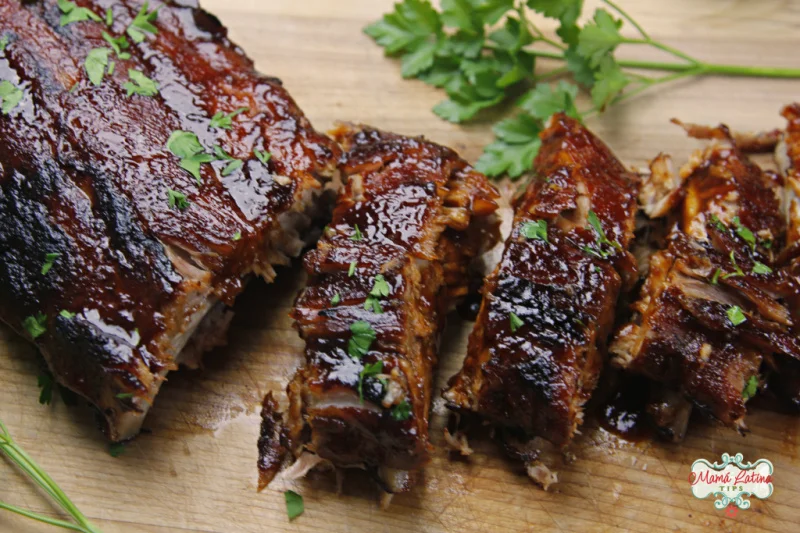
These oven-baked pork ribs are finished with a sweet-and-sour guajillo chilli sauce made with orange juice, lime and honey. Slow, covered cooking tenderises the ribs before a brief high-heat finish adds colour.
Ingredients
- 2 tablespoons (30 ml), dividedKnorr® Selects chicken-flavour bouillon
- ¼ teaspoonground black pepper
- 3 lb (approximately 1.5 kg)pork ribs
- 2¼ cups (approximately 540 ml), dividedfreshly squeezed orange juice
- 1 cup (approximately 240 ml)water
- 5guajillo chillies, cleaned and deseeded
- 2garlic cloves
- ¼ cup (approximately 60 ml)lime juice
- 3 tablespoons (approximately 45 ml)honey
- 1 teaspoon (approximately 5 ml)olive oil
- To taste, optionalparsley, for garnish
Instructions
- 1
Preheat the oven
Heat the oven to 120°C.
- 2
Mix the seasoning
Combine 1 tablespoon of the bouillon with the black pepper.
- 3
Prepare the ribs
Rinse the ribs, remove the membrane covering the bones and pat them dry with paper towels. To remove the membrane, slide a knife under one corner of the translucent, whitish layer and pull it away.
- 4
Wrap the ribs
Set the ribs on a large piece of heavy-duty foil on a baking tray, leaving enough foil to wrap them completely.
- 5
Season the ribs
Pour ¼ cup of the orange juice over the ribs, then coat them with the bouillon and pepper mixture. Position the meatier side down and wrap the ribs in the foil.
- 6
Bake the ribs
Bake at 120°C for 70 minutes. Increase the oven temperature to approximately 180°C and bake for a further hour.
- 7
Soak the chillies
While the ribs bake, put the guajillo chillies and garlic in 1 cup of boiling water. Turn off the heat, cover and leave to soak for 20 minutes, then drain.
- 8
Blend the sauce
Blend the chillies and garlic with the remaining orange juice, lime juice, 1 tablespoon of bouillon and honey. Strain the sauce.
- 9
Simmer the sauce
Heat the olive oil in a saucepan or frying pan and pour in the guajillo sauce. Once it comes to the boil, reduce the heat and simmer for 20 minutes. Taste and, if needed, add a little more bouillon, no more than ½ teaspoon at a time.
- 10
Divide the sauce
Split the sauce into two portions.
- 11
Coat the ribs
Take the ribs out of the oven and carefully open the foil. Using a kitchen brush, coat both sides of the ribs with half of the sauce.
- 12
Broil the ribs
Switch the oven from baking to broiling at 200°C. Return the ribs with the meaty side facing up and broil uncovered for 10 minutes, or until they begin to char slightly.
- 13
Cut and serve
Remove the ribs from the oven and cut them into portions. Serve with the remaining guajillo sauce on top or at the table for everyone to add as they like.
What are pork ribs with guajillo chilli?
This is a Mexican-inspired take on oven-baked ribs, finished with a sauce of guajillo chillies, citrus and honey. Guajillos are dried chillies often used in Mexican cooking; here they bring a mellow chilli flavour to a tangy, lightly sweet coating.
The method combines a long, covered bake with a short, uncovered broil. That gives the ribs time to become tender before the sauce gets a chance to colour and char at the edges.
Nutrition and macros by portion
The nutrition label shows one serving as written: 300 calories, 19g protein, 16g carbs, 18g fat.
| Portion | Adjustment | kcal | Protein | Carbs | Fat |
|---|---|---|---|---|---|
| Lighter | Smaller rib portion | 210 kcal | 13g | 11g | 13g |
| This serving | As written | 300 kcal | 19g | 16g | 18g |
| Hungry | Extra ribs and rice | 450 kcal | 29g | 24g | 27g |
The pork ribs provide most of the protein and fat, while the orange juice and honey contribute most of the carbohydrates and sugars. Serve a rib portion with vegetables and a modest helping of rice or beans for a more balanced plate.
The guajillo sauce
Rehydrate first: soaking the guajillos and garlic in boiling water softens them for blending. Drain them before blending as directed.
Balance the flavours: orange juice and honey bring sweetness, while lime juice adds acidity. Straining the blended sauce helps make it smooth enough to brush over the ribs.
Preparing the ribs
Remove the membrane: peeling off the thin layer on the bone side lets you season the ribs directly. Grip a loosened corner and pull it away from the rack.
Wrap snugly: foil holds in moisture during the slow bake. Place the meatier side down for this stage, then turn the ribs meat-side up for the final broil.
Cooking in two stages
Slow bake: the ribs cook covered at 120°C for 70 minutes, then at approximately 180°C for another hour. Keep them wrapped during both stages.
Finish uncovered: after brushing on half the sauce, broil the ribs at 200°C for 10 minutes. Watch closely towards the end, since the sauce can darken quickly.
Checking the finish
Look for slight charring: the recipe calls for the ribs to broil until they begin to char a little. Keep the finish brief so the honey in the sauce does not burn.
Cut between the bones once the ribs are out of the oven. Serve the reserved sauce separately or spoon it over the portions.
What to serve alongside
Serve the ribs with a simple side such as rice, beans or a crisp salad to complement the sweet-and-sour sauce. A vegetable side also gives the plate a fresh contrast to the rich pork.
Set out the remaining sauce at the table so everyone can choose how much to add.
Recipe notes & tips
- Pat the ribs dry after rinsing so the seasoning coats them evenly.
- Use heavy-duty foil and seal the parcel well before baking.
- Strain the blended sauce for a smoother coating.
- Taste the sauce before adding more bouillon, and increase it only in small amounts.
- Stay close during the final broil, as the honeyed sauce can char quickly.
- Keep the second half of the sauce separate for serving.
Variations
- Add cumin: blend a little ground cumin into the sauce for an earthy note.
- Bring more heat: include a chilli with the guajillos when blending.
- Use orange zest: add a little zest to the sauce for a brighter citrus aroma.
- Serve with slaw: pair the ribs with crunchy cabbage for a fresh contrast.
- Add fresh herbs: scatter chopped parsley over the ribs just before serving.
Common mistakes to avoid
- Leaving the membrane on: it can make the bone side chewy, so loosen a corner and pull it away before seasoning.
- Opening the foil early: the ribs need to stay covered through both baking stages, so keep the parcel sealed until they are ready for sauce.
- Skipping the sauce straining: unstrained sauce can be coarse, so pass it through a colander after blending.
- Adding too much bouillon at once: taste first and add no more than ½ teaspoon at a time.
- Walking away during broiling: the sauce may char quickly, so check the ribs as they approach the 10-minute mark.
How to store
Refrigerate leftover ribs and sauce in separate airtight containers and use within 3–4 days. Reheat the ribs covered in a moderate oven until hot throughout, adding sauce after reheating or warming it separately.
Frequently asked questions
Can I make the guajillo sauce ahead?
Yes. Prepare it through the simmering step, cool it, and refrigerate it in a covered container. Reheat it gently before brushing it over the ribs.
How do I remove the membrane from the ribs?
Slide a knife beneath one corner of the thin membrane, then grip and pull it away. Paper towel can help you hold it if it feels slippery.
Can I use a different dried chilli?
Guajillos give this sauce its particular flavour, but another mild dried chilli can be used if needed. The sauce’s flavour and heat will vary with the substitute.
Why are the ribs baked in foil?
The foil keeps the ribs covered during the long bake, helping them cook in a moist environment. They are uncovered only for the final broil.
Can I cook the ribs entirely on the day?
Yes. The method is designed to cook the ribs and sauce in one session, with the sauce made while the ribs are in the oven.
What does the second half of the sauce do?
It is reserved for serving, either spooned over the cut ribs or offered at the table. Keeping it separate also means it is not exposed to the broiler.
Cook it from the original
This recipe comes from mamalatinatips.com. Their page has the author’s own photos, notes and tips — the best place to cook it from.
Open the recipe on mamalatinatips.com