
Rustic No-Knead Bread Recipe
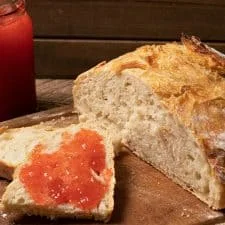
This rustic no-knead loaf uses a slow rise to develop flavour and a crisp crust without kneading. Bake it in a preheated covered oven-proof pan for a straightforward homemade loaf with a chewy interior.
Ingredients
- 375 g (3 cups)all-purpose flour
- 5 g (1 tsp)salt
- 1.5 g (½ tsp)instant yeast
- 355 ml (1½ cups)cold water
Instructions
- 1
Mix dry ingredients
Combine the flour, salt and instant yeast in a large bowl.
- 2
Add the water
Make a well in the middle of the dry ingredients and gradually pour in the cold water.
- 3
Form the dough
Mix until all the flour is incorporated and the dough is loose and shaggy.
- 4
Let it rise
Cover the bowl and leave the dough to rise for 12 hours.
- 5
Turn out dough
Tip the dough onto a well-floured work surface.
- 6
Shape the loaf
Fold the edges of the dough inwards to form a loaf.
- 7
Cover the loaf
Set it seam-side down on a well-floured cloth or a piece of parchment paper, then cover it.
- 8
Preheat the pan
Preheat the oven, an oven-proof pan and its lid to 230°C (450°F).
- 9
Transfer the dough
Carefully take the hot pan and lid out of the oven and place the dough inside, seam-side up.
- 10
Bake covered
Put the lid back on and bake for 30 minutes.
- 11
Finish uncovered
Remove the lid and bake for a further 20 to 30 minutes.
- 12
Cool and serve
Let the bread cool before serving.
What is rustic no-knead bread?
This is a simple, crusty loaf made from flour, water, salt and yeast, with time doing the work that kneading often does. No-knead bread became popular in American home kitchens as an approachable way to bake a loaf with a crisp crust and an open, chewy crumb.
Here, a long rise develops the dough while a covered, preheated pan traps steam during the first part of baking. The recipe keeps the ingredient list short and the hands-on work minimal.
Nutrition and macros by portion
The nutrition label shows one serving as written: 1370 calories, 40g protein, 287g carbs, 4g fat.
| Portion | Adjustment | kcal | Protein | Carbs | Fat |
|---|---|---|---|---|---|
| Lighter | Smaller bread portion | 959 kcal | 28g | 201g | 3g |
| This serving | As written | 1370 kcal | 40g | 287g | 4g |
| Hungry | Larger bread portion | 2055 kcal | 60g | 431g | 6g |
The flour provides most of the loaf's carbohydrates and some protein, while the small amount of fat comes mainly from the flour. Salt is the main source of sodium. Pair a slice with eggs, beans or another protein-rich food and vegetables for a more balanced plate.
The four ingredients
Flour: all-purpose flour makes a familiar, versatile loaf. Measure it consistently; packing a cup can add more flour than intended.
Yeast and salt: instant yeast is mixed directly with the dry ingredients, while salt seasons the dough. Keep the quantities as given so the slow rise stays balanced.
Water: cold water is added gradually and brings the mixture together into a loose, shaggy dough. It should not look like a firm kneaded dough.
Why the long rise matters
The 12-hour rise is the recipe's main fermentation stage, so allow for it when planning when to bake. Keep the bowl covered as directed while the dough rests.
The dough is ready for shaping after this rise; the recipe does not call for kneading during that time. A long rest also means there is no need to rush into baking as soon as the ingredients are mixed.
Shaping and transferring
Fold the edges in to make a loaf, then set it seam-side down on a floured cloth or parchment. The recipe turns it seam-side up when transferring it to the hot pan.
Take care when handling the preheated pan and lid. Have the dough ready to go before removing them from the oven, and lower it in carefully.
Crust and doneness
The pan stays covered for the first 30 minutes of baking, then the loaf bakes uncovered for another 20 to 30 minutes. The recipe gives a range for the uncovered stage rather than a single finish time.
Watch the crust as it bakes uncovered and remove the loaf when it has reached the colour and finish you want. Let it cool before cutting so the crumb can set.
Timing the bake
The listed total time is 780 minutes, including the 12-hour rise and baking. The method adds 50 to 60 minutes in the oven, but does not specify a cooling duration.
Start the dough well ahead of serving: mix it, leave it covered to rise for 12 hours, and then shape and bake it.
Serving ideas
Serve slices warm or at room temperature with butter, or use them alongside soup or a salad. The loaf also works as a base for sandwiches once cooled.
For a simple balanced plate, pair bread with a protein-rich topping and vegetables rather than serving it on its own.
Recipe notes & tips
- Allow the full 12 hours for the covered rise.
- Use a large bowl so the dough has room to rise.
- Flour the shaping surface and the cloth or parchment to help prevent sticking.
- Preheat the oven-proof pan and lid along with the oven to 230°C (450°F).
- Handle the hot pan and lid carefully when transferring the dough.
- Let the loaf cool before slicing.
Variations
- Wholemeal flour: Replace some of the all-purpose flour with wholemeal flour, keeping in mind that the loaf's texture may change.
- Seeded crust: Sprinkle seeds over the outside of the shaped loaf before baking.
- Herb aroma: Mix dried herbs into the flour before adding the water.
- Garlic flavour: Add a little finely chopped garlic to the dry ingredients.
- Cheese loaf: Fold grated cheese into the dough before shaping.
Common mistakes to avoid
- Adding flour too quickly: Pour in the water gradually and mix until all the flour is incorporated.
- Expecting firm dough: The mixture should be loose and shaggy rather than smooth and stiff.
- Shortening the rise: Leave the covered dough for the full 12 hours.
- Skipping the preheat: Heat the oven-proof pan and lid with the oven before baking.
- Handling the pan carelessly: Remove the hot pan and lid carefully before adding the dough.
- Cutting too soon: Let the loaf cool before slicing.
How to store
Once completely cool, store the loaf in a bread bag or wrapped in a clean cloth at room temperature and use within a few days. Refresh slices in a toaster or warm them briefly in the oven.
Frequently asked questions
Can I use active dry yeast instead of instant yeast?
The recipe specifies instant yeast, which is mixed directly into the dry ingredients. If using active dry yeast, follow its packet guidance for adapting it to a recipe.
How long does the dough need to rise?
Cover it and leave it to rise for 12 hours, as directed in the method.
Why is the dough so loose?
This recipe makes a loose, shaggy dough rather than a firm one. Mix until the flour is incorporated, then cover it for the long rise.
Do I need a Dutch oven?
The method calls for a preheated oven-proof pan with a lid. A Dutch oven can serve that purpose if it is suitable for the oven temperature.
How long does the bread bake?
Bake it covered for 30 minutes, then uncovered for an additional 20 to 30 minutes.
Can I slice the loaf while it is hot?
It is best to let it cool first, as the method directs, before slicing and serving.
Cook it from the original
This recipe comes from brandnewvegan.com. Their page has the author’s own photos, notes and tips — the best place to cook it from.
Open the recipe on brandnewvegan.com