
Salt and Pepper Calamari
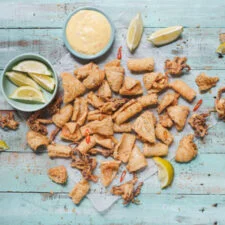
Crisp, peppery calamari with a light rice-flour coating makes a quick seaside-style lunch. Serve it hot with lemon wedges and a chilli or garlic mayonnaise for dipping.
Ingredients
- 600 gcalamari or chokka, with tentacles, cleaned
- 100 grice flour
- 1 tsp (5 ml)salt
- 1 tsp (5 ml)white pepper
- 1 tsp (5 ml)black pepper
- A pinchcayenne pepper
- For deep fryingoil
- To tastelemon wedges
- To tastechilli mayonnaise
Instructions
- 1
Score the calamari
Cut each calamari tube in half lengthways. Score the inside in a criss-cross pattern, taking care to make the cuts on the inside so the squid curls as it cooks. Cut into bite-sized pieces, allowing for them to curl and shrink; keep them large enough not to become too small.
- 2
Season the flour
Mix the rice flour with the salt, white pepper, black pepper and cayenne pepper.
- 3
Coat in batches
Toss the scored calamari and tentacles in the seasoned flour in batches. Shake off any excess flour and set each batch aside before coating the next.
- 4
Heat the oil
Heat the oil to 180 °C in a deep-fat fryer or deep-sided saucepan.
- 5
Fry until crisp
Fry the calamari in batches until crisp, light and golden.
- 6
Drain and serve
Lift the calamari from the oil and drain on sheets of kitchen towel. Serve with lemon wedges and your favourite dipping sauce. For chilli mayo, stir a generous drizzle of your favourite chilli sauce and a little lemon into homemade mayonnaise; for garlic mayo, mix in the soft flesh from whole roasted garlic bulbs.
What is salt and pepper calamari?
Salt and pepper calamari is squid coated in seasoned flour and quickly fried until crisp. It is a popular way to serve squid in many coastal cuisines, with the exact seasoning and accompaniments varying from place to place.
This version uses rice flour for a light coating, with white and black pepper for warmth and a pinch of cayenne for extra heat. Lemon and a creamy dip provide a bright, cool contrast.
Nutrition and macros by portion
The nutrition label shows one serving as written: 400 calories, 29g protein, 37g carbs, 15g fat.
| Portion | Adjustment | kcal | Protein | Carbs | Fat |
|---|---|---|---|---|---|
| Lighter | Use less mayo | 280 kcal | 20g | 26g | 11g |
| This serving | As written | 400 kcal | 29g | 37g | 15g |
| Hungry | Add a larger portion | 600 kcal | 44g | 56g | 23g |
The calamari provides most of the protein, while the rice flour supplies the carbohydrates and the frying oil and mayonnaise contribute much of the fat. Pair a serving with salad or vegetables for freshness and extra variety on the plate.
Why score the squid?
Inside cuts: scoring the inner surface helps the squid curl as it cooks. Keep the lines shallow and crosshatched rather than cutting all the way through.
Bite-sized pieces: calamari shrinks and curls in the hot oil, so cut pieces a little larger than the size you want to serve.
The seasoned rice-flour coating
Rice flour: this gives the squid a fine, crisp coating without a thick batter. Shake off loose flour so it does not fall into the oil and burn.
Pepper blend: white pepper brings a rounded heat, while black pepper tastes more aromatic. Cayenne adds a sharper kick, so keep the pinch modest if you prefer a milder finish.
Frying in batches
Oil temperature: bring the oil to 180 °C before frying. A steady temperature helps the coating turn golden without leaving the calamari greasy.
Batch size: add only a small amount at a time. Crowding the pan cools the oil and makes it harder for the coating to crisp evenly.
How to tell when it is ready
Colour and texture: look for a light golden coating that feels crisp. The squid should have curled slightly, but avoid leaving it in the oil longer than needed.
Drain promptly: transfer each batch to kitchen towel as soon as it is cooked. Serve straight away while the coating is at its crispest.
Dips and sides
Lemon and mayo: serve the calamari with lemon wedges and chilli mayonnaise for a sharp, creamy pairing. For a gentler dip, use mayonnaise with a little lemon and soft roasted garlic instead.
On the plate: add a fresh green salad or crunchy vegetables to balance the fried coating and make this lunch more substantial.
Recipe notes & tips
- Dry the cleaned calamari well before coating so the flour adheres rather than clumping.
- Keep the coated pieces in a single layer while you finish preparing the batches.
- Use a thermometer to check that the oil reaches 180 °C before frying.
- Let the oil return to temperature between batches.
- Serve the calamari as soon as it has drained, with lemon ready at the table.
Variations
- Milder seasoning: leave out the cayenne for a gentler pepper flavour.
- Extra chilli: add a little more cayenne to the seasoned flour if you like a hotter coating.
- Garlic dip: stir the soft flesh of whole roasted garlic bulbs into mayonnaise.
- Chilli mayo: mix a generous drizzle of your favourite chilli sauce and a little lemon into mayonnaise.
- Fresh herbs: scatter chopped parsley over the calamari just before serving.
Common mistakes to avoid
- Scoring the outside: the squid curls from the inside, so make the crosshatch cuts on the inner surface of each tube.
- Cutting pieces too small: calamari shrinks as it cooks; leave the pieces generously bite-sized.
- Leaving excess flour on: loose flour can burn in the oil, so shake off the excess before frying.
- Overcrowding the pan: too many pieces lower the oil temperature; fry in batches.
- Frying for too long: the coating can darken and the squid become tough, so remove it once crisp and light golden.
How to store
For the best texture, eat the calamari just after frying. If you have leftovers, refrigerate them in a covered container for up to 2 days and reheat in an oven or air fryer until hot; the coating may not be as crisp as when freshly cooked.
Frequently asked questions
Can I use frozen calamari?
Yes. Thaw it fully in the fridge and pat it very dry before scoring and coating.
Can I make this without a deep-fat fryer?
Yes. Use a deep-sided saucepan and heat the oil to 180 °C, taking care not to fill the pan too high.
How do I know the oil is hot enough?
A kitchen thermometer gives the clearest check: aim for 180 °C. Let the oil recover to that temperature between batches.
Can I prepare the calamari ahead?
You can clean and score it ahead, then cover and refrigerate it. Coat it shortly before frying so the rice flour does not become damp.
What can I serve instead of chilli mayo?
Use plain mayonnaise with lemon, or stir in soft roasted garlic for a milder dip. Lemon wedges are a simple alternative to a sauce.
Cook it from the original
This recipe comes from crushmag-online.com. Their page has the author’s own photos, notes and tips — the best place to cook it from.
Open the recipe on crushmag-online.com