
Teriyaki Glazed Salmon 照り焼きサーモン
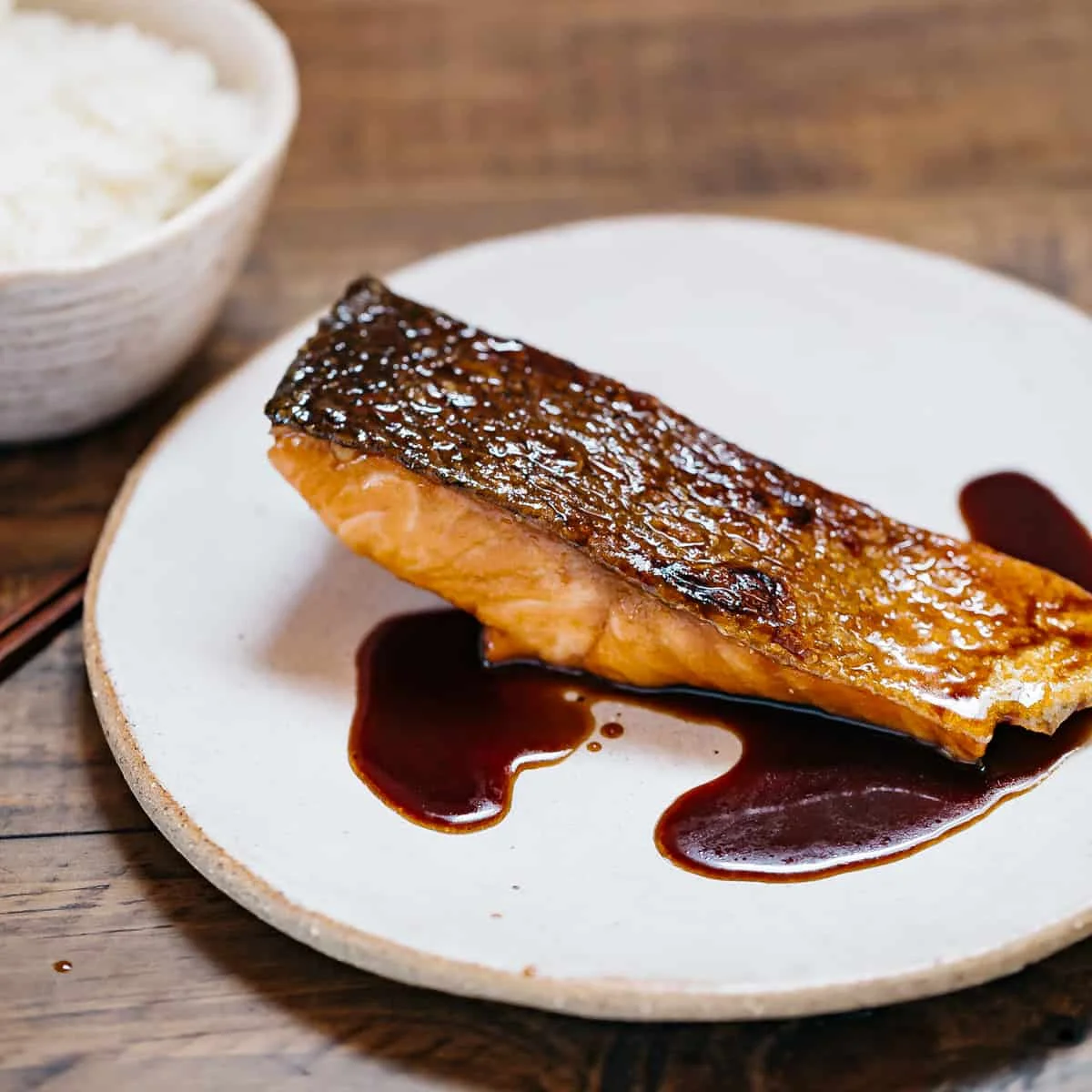
This Japanese-inspired teriyaki salmon pairs pan-cooked fillets with a glossy sauce of soy, sake, mirin and sugar. It comes together in about 15 minutes and is easy to serve with plain cooked rice.
Ingredients
- 2salmon fillets, with or without skin
- 1 tsp (5 ml)salt
- 2 tbsp (30 ml)soy sauce
- 2 tbsp (30 ml)cooking sake
- 2 tbsp (30 ml)mirin
- 1 tbspsugar
- 1 tbspplain flour
- 1 tbsp (15 ml)cooking oil
Instructions
- 1
Salt the salmon
Sprinkle salt over both sides of the salmon fillets.
- 2
Rest the fillets
Leave the salted salmon for 10 minutes.
- 3
Mix the sauce
Put the soy sauce, sake, mirin and sugar in a small saucepan over medium heat. Stir until the sugar dissolves, then set the sauce aside.
- 4
Pat the salmon dry
Use a kitchen towel to pat both sides of the fillets dry.
- 5
Dust with flour
Dust both sides of the fillets with plain flour, then brush off any excess.
- 6
Heat the oil
Heat the cooking oil in a frying pan and place the salmon in skin side down.
- 7
Cook the first side
Cook the fillets over medium-high heat for 2 minutes.
- 8
Turn and glaze
Turn the fillets over and pour in the teriyaki sauce. Simmer until the sauce thickens and the other side of the salmon is cooked.
- 9
Spoon over sauce
While the salmon cooks, occasionally spoon the sauce over the fillets.
- 10
Serve with rice
Serve the salmon with plain cooked rice.
What is teriyaki salmon?
Teriyaki is a Japanese style of cooking in which ingredients are coated with a glossy, sweet-savoury glaze. This version cooks salmon in a pan and uses a simple mixture of soy sauce, sake, mirin and sugar.
The quick sauce and lightly floured fish make a practical weeknight combination: the flour helps the glaze cling, while the salmon cooks in just a few minutes.
Nutrition and macros by portion
The nutrition label shows one serving as written: 396 calories, 36g protein, 18g carbs, 18g fat.
| Portion | Adjustment | kcal | Protein | Carbs | Fat |
|---|---|---|---|---|---|
| Lighter | Use less rice | 277 kcal | 25g | 13g | 13g |
| This serving | As written | 396 kcal | 36g | 18g | 18g |
| Hungry | Add extra cooked rice | 594 kcal | 54g | 27g | 27g |
The salmon provides most of the protein and fat, while the sugar and mirin contribute carbohydrates; rice served alongside adds further carbohydrates. Balance the plate with a serving of vegetables alongside the rice and fish.
A quick teriyaki sauce
Sauce base: Soy sauce brings saltiness, while sake and mirin add depth and sweetness. Sugar rounds out the mixture and helps it become glossy as it simmers.
Dissolving the sugar: Warm the sauce gently and stir until the grains disappear. Set it aside while you prepare the fish.
Why salt and dry the fish
Salting: The 10-minute rest seasons the fillets before they go into the pan. Pat them dry afterwards so surface moisture does not interfere with browning.
Flour coating: Use a thin dusting on both sides and brush away the excess. A heavy layer can turn pasty rather than helping the sauce coat the fish.
Getting the salmon right
Skin side first: Starting with the skin against the hot pan gives it time to cook and crisp. Keep the heat at medium-high for the stated 2 minutes on the first side.
Doneness cue: The recipe instructs you to simmer the second side in the sauce until cooked through and the sauce thickens. Watch closely near the end, as the glaze can reduce quickly.
Timing the glaze
Sauce and fish: Mix the sauce while the salted fillets rest, then pat the salmon dry and flour it before frying. This keeps the short cooking sequence organised.
Finishing: Add the sauce after turning the fish, then spoon it over the fillets occasionally as it simmers. Take the pan off the heat once the fish is cooked and the glaze has thickened.
What to serve with it
Rice: Plain cooked rice is the suggested accompaniment and gives the sweet-savoury sauce somewhere to collect. Spoon any remaining glaze from the pan over the salmon or rice.
Vegetables: Add a simple side of steamed greens or lightly cooked vegetables if you want a more complete plate without competing with the teriyaki flavour.
Recipe notes & tips
- Pat both sides of the salmon thoroughly dry before coating them with flour.
- Brush off loose flour so it does not form a thick layer in the pan.
- Start skin side down if your fillets have skin.
- Stir the sauce until the sugar has dissolved before setting it aside.
- Spoon the simmering glaze over the salmon from time to time.
- Keep an eye on the sauce as it thickens so it does not reduce too far.
Variations
- Add ginger: Stir a little freshly grated ginger into the sauce for a warming note.
- Add garlic: Mix finely grated garlic into the sauce for a more savoury glaze.
- Use skinless fillets: Cook them in the same way, turning gently to keep them intact.
- Finish with spring onion: Scatter sliced spring onion over the salmon just before serving.
- Serve with greens: Add steamed broccoli or another simply cooked green vegetable alongside.
Common mistakes to avoid
- Skipping the rest: Leave the salted fillets for the full 10 minutes, then pat them dry before cooking.
- Leaving excess flour: Brush off loose flour so the coating stays light rather than clumping.
- Starting with the wrong side: Place skin-on fillets skin side down first, as directed.
- Overcooking the glaze: Watch the pan as the sauce simmers and remove it from the heat once thickened.
- Forgetting to baste: Spoon the sauce over the salmon occasionally while the second side cooks.
How to store
Refrigerate leftover salmon in an airtight container and eat within 2 days. Reheat gently in a covered pan over low heat, adding a small splash of water if the glaze has become very thick.
Frequently asked questions
Can I use salmon without the skin?
Yes. The recipe allows for fillets with or without skin. Turn skinless pieces gently so they stay whole.
Why does the recipe salt the salmon before cooking?
The fillets rest for 10 minutes after salting to season them. Pat both sides dry before adding the flour.
Can I make the teriyaki sauce ahead?
You can mix and warm the sauce ahead, then set it aside. Add it to the pan after turning the salmon, as directed.
How do I know when the salmon is done?
The recipe says to simmer until the other side is cooked and the sauce has thickened. Check the thickest part of a fillet before serving.
What should I serve with teriyaki salmon?
Plain cooked rice is the suggested accompaniment. Steamed vegetables also work well alongside it.
Can I reheat leftover salmon?
Yes. Reheat it gently in a covered pan over low heat, with a little water if needed to loosen the glaze.
Cook it from the original
This recipe comes from chopstickchronicles.com. Their page has the author’s own photos, notes and tips — the best place to cook it from.
Open the recipe on chopstickchronicles.com