
Soft and Fluffy White Bread Loaf
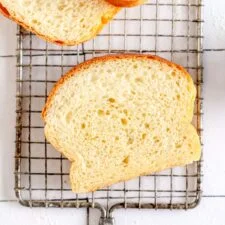
These soft, fluffy white bread loaves are made by shaping risen dough into two tins and baking until deeply golden. Make them for fresh sandwich bread, toast or a warm slice straight from the cooling rack.
Ingredients
- 1 batchwhite bread dough, risen and ready to use (see dough post for rising options)
- as neededsoftened butter, for greasing the loaf tins
- 1 egg, whisked with 15 ml (1 tbsp) wateregg wash
Instructions
- 1
Prepare the dough
Begin with risen white bread dough. If it has had a cold first rise, leave it at room temperature for about 30 minutes so it softens and is easier to handle.
- 2
Grease the tins
Grease two 1 lb loaf tins, each about 22 x 12.5 cm (8.5 x 4.5 in), with softened butter.
- 3
Divide the dough
Turn the risen dough onto a clean work surface dusted lightly with flour. Divide it into two equal pieces; the dough weighs about 850 g, so aim for two pieces of about 425 g each.
- 4
Rest the rounds
Use a bench scraper and the work surface to shape each piece into a ball, building some tension in the dough. Cover with a clean tea towel and leave to rest for about 10 minutes.
- 5
Turn the dough
Shape one piece at a time into a loaf, turning it over so the smooth, good side faces down.
- 6
Flatten and fold
Use your hands to flatten the dough into a rectangle about the length of the tin, roughly 20 x 15 cm (8 x 6 in) for a 1 lb loaf tin. Fold in a little from the short edges to make a rough square; this helps create neat ends.
- 7
Roll the loaf
Fold the top third down and press gently with your fingers to seal it to the dough beneath. Roll the remaining dough tightly towards you, then pull the dough against the work surface to seal the seam and tuck in the ends.
- 8
Set in the tin
Carefully place the shaped dough in a loaf tin with the seam facing down. It will not reach all the way to the ends of the tin yet.
- 9
Shape the second loaf
Repeat the shaping process with the second piece of dough and place it in the other prepared tin.
- 10
Proof the loaves
Cover the tins with plastic wrap or a clean tea towel and leave them somewhere warm until the dough has doubled and is nearing the tops of the tins, about 1 hour depending on the kitchen temperature. To check, press lightly with a floured finger: a fully risen loaf will retain a dent that slowly springs back. If the dough started cold, allow 2–3 hours for this rise so it has time to warm up.
- 11
Heat the oven
While the loaves rise, preheat the oven to 180°C (350°F) and position a rack in the middle.
- 12
Brush with egg
Once the loaves have risen, brush the tops with egg wash.
- 13
Bake until golden
Bake for 25–30 minutes, until deeply golden brown. If checking with a digital thermometer, the centre of a fully baked loaf should read 88°C (190°F).
- 14
Cool the bread
Take the loaves out of the oven and set the tins on a cooling rack. Leave them in the tins for 10–15 minutes, then turn them out and cool completely on a wire rack.
- 15
Slice and store
Slice once the loaves are cool. Keep leftovers in an airtight container at room temperature for up to 4 days; they are best fresh on the day, but can be gently warmed or lightly toasted.
What is a white bread loaf?
A white bread loaf is a yeasted loaf made with refined wheat flour, shaped to bake in a tin for an even, sliceable crumb. This American-style version turns one batch of risen dough into two loaves, with a simple egg wash for a glossy, golden top.
The method relies on shaping and a final proof rather than a complicated dough technique. Rolling the dough into a tight log helps the loaf hold its shape and gives it an even texture.
Nutrition and macros by portion
The nutrition label shows one serving as written: 1100 calories, 36g protein, 220g carbs, 9g fat.
| Portion | Adjustment | kcal | Protein | Carbs | Fat |
|---|---|---|---|---|---|
| Lighter | Smaller, thinner slices | 770 kcal | 25g | 154g | 6g |
| This serving | As written | 1100 kcal | 36g | 220g | 9g |
| Hungry | Larger slices | 1650 kcal | 54g | 330g | 14g |
Most of the carbohydrates and energy come from the bread dough, while its flour also supplies some protein; the exact amounts depend on the dough recipe. The butter used to grease the tins and the egg wash contribute a small amount of fat. Pair a slice with eggs, beans or another protein-rich topping and fruit or vegetables for a more balanced plate.
The dough and tins
Risen dough: start with a batch that has completed its first rise. The recipe specifies about 850 g of dough, divided into two portions of about 425 g each.
Loaf tins: butter two 1 lb tins measuring about 22 x 12.5 cm. The dough may not reach the ends when first placed in the tins; it expands during the final rise.
Shaping for a soft crumb
Rest the rounds: shaping each portion into a ball and leaving it covered for about 10 minutes makes the dough easier to flatten and roll.
Seal the log: fold down the top third, press it to adhere, then roll the rest towards you. A snug roll and a sealed seam help the loaf rise evenly rather than opening along the bottom.
Knowing when the loaves are ready
Proofing: look for dough that has doubled and is nearing the top edge of the tin. A gentle press with a floured finger should leave an indentation that returns slowly.
Timing: the final rise takes about 1 hour in a warm kitchen, but can take 2–3 hours when the dough begins cold. Follow the dough's appearance and the finger test rather than relying on the clock alone.
Getting the crust and centre right
Egg wash: brush the tops once the loaves have finished rising to help them bake to a deep golden colour.
Doneness: bake at 180°C for 25–30 minutes. The recipe's internal temperature cue is 88°C in the centre; let the loaves cool before slicing so the crumb can set.
Serving and using the loaves
Fresh slices are well suited to sandwiches, toast or serving alongside soup. Let the loaves cool completely before cutting for neater slices.
For a warm slice later, lightly toast it or warm it gently. The bread is at its best on baking day, while the remaining slices can be kept airtight at room temperature.
Recipe notes & tips
- Weigh the dough portions if you want the two loaves to bake at a similar rate.
- Use only a light dusting of flour on the work surface so the dough can still grip it during shaping.
- Keep the dough covered during its rest and final rise to prevent the surface drying out.
- Use the finger-press test to judge the final rise, especially if your kitchen is cooler or warmer than usual.
- Cool the loaves fully before slicing for a cleaner cut and a settled crumb.
- If the dough had a cold first rise, allow the full 2–3 hours for the final proof when needed.
Variations
- Seeded top: sprinkle seeds over the egg-washed loaves before baking.
- Plain crust: skip the egg wash for a less glossy finish.
- Sandwich slices: use a serrated bread knife and cut only once the loaf has cooled.
- Toast: slice the cooled bread and toast it lightly for a crisp edge.
- Soup side: serve a slice alongside soup for a simple meal.
Common mistakes to avoid
- Rushing the final rise: wait until the dough has doubled and springs back slowly after a light press.
- Rolling loosely: roll the dough snugly and seal the seam so the loaf holds together.
- Leaving the seam upwards: place each loaf in its tin seam side down.
- Using a cold dough too soon: allow it to soften at room temperature and give the final rise 2–3 hours if needed.
- Slicing while hot: cool the loaf completely first so the crumb has time to set.
- Overbaking: check within the 25–30 minute window and use the 88°C centre-temperature cue if desired.
How to store
Keep the cooled bread in an airtight container at room temperature for up to 4 days. It is best on the day it is baked; warm leftover slices gently or toast them lightly.
Frequently asked questions
Can I use dough that has had a cold first rise?
Yes. Leave it at room temperature for about 30 minutes before shaping so it softens. Its final rise may take 2–3 hours as it warms up.
How much dough goes into each tin?
The batch weighs about 850 g, so divide it into two pieces of about 425 g each.
How do I know the final rise is complete?
The dough should have doubled and be nearing the top edge of the tin. A light press with a floured finger should leave a dent that slowly springs back.
Can I check whether the bread is baked through?
Yes. The recipe gives an internal temperature of 88°C in the centre as a doneness cue, alongside a deeply golden crust after 25–30 minutes.
When should I slice the bread?
Wait until the loaves have cooled completely on a wire rack. This helps the crumb set and makes slicing easier.
How long does homemade white bread keep?
Store it in an airtight container at room temperature for up to 4 days. It is best fresh on the day it is made.
Cook it from the original
This recipe comes from cloudykitchen.com. Their page has the author’s own photos, notes and tips — the best place to cook it from.
Open the recipe on cloudykitchen.com