
Punjabi Dum Aloo
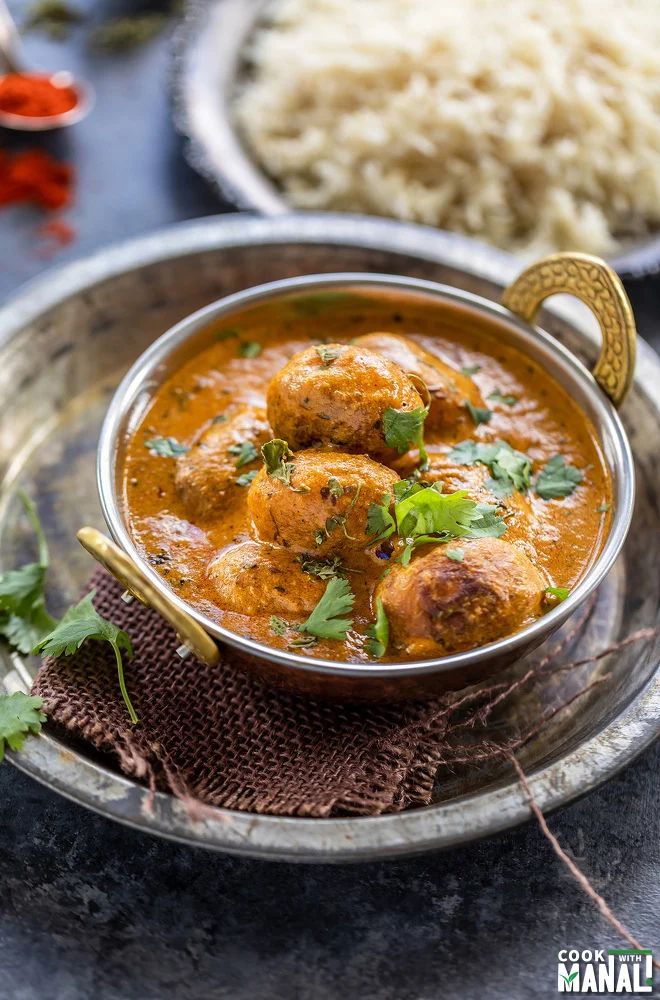
Punjabi Dum Aloo is a North Indian curry of baby potatoes simmered with toasted spices, a smooth onion-cashew paste and yoghurt. The potatoes are browned before they cook gently in the sauce, making this a flavourful dish to serve with rice or naan.
Ingredients
- 1 tablespooncoriander seeds
- 1/2 teaspoon, dividedcumin seeds
- 1/2 teaspoonfennel seeds
- 4green cardamom pods
- 2cloves
- 1 inchcinnamon stick
- 500 g (14 baby potatoes)baby potatoes
- 4 tablespoons + 2 teaspoons, dividedmustard oil
- 1 large (230 g), roughly choppedred onion
- 4–5 large cloves, roughly choppedgarlic
- 1.5 inches, roughly choppedginger
- 1green chilli
- 10raw, unsalted cashews
- 1 teaspooncumin seeds
- 1/2 teaspoonhing
- 1bay leaf
- 1.5 teaspoons, dividedKashmiri red chilli powder
- 1/4 teaspoonblack pepper powder
- 240 g (1 cup)yoghurt
- 3/4–1 teaspoon, adjust to tastesalt
- 1/2 teaspoonturmeric powder
- 240 ml (1 cup), or as needed for the preferred gravy consistencywater
- 1–2 tablespoonsdouble cream
- 1 teaspoonsugar
- 1/4 teaspoongaram masala
- 1 tablespoonkasuri methi
- to garnishfresh coriander
Instructions
- 1
Boil the potatoes
Put the potatoes in a pan of water over a medium-high heat. Once the water is fully boiling, turn off the heat, cover the pan with a plate and leave the potatoes in the hot water for 15 minutes.
- 2
Prepare the potatoes
Drain the potatoes and rinse them under cold water, then peel them. Prick each potato all over with a toothpick and set aside.
- 3
Grind the spices
Put the coriander seeds, 1/2 teaspoon cumin seeds, fennel seeds, cardamom, cloves and cinnamon in a small pan over a medium heat. Toast for 2–3 minutes until fragrant, taking care not to burn them. Cool slightly, grind to a fine powder and set aside.
- 4
Cook the aromatics
Heat 2 teaspoons mustard oil in a pan until hot. Add the ginger, garlic and green chilli and cook for 1 minute.
- 5
Soften the onion
Add the onion and cashews to the pan and cook for 3 minutes, until the onion has softened.
- 6
Blend the paste
Take the pan off the heat. Transfer the onion mixture to a blender and blend to a fine paste, then set aside.
- 7
Brown the potatoes
Heat 4 tablespoons mustard oil in a kadai or wok over a medium heat until hot. Fry the boiled potatoes until golden on both sides, then transfer them to a plate. Once they have cooled a little, prick them again with a toothpick.
- 8
Start the masala
Add 1 teaspoon cumin seeds and the bay leaf to the same oil. Sauté for a few seconds, then stir in the hing. Add 1 teaspoon Kashmiri red chilli powder and fry for a few seconds to colour the oil.
- 9
Cook the onion paste
Add the prepared onion-cashew paste and mix well. Cook for 2 minutes.
- 10
Add ground spices
Stir in the ground spice mixture and black pepper. Mix well and cook for 1 minute.
- 11
Stir in the yoghurt
Take the pan off the heat and add the whisked, room-temperature yoghurt. Stir continuously as you combine it with the curry to help prevent it from separating.
- 12
Simmer the masala
Return the pan to a medium heat, stirring as the mixture comes to a gentle boil. Cook for 3–4 minutes, then add the salt, remaining 1/2 teaspoon Kashmiri red chilli powder and turmeric. Cook for 4 minutes, until oil is visible on top of the masala.
- 13
Dum-cook potatoes
Add the fried potatoes and mix well. Pour in 1/4 cup water, cover tightly and cook over a low heat for 5–6 minutes.
- 14
Finish the curry
Add the cream, sugar, garam masala and kasuri methi. Add a further 3/4 cup water, or adjust the amount to your preferred curry consistency. Simmer for 3 minutes, then turn off the heat. Cover and leave for 5 minutes before serving.
- 15
Garnish and serve
Garnish with fresh coriander and serve the Punjabi Dum Aloo with rice or naan.
What is Punjabi Dum Aloo?
Dum Aloo is a North Indian potato curry; dum refers to cooking the ingredients gently under a tightly fitted lid. Punjabi versions are often rich and warmly spiced, with potatoes cooked in a substantial sauce.
Here, baby potatoes are first boiled and browned, then finished in a yoghurt-based masala. Toasted whole spices and an onion-cashew paste build flavour and body without losing the potatoes’ place at the centre of the dish.
Nutrition and macros by portion
The nutrition label shows one serving as written: 364 calories, 7g protein, 35g carbs, 23g fat.
| Portion | Adjustment | kcal | Protein | Carbs | Fat |
|---|---|---|---|---|---|
| Lighter | Use less oil and cream | 255 kcal | 5g | 25g | 16g |
| This serving | As written | 364 kcal | 7g | 35g | 23g |
| Hungry | Serve with extra rice | 546 kcal | 11g | 53g | 35g |
The potatoes and sugar provide most of the carbohydrate, while mustard oil, cashews and cream contribute much of the fat. The yoghurt and cashews add some protein, with the potatoes also contributing a smaller amount. Serve with a modest portion of rice or naan and add a vegetable side to round out the plate.
The potatoes make the dish
Boiling first: letting the potatoes sit in the covered pan for 15 minutes after the water boils cooks them gently. The method avoids continuing to boil them over the heat.
Pricking and browning: the toothpick holes give the curry a way to reach inside the potatoes. Browning them on both sides adds colour before they go into the sauce.
Build flavour in stages
Whole spices: toasting coriander, cumin, fennel, cardamom, cloves and cinnamon briefly releases their aroma. Let them cool before grinding so they form a fine powder.
Onion paste: cooking the onion with garlic, ginger, chilli and cashews softens the ingredients before blending. The resulting paste gives the masala a smooth, substantial base.
Keep the yoghurt smooth
Room temperature: the method specifies whisked yoghurt that is not cold from the fridge. Adding it after taking the pan off the heat helps it blend into the masala more evenly.
Steady stirring: keep stirring as you add the yoghurt, then bring the sauce back to a gentle boil over medium heat. A hard, sudden boil can make the yoghurt separate.
Look for the right texture
Masala cue: after adding the salt, chilli powder and turmeric, cook until oil appears on the surface. This is the visual cue given in the method before the potatoes are added.
Gravy cue: add the water gradually to suit the consistency you like. The potatoes should be coated by the sauce, while the final covered simmer allows the flavours to come together.
What to serve with it
Rice: serve the curry with plain rice to make a simple meal and catch the gravy. Naan is another suggested option for scooping up the sauce.
To finish: scatter fresh coriander over the curry just before serving. Keep the lid on for the final 5-minute rest, then bring the pan to the table while warm.
Recipe notes & tips
- Keep the whole spices moving as they toast so they become fragrant without burning.
- Let the toasted spices cool slightly before grinding them to a fine powder.
- Make sure the mustard oil is hot before adding the aromatics or potatoes, as directed in the method.
- Use room-temperature, whisked yoghurt and stir continuously while adding it to the pan.
- Add the water to suit the gravy consistency you prefer.
- Leave the covered curry to rest for 5 minutes before serving.
Variations
- Adjust the heat: use less Kashmiri chilli powder for a milder curry.
- Choose the gravy texture: add a little more or less water to make it thicker or looser.
- Change the garnish: finish with extra fresh coriander if you like a more herbaceous note.
- Serve with rice: pair the curry with rice for a simple, sauce-friendly meal.
- Serve with naan: use naan to scoop up the potatoes and gravy.
Common mistakes to avoid
- Overboiling the potatoes: turn off the heat once the water boils and leave them covered for 15 minutes.
- Burning the spices: toast them for 2–3 minutes and remove them as soon as they smell fragrant.
- Skipping the second prick: prick the potatoes again after browning so the sauce can reach them.
- Adding cold yoghurt: use room-temperature yoghurt to help it blend smoothly into the masala.
- Stopping the stir too soon: stir continuously as the yoghurt goes in to help prevent separation.
- Cooking the dum on high heat: keep the pan tightly covered over low heat for the 5–6-minute simmer.
How to store
Cool leftovers and refrigerate them in a covered container; use within 3 days. Reheat gently in a covered pan until piping hot, adding a splash of water if the gravy has thickened.
Frequently asked questions
Can I use larger potatoes?
The recipe is written for 14 baby potatoes. If using larger potatoes, cut them into pieces so they can be boiled, browned and coated in the curry in a similar way.
Can I make the curry less spicy?
Use less Kashmiri red chilli powder to reduce the heat. The amount of chilli powder is divided between the initial tempering and the later masala stage.
Why does the yoghurt need to be at room temperature?
Room-temperature yoghurt is less of a shock to the warm masala and is easier to stir in smoothly. Keep stirring as you add it.
How much water should I add?
The method first adds 1/4 cup, then adds a further 3/4 cup with the finishing ingredients. The recipe also says to adjust the amount to suit the consistency you prefer.
What does dum cooking mean here?
It means cooking the potatoes with the curry in a tightly covered pan over low heat. In this recipe, that covered stage lasts 5–6 minutes.
What should I serve with Punjabi Dum Aloo?
Serve it with rice or naan, as suggested in the recipe. Both work well with the gravy.
Cook it from the original
This recipe comes from cookwithmanali.com. Their page has the author’s own photos, notes and tips — the best place to cook it from.
Open the recipe on cookwithmanali.com